I must confess something before we proceed: I have never set foot in Aligarh, nor seen Aligarh Muslim University (AMU) with my own eyes. My acquaintance is solely through the accounts of those who have. Yet, a subtle reflection of Aligarh persistently trails me. I vividly recall 2018, when I stumbled upon books by Mukhtar Masood, notably Harf-e-Shouq, dedicated to the students of Aligarh College. That dedication captivated me, turning skimming into deep reading and annotation.
The Unspoken Impact of Aligarh
We often discuss Delhi and Bombay and the life they sustained, but rarely Aligarh and its profound impact on subcontinental Muslims, especially the early Pakistani elite. As Jaun Alia remarked, 'Pakistan ... ye sab Aligarh ke laundon ki shararat thi' (Pakistan was the mischief of Aligarh's boys). Yet, making this case often requires overwhelming evidence, as Mencken noted in In Defence of Women.
Mukhtar Masood, an Aligarian, was Lahore's commissioner who inaugurated Minar-e-Pakistan and, as Hamid Mir noted, refused to yield the occasion to Ayub Khan—ironically, also an Aligarian. Aligarh produced all kinds.

Strachey Hall: The Birthplace of Movements
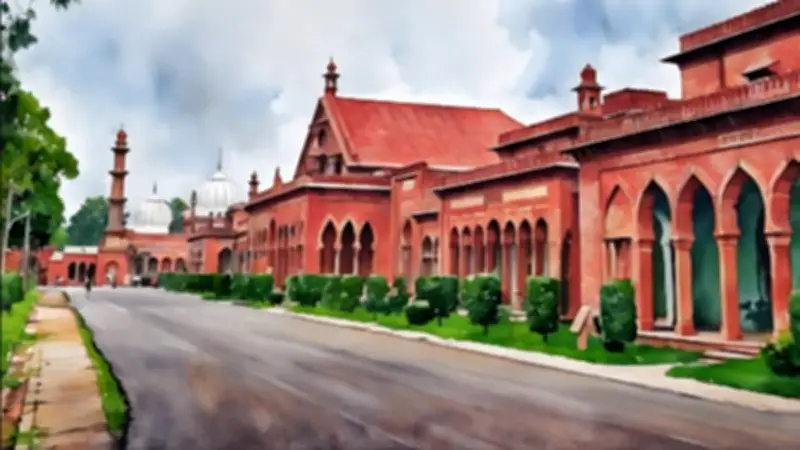
Much has been written about Aligarh's people, but little about Aligarh itself. Strachey Hall birthed the Muslim Educational Conference in 1886, which gave rise to the Muslim League in 1906. Aligarh served as the League's office until 1910. Thus, the journey from 1886 culminated in 1947. Lord Lytton laid the foundation stone in 1877, but it took 19 years to complete the hall.
Sir Syed Ahmed Khan knew perseverance. In 1885, construction halted due to fund shortages. A proposal emerged: donors of Rs. 500 would have their names carved into Strachey Hall's walls. The idea worked, raising Rs. 60,000. Women donated jewelry; a man with Rs. 500 saved for his daughter's wedding preferred to contribute to this sacred endeavor. This testament to the institution's grandeur shows how it outlasts voices, movements, and endured strength.
The Arsenal of Muslim India
Strachey Hall hosted Quaid-e-Azam Muhammad Ali Jinnah, who gave speeches there from 1938 to 1944, calling it the 'arsenal of Muslim India.' Jinnah was granted lifetime membership of AMUSU in 1938 and was a founder of the University Court and donor. His portrait once hung in Aligarh but later became controversial when some demanded its removal. Unlike that petitioner, Strachey Hall showed magnanimity.
The hall also hosted Ambedkar, Gandhi, Nehru, Iqbal, Sarojini Naidu, Liaquat Ali Khan, Lord Curzon, Lord Reading, Lord Irwin, and Lord Willingdon—all within its signature Mughal red brick, yet not particularly Mughal in purpose. It is a classic colonial foundation with a subtle attempt to transcend that semblance. Strachey Hall borrows from both traditions without belonging to either.
The Rebellious Act of Building
The building is perfectly composed, but the act of building it was rebellious. Sir Syed took the colonizer's form and the Mughal's material to create something serving neither empire nor dynasty, but education as political survival. He once described his struggles: 'I was the porter and the overseer, worked as an engineer, and did not hesitate to spend my own money. The reward was pamphlets accusing me of skimming money.' This is the penalty for intellectual curiosity and resolve.
What drew me to write about Strachey Hall and Aligarh was a genuine reverence from reading Harf-e-Shouq. I have studied in institutions with legacies, but the feeling was never the same. Mukhtar Masood's desire to counter allegations against Sir Syed and Aligarh was deeply personal. The imprints Aligarh left on him implanted in me an adopted affection for a place I have never walked through, yet admire more fondly than many I have formally encountered.
This, perhaps, is the rawest testament to the institution's grandeur: that it is possible to be remembered and endorsed beyond borders, outlasting the voices it once echoed, the movements it mobilized, and the strength it endured.