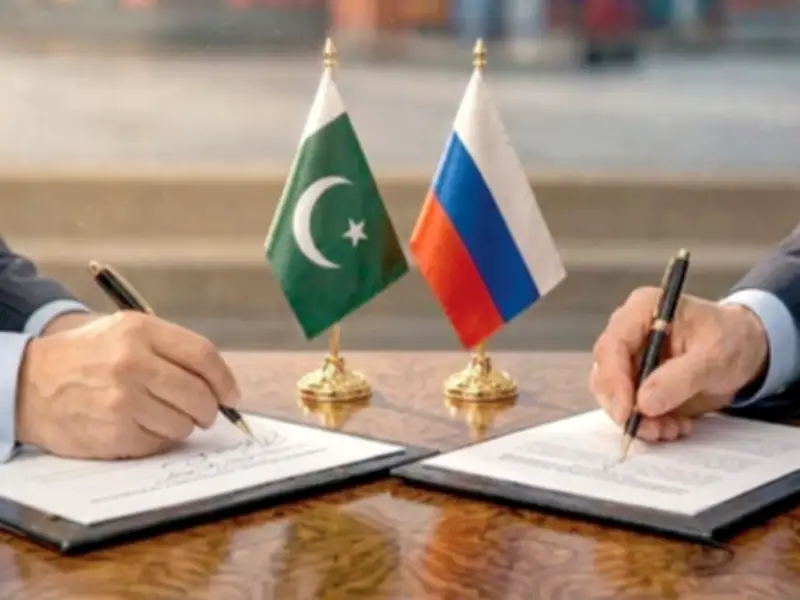
ISLAMABAD: Pakistan and Russia are set to sign an economic cooperation agreement by 2030 aimed at boosting trade and investment opportunities across various sectors of the economy. As part of this initiative, Pakistan has agreed to join the International North-South Transport Corridor (INSTC) proposed by Russia, which will be connected to Gwadar Port. Recently, Russian Deputy Prime Minister Alexey Overchuk announced that Russia had extended support to include Gwadar Port in the INSTC. The objective is to build maritime trade routes with Central Asia and complement China's Belt and Road Initiative (BRI).
International North-South Transport Corridor
The INSTC is a 7,200-kilometre multimodal network of sea, rail, and road linkages aimed at connecting India, Iran, Azerbaijan, Russia, and Central Asia. This corridor is expected to enhance regional connectivity and trade.
Resolving Past Disputes
Earlier, a $93 million export claim dispute between Pakistan and Russia had halted investment from Russia. Due to this row, Russia could not even legally extend a credit line to Pakistan. The matter was finally resolved during the Pakistan Tehreek-e-Insaf (PTI) government in 2019, paving the way for ramping up trade and offering investment opportunities to Russian investors.

Overcoming Payment Hurdles
Another stumbling block was the bar on payments in dollars because of US sanctions on Russia. To remove this hurdle, Pakistan proposed signing currency swap agreements with Iran and Russia to facilitate payments in local currencies. These countries are currently studying the proposal. Pakistan and Russia are also working on a roadmap to clear hurdles to bilateral investments and trade.
High-Level Engagements
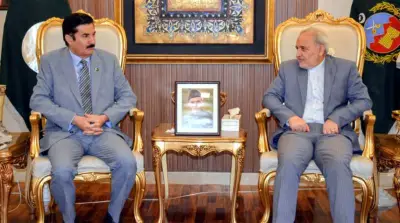
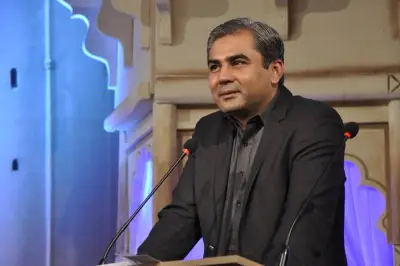
Federal Minister for Energy (Power Division) Awais Ahmed Khan Leghari addressed a webinar titled "Pakistan-Russia Bilateral Relationship at the Cusp of Shifting Global Order," where he highlighted a highly positive and pragmatic trajectory in bilateral relations over the past two decades. Discussing the structural transformation in global politics, the minister noted that the residual distrust from the Soviet era had faded, elevating the partnership from an "unfriendly country" to a "trusted friend" across sectors such as trade, energy, defence, and technology.
This diplomatic momentum is driven by high-level engagements between the top leadership, reflected in four recent meetings between Prime Minister Muhammad Shehbaz Sharif and Russian President Vladimir Putin. As co-chairman of the Russia-Pakistan Intergovernmental Commission (IGC), the energy minister emphasised the importance of regular engagements with his counterpart, Russian Energy Minister Sergey Tsivilev, describing the IGC as the foundation of their multi-faceted ties.
Expanding Cooperation
Bilateral cooperation has expanded through structured frameworks including consultations on security, strategic stability, and counter-terrorism, alongside mutual alignment at the United Nations and the Shanghai Cooperation Organisation (SCO) to advocate for an inclusive, multipolar international order. A key focus of the address was regional connectivity, with Pakistan signalling its intent to join the INSTC. Leghari welcomed the statement by Russian Deputy Prime Minister Alexey Overchuk regarding connecting the INSTC with Pakistan's Gwadar Port, which would build a crucial link in China's Belt and Road Initiative.
The minister highlighted that the Russian leadership had praised Pakistan's recent diplomatic role in mitigating the conflict between the United States and Iran, further reinforcing President Putin's acknowledgement of Pakistan as a genuine global stakeholder.
Future Steps
To unlock the substantial potential for bilateral trade and dismantle structural hurdles like restrictions on payment mechanisms, both nations have agreed to sign the Programme of Economic Cooperation by 2030. Furthermore, the recent signing of the long-pending Russia-Pakistan Readmission Agreement in Bishkek will ease visa regimes and facilitate business travel and people-to-people exchanges.

Pakistan's growing institutional engagement was recently demonstrated by fielding one of the largest delegations at the Kazan Forum 2026, alongside regular participation in the St Petersburg International Economic Forum and Moscow Energy Week. Concluding his remarks, the federal minister reiterated that Pakistan-Russia relations were a vital component of broader Eurasian economic integration and regional stability.