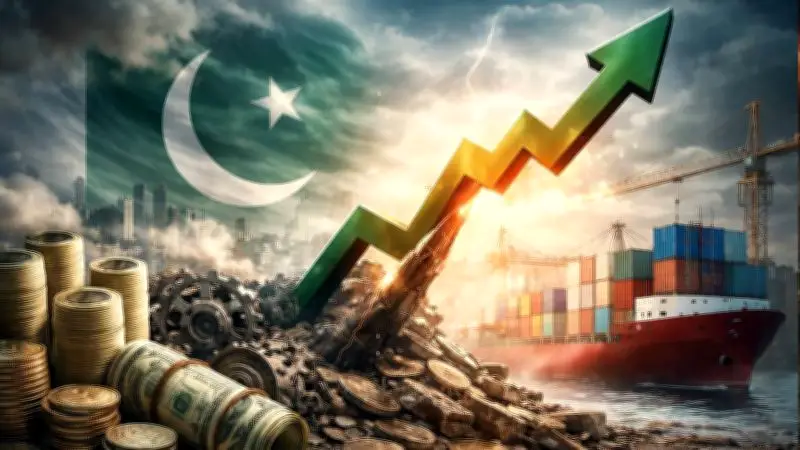
The world is growing less generous, less stable, and less predictable. The work of building a self-reliant Pakistan is generational — which is precisely why it must begin now. Something has shifted in the world, and not quietly. Across Europe and the Americas, anti-immigration politics has become the mainstream rather than the fringe. The institutions that were supposed to manage international disputes, the World Trade Organization, the United Nations system, and the various accords and frameworks built after two world wars, are being ignored or dismantled by the very powers that once built them.
Global Shifts and Local Realities
Great powers are turning inward. Trade is becoming a weapon. Alliances are becoming transactional in ways they have not been since the 1930s. At the same time, artificial intelligence is arriving in the labour market with a speed that our institutions are not remotely prepared for. The professions that represented stability and upward mobility for the Pakistani middle class, such as law, accounting, medicine, engineering, and software, are being disrupted faster than new opportunities are appearing. A young person graduating today in Lahore or Karachi faces a labour market that their parents would not recognise. The frustration that builds in a young population with few visible paths forward is not an abstraction. It is the material from which political instability is made.
The Urgency of Planning
None of this is necessarily irreversible. But the direction is clear enough, and the pace is fast enough, that any responsible government must plan for a world that is significantly more hostile, more fragmented, and less willing to underwrite Pakistani stability than the world of the last several decades. The question is what that planning looks like — and whether we have the honesty and patience to actually do it. A country that cannot feed, power, or heal itself is not really sovereign. It is simply dependent on whoever controls those things being well-disposed towards it.

Lessons from Successful Transformations
The answer requires thinking in generations, not electoral cycles. South Korea in the 1960s was poorer than Pakistan. Singapore, at independence, had no natural resources and no hinterland. Malaysia was a commodity-dependent economy with deep ethnic divisions. What each of these countries shared was a governing class willing to make decisions whose benefits they knew they would not live to fully enjoy — decisions about education, infrastructure, energy, and industrial policy that compounded quietly over decades into genuine national strength. The transformation of each took thirty to forty years of consistent, protected commitment. That is the kind of horizon Pakistan needs to adopt, not as a distant deadline but as an argument for beginning immediately. The work is long. That is why it cannot wait.
Core Priorities for Self-Reliance
The focused question, then, is this: what does Pakistan need to be able to do for itself, regardless of what the world looks like, regardless of which alliances hold and which collapse, regardless of whether global supply chains remain open or become hostile? The answer, stripped down to its core, is not complicated. We need to be able to educate our own people. We need to generate our own electricity. We need access to fresh water. We need to feed ourselves from our own land. And we need to be able to manufacture at least the essential medicines our people require. If we can do those things with reasonable self-sufficiency, we can survive almost any external shock. If we cannot, we are permanently vulnerable to forces entirely outside our control.

Energy: Rethinking the Power Sector
The depth of an economy must always be the binding constraint on the commitments a government makes on its behalf — and that when an economy's depth changes, contracts must change with it. Take electricity. Pakistan’s power sector is in a crisis that has structural roots we need to understand honestly, without looking for villains. The capacity payment model — under which the government pays independent power producers a fixed charge regardless of how much electricity is actually dispatched — was not a conspiracy. It was the only workable arrangement available at the time. With a single buyer, a state-owned fuel supply chain, and private investors who needed bankable contracts before they would commit capital, the take-or-pay structure was the rational instrument of its era. It brought investment when nothing else would.
The problem is not that the model was wrong then; it is that it no longer fits an economy that simply does not earn enough to sustain it. Our exports are too narrow, our tax base too shallow, our foreign exchange too precarious to comfortably service a power sector whose fixed obligations run into the trillions. Although the government has recently renegotiated the tariff structure with independent power producers, delinking most capacity payments from the dollar and tying them instead to domestic variables, the lesson is not that private energy investment was a mistake. The lesson is that the depth of an economy must always be the binding constraint on the commitments a government makes on its behalf — and that when an economy's depth changes, contracts must change with it.
Solar Revolution and Grid Transformation
Meanwhile, the market has already begun to deliver its own answer. Consumers who can afford it, factories, middle-class households, and farms are leaving the grid and installing solar at a pace that has exceeded our total installed power plant capacity in cumulative imports since 2019. This is not a problem to be resisted. It is a direction to be shaped. Every home, every hospital, every school, every farm should be generating its own power. The national grid should serve as a smart backup and balancing mechanism, not as the primary source. This transition will create short-term revenue difficulties for the government. But the alternative, continuing to accumulate circular debt while consumers exit, is not a stable position. We can manage this change deliberately or have it happen to us chaotically. That choice remains ours to make.
Water: The Overlooked Crisis
Water is the crisis we are not yet discussing with the seriousness it deserves. Beyond drinking water, which must remain the absolute priority, virtually all other domestic, agricultural, and industrial water use should progressively move towards recycling and reuse. The technologies to do this exist across a range of cost and complexity: greywater recycling for households and buildings in the near term, industrial wastewater treatment at the larger scale over time. Some of these can be mandated in new construction within years; others require longer investment horizons, but should be planned for now.
There is also the chronic waste of floodwater. Pakistan is a country that drowns in one season and thirsts in another, yet we have never invested seriously in the storage and canal infrastructure needed to capture what nature provides in excess. Building dedicated flood-capture canals and retention systems is not beyond our engineering capability — it is beyond our planning patience. The countries that transformed themselves did not wait for the world to become more hospitable. They built their strength precisely because they knew it would not.
Desalination for Coastal Areas
In coastal areas, particularly Karachi and the broader Makran coast, the government should actively incentivise private investment in desalination. The Arabian Sea sits largely unused as a resource. With the right regulatory framework and targeted incentives, desalination can make a meaningful contribution to water security in those regions within a decade.
Food Security: A Policy Failure
We have the land. We have some of the most fertile soil on earth. That we import wheat and edible oils is a policy failure, not a natural condition. On food, we are unnecessarily dependent. The Indus plain is among the most productive agricultural territories anywhere. That we import wheat, pulses, and edible oils is not because we lack the capacity to grow them — it is because decades of agricultural policy have prioritised short-term subsidies over long-term investment in seeds, soil, cold storage, and market infrastructure. This is correctable. It requires sustained commitment and a willingness to measure outcomes honestly rather than counting acreage and calling it progress.
Medicines: The Hidden Vulnerability
Medicines are the least discussed vulnerability. The COVID-19 pandemic briefly made it obvious that countries dependent on imported pharmaceutical ingredients are dangerously exposed when global supply chains break down. Pakistan has medicinal plant resources and trained scientists. What we lack is the sustained industrial policy investment to turn that potential into domestic manufacturing capacity for essential drugs. This is not beyond us. It is a choice we have not yet made.
Education: The Longest Investment
Underlying all of this is education, not the enrolment statistics we use to reassure ourselves and international donors, but genuine, measurable, world-standard education that produces people capable of building and running a modern economy. South Korea's transformation began first in classrooms. Singapore's founding generation treated education as infrastructure, not social spending. We cannot be self-sufficient in anything if we remain dependent on foreign institutions to train our best minds, who then rationally do not return. This is the longest investment of all, and therefore the one that requires the most consistent, protected commitment from the state.
The Political Challenge
I am not arguing for isolation. Complete self-sufficiency from global trade is neither achievable nor desirable. What I am arguing for is strategic insulation: ensuring that the things people cannot live without are not hostage to the goodwill of foreign governments or the stability of supply chains we do not control.
The honest difficulty is political. None of this is achievable in a single government term. The incentives of the electoral cycle run directly against the kind of long, patient, institutional investment these priorities require. Lee Kuan Yew governed Singapore for thirty years. Park Chung-hee's industrial policy in South Korea ran for two decades. Mahathir Mohamad’s Vision 2020 for Malaysia was announced in 1991 and pursued consistently across multiple administrations. Pakistan has not lacked ambition in its policy documents. What it has lacked is the institutional architecture to ensure that what one government builds, the next does not dismantle.
Conclusion: The Time to Act is Now
The world will continue to change, and the changes ahead are unlikely to favour the unprepared. The question is whether Pakistan, a generation from now, is a country that weathered those changes because it had the foresight to build foundations that could hold, or one that did not, because it kept deferring the hard work for another day. The countries that transformed themselves did not wait for the world to become more hospitable. They built their strength precisely because they knew it would not.