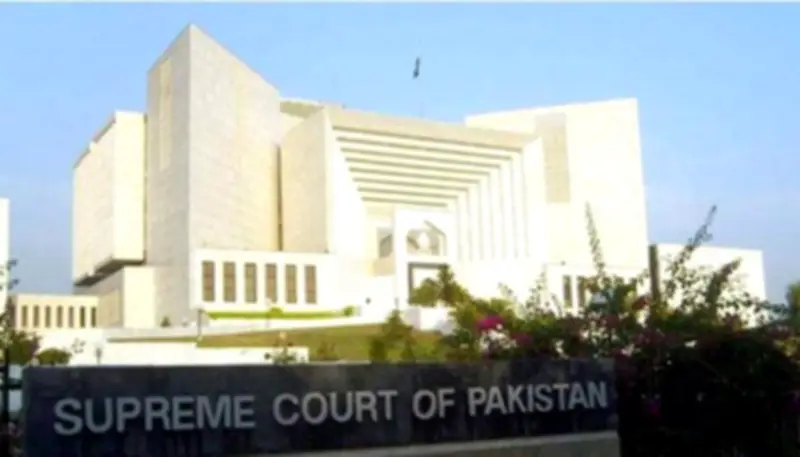
The Supreme Court of Pakistan has upheld the life imprisonment sentence awarded to Abdul Mannan for carrying out an acid attack on Faisalabad resident Iqra Parveen. The court rejected Mannan's plea for a reduced sentence on the grounds that he was a juvenile at the time of the offense.
A three-member bench comprising Justice Hashim Khan Kakar, Justice Salahuddin Panhwar, and Justice Ishtiaq Ibrahim issued a detailed 13-page judgment. The court described acid attacks as among the most heinous crimes and stressed the need for stronger protections for victims.
The court observed that juvenility could not be used as a shield in cases involving brutal and premeditated offenses. It remarked that acid attacks were, in some respects, more horrific than murder because while murder ends a life once, an acid attack condemns the victim to lifelong physical and psychological suffering.

Compensation and Directives
In addition to upholding the life sentence, the court directed the convict to pay Rs1 million in compensation to the victim. The judgment also contained a series of directives aimed at preventing acid attacks and improving support for survivors.
The court ordered all high courts to ensure that acid attack trials are concluded within four months and directed chief justices to personally monitor the progress of such cases.
Restrictions on Acid Sale
The Supreme Court further instructed the government to immediately prohibit the unrestricted sale of acid and establish a biometric and centralized digital monitoring system for its purchase and distribution. Under the proposed mechanism, buyers would be required to provide national identity card details and biometric verification, including thumb impressions.
Rehabilitation Fund
To support victims, the court ordered the creation of a National Rehabilitation Fund for acid attack survivors and directed the state to bear the full cost of plastic surgery and psychological treatment. The judgment also called for permanently affected survivors to be issued disability certificates and provided monthly financial assistance.
It further directed authorities to allocate special quotas for acid attack survivors in government employment, educational institutions, and welfare programs.
Implementation
The court ordered the registrar to circulate copies of the judgment to all high courts, federal and provincial law departments, the Attorney General for Pakistan, and the advocates general of the provinces for implementation of the directives.