In Pakistan, clinical training has always carried a difficult balance. Students, nurses, and healthcare trainees need practical experience before they face real patients. However, real hospital settings do not always allow repeated practice, equal access to different cases, or room for mistakes. This is where simulation-based training is becoming increasingly relevant. It gives learners a safer space to understand clinical workflows before they enter high-pressure healthcare environments.
Gaming Technology Meets Medical Education
Gaming technology may not sound like an obvious part of medical training, but its core purpose fits naturally into this space. A good game system responds to movement, decisions, timing, feedback, and teamwork. In clinical learning, those same ideas can help create virtual environments where trainees can practice procedures, handle equipment, and repeat scenarios until they become more confident. For Pakistan, where training quality and access can vary across institutions, this kind of practical digital support can add real value.
Muhammad Usman Butt: Bridging VR and Healthcare
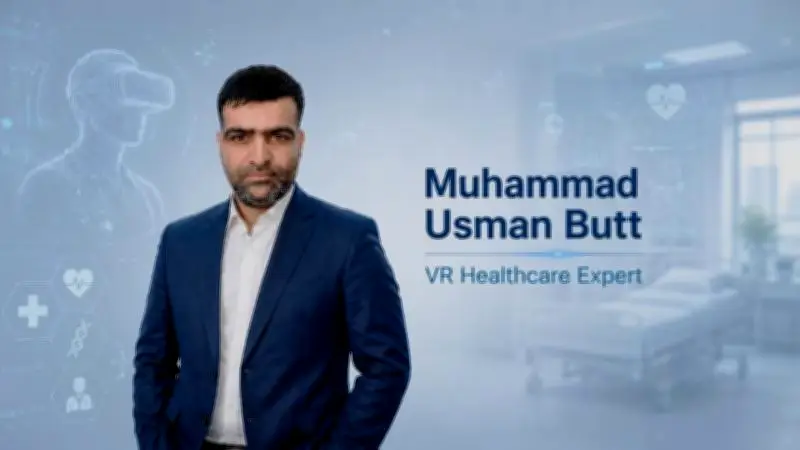
Muhammad Usman Butt has built his work around the use of VR and gaming technology for healthcare training. As a Rawalpindi-based Senior Unity Developer and VR Healthcare Simulation Developer, he works at the point where interactive game development meets healthcare education. His work connects virtual simulation, clinical practice, and safer learning methods for Pakistan’s medical training environment. His focus is on VR healthcare simulation, especially systems that allow nurses and trainees to practice clinical workflows inside a simulated hospital environment. He has worked on virtual medical equipment interactions, including ECG wires, defibrillator pads, oxygen masks, cannulas, stethoscopes, patient monitors, and other hospital-based tools.

Clinical training is not only about reading steps. It is also about hand movement, equipment placement, timing, and decision-making under pressure. Before moving deeper into healthcare simulation, Muhammad Usman spent more than a decade working across Unity development, games, VR, AR, WebGL, Android, iOS, PC platforms, and multiplayer systems. That background gives his healthcare work a practical foundation. Instead of treating VR as only a visual demo, he approaches it as an interactive training environment.
Technical Expertise in Simulation Design
He has worked with multiplayer flows, voice communication, hand poses, grab interactions, reset systems, UI visibility, and performance optimization for VR devices. These are the same technical layers that make a training simulation feel responsive, repeatable, and useful for learners. “For medical training, the goal is not just to make something look real,” Usman says. “The goal is to let trainees practice the right actions in a safe environment, again and again.” This principle explains why his gaming background fits clinical learning. A medical trainee needs more than a video or lecture. They need guided practice, realistic feedback, and a system that allows mistakes without putting a patient at risk.
A New Kind of Healthcare Education Professional
As a VR healthcare specialist, Muhammad Usman Butt represents a newer kind of technical professional in Pakistan’s healthcare education space. His contribution is not clinical diagnosis or medical teaching. It is the design and development of training systems that can support those who teach and learn clinical practice. His role sits between software engineering, simulation design, and healthcare training needs.
Pakistan’s healthcare education system needs more ways to make practice accessible, consistent, and repeatable. VR cannot replace hospitals, instructors, or real patient experience. However, it can prepare trainees before they enter those settings. It can help them repeat difficult scenarios, understand equipment handling, and build confidence in a controlled environment.
The Future of Clinical Training in Pakistan
The future of clinical training in Pakistan will not depend on technology alone. But when gaming technology, VR development, and healthcare education come together, they can create safer and more practical ways for the next generation of medical professionals to learn.