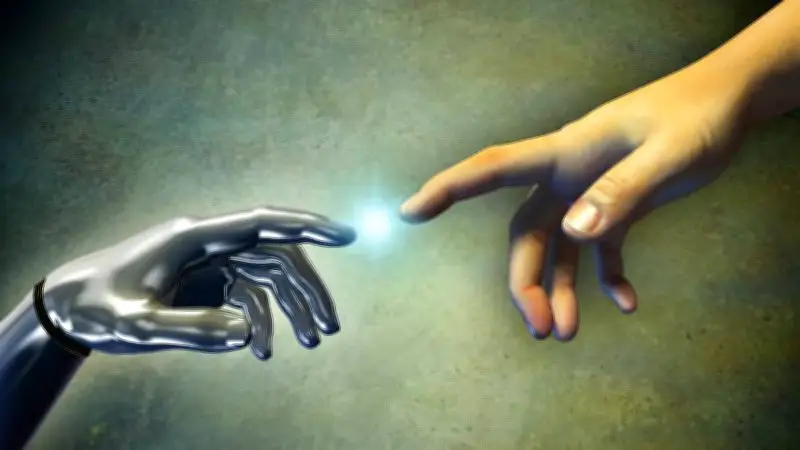
Artificial intelligence is rapidly transforming creative industries by composing music, artwork, essays, legal documents and even software code within seconds or minutes. Much of the creative and educational industry now relies on artificial intelligence to produce its work. While these AI tools promise innovation, they raise a fundamental legal concern: who owns AI-generated creativity?
The Human Authorship Requirement
Intellectual property law has traditionally been built around the idea of human authorship, a framework that modern AI systems challenge in ways not yet clearly understood by lawmakers. Traditional frameworks of intellectual property rights face unprecedented challenges due to the proliferation of online content and its borderless dissemination. The central rule of copyright law is that it requires human authorship; most systems around the world recognise this as a basic principle, often confirming that copyright protects the “fruits of human creativity” rather than the outputs of machines.
Such was the case in Thaler v Perlmutter in the United States, which affirmed that works produced autonomously by an AI system would not receive copyright protection since human authorship is a requirement. Unlike jurisdictions such as the US or UK, Pakistani courts have not yet considered whether works generated by artificial intelligence can receive copyright protection. The existing legislation governing protection was drafted decades before the emergence of generative AI; so far, Pakistan has no law specifically addressing intellectual property rights concerning AI. The absence of such legislation could soon expose gaps in Pakistan’s intellectual property framework.

Ownership Dilemmas
However, the decision of US courts creates a dilemma: if AI produces a work independently, it may fall outside the scope of copyright protection entirely. The question of ownership, however, remains difficult to determine. Even when AI-generated works display creativity and originality, determining their owner can be difficult. One side of the debate argues that the person who provides the prompt should be considered the author since they guide the process. A different perspective suggests that developers who designed the AI system deserve recognition for enabling the creation. A more prominent view is that AI-generated outputs should remain in the public domain since they lack human authorship and are generated using datasets of existing works. These various perspectives on the ownership of AI-generated work showcase the tensions between copyright principles and technological innovation.
Training Data Controversies
One of the major global controversies at present is that AI systems are trained on huge datasets containing copyrighted material. Publishers, authors and artists have come forward claiming that their work is being used without permission. Looking beyond the issue of ownership, artificial intelligence also raises concerns about how creative works are used to train these systems. The practice of relying on these datasets to train AI models has sparked numerous legal disputes globally, with creators arguing that their work is being used without consent or compensation. Technology companies have maintained that training these AI models constitutes “transformative use”, which is similar to how search engines analyse content online. This has left courts to determine whether this process infringes copyright or falls within the doctrine of fair use.
For content owners, the implications are significant. By producing large volumes of creative content at minimal cost, the value of human creativity is potentially undermined. Simultaneously, the work of creators is being absorbed into AI training datasets without recognition or compensation, creating further concerns. Some organisations and writers have already begun introducing labels identifying their work as human-authored.

Pakistan’s Position
For Pakistan, these developments are particularly relevant since the country’s rapidly growing digital economy includes thousands of graphic designers, freelancers and content creators who rely on intellectual property protections. Yet existing copyright laws were drafted long before the emergence of generative artificial intelligence. Without clear legal frameworks, Pakistani creators may face uncertainty over ownership rights, while technology companies will continue to operate in a regulatory grey area.
The rapid expansion of artificial intelligence raises policy questions that lawmakers around the world are now facing. The significant question for Pakistan is whether works generated by AI systems are eligible for copyright protection, or whether intellectual property rights should remain traditionally limited to human creations. If these works are protected, there needs to be a determination of the threshold of human involvement necessary before copyright can be claimed. Equally contentious is the issue of training datasets, which calls for clearer rules on whether technology companies should obtain licences before using such material.
Conclusion
As these debates intensify globally, Pakistan must consider whether its existing intellectual property laws are sufficient or whether AI-specific legislation is needed. Artificial intelligence is not merely a technological innovation; it is a challenge to the legal concept of creativity itself. As machines increasingly participate in the production of art, literature and design, intellectual property law must adapt to ensure that innovation continues without undermining the rights of human creators. For countries such as Pakistan, the debate over AI and copyright is not a distant issue but rather an emerging legal frontier that demands careful attention.