Internet connectivity is no longer just a background service; it now underpins how people work, study, pay, communicate, stream, run businesses, and access public services. For many years, much of this connectivity relied on copper-based networks built for older communication needs. Copper facilitated voice and early data services, but the demands of today's internet have raised the standard. Modern users expect faster speeds, stable video calls, smooth online services, and fewer disruptions in daily digital life. This is why the transition from copper to fiber has become a critical engineering shift. Fiber networks can carry larger volumes of data with superior speed and reliability, especially for homes, businesses, and institutions that depend on continuous connectivity.
The Shift from Copper to Fiber
The work behind this transition involves more than just laying cables. It requires planning routes, installing access points, migrating customers, configuring devices, and resolving real-time network issues to ensure service works end-to-end. Saudi Arabia's rapid digital growth has made this connectivity work even more vital. As the country expands digital services, smart infrastructure, business technology, and modern public systems, telecom networks must support higher expectations. Behind this progress lies a large technical workforce, including Pakistani engineers who have contributed to network deployment, maintenance, and field operations across the Kingdom.
Profile of a Pakistani Telecom Engineer
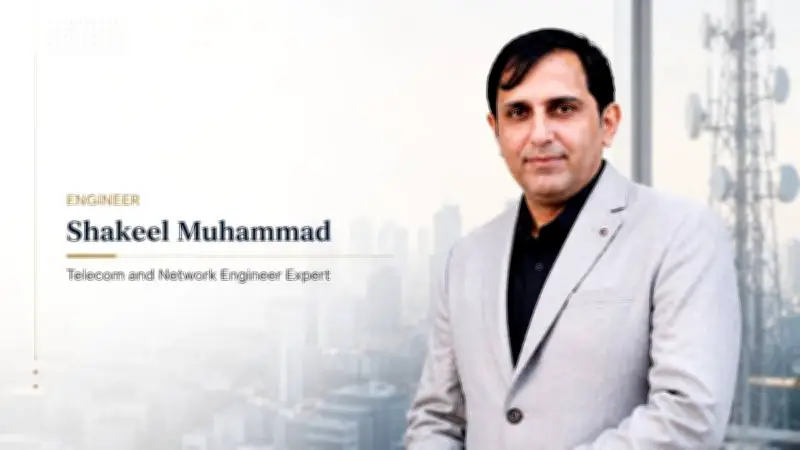
One such professional is Shakeel Muhammad, a Telecom and Network Expert working as a Telecom Engineer with ABANA Enterprises Group Co in Saudi Arabia. His core focus is fiber network deployment and maintenance, particularly FTTH (Fiber to the Home) and FTTX services that bring fiber connectivity directly to homes, businesses, and customer premises. Shakeel Muhammad represents the practical engineering role that often stays behind the scenes but directly influences how reliable a network feels to the end user.

In simple terms, his work involves taking high-speed internet from the main network and making it usable for customers. Engineers plan how fiber reaches an area, connect it through access points, install or support customer-end devices, test the service, and fix weak points when voice, video, or data services are affected. For a household, this means clearer calls, smoother streaming, and fewer interruptions. For a business, it translates to more stable systems, better communication, and reduced downtime during daily operations.
Shakeel's Role in Fiber Deployment
In his current role, Shakeel has led and managed teams across fiber deployment and maintenance projects. His responsibilities include monitoring fiber installation quality, supporting VoIP, video, and data services, helping migrate customers from copper to fiber technology, and coordinating field and support personnel. These tasks place him close to the practical side of connectivity, where planning, installation, and troubleshooting must converge before a service becomes reliable for the user.
Shakeel Muhammad has also worked on the design, activation, and support of fixed and wireless networks. His experience includes data circuits across fiber, copper, and transmission technologies for business and government needs. In simpler terms, he helps ensure that network connections are properly planned, devices are configured correctly, and faults are resolved when services are interrupted. His academic background, including a Master of Science in Electronic Communications and Computer Engineering from the University of Nottingham and a Bachelor of Electrical Engineering in Telecom and Electronics, adds formal depth to his field experience.
Impact on Saudi Arabia's Digital Future
Connectivity is judged by ordinary users in simple terms: does the internet work, is the call clear, does the video stop, can the business stay online. Fiber networks are part of the answer, but engineers make that answer practical. As Saudi Arabia continues to move toward more data-driven services and stronger digital infrastructure, professionals like Shakeel Muhammad demonstrate how Pakistani engineering talent is helping support the systems that keep modern connectivity running.