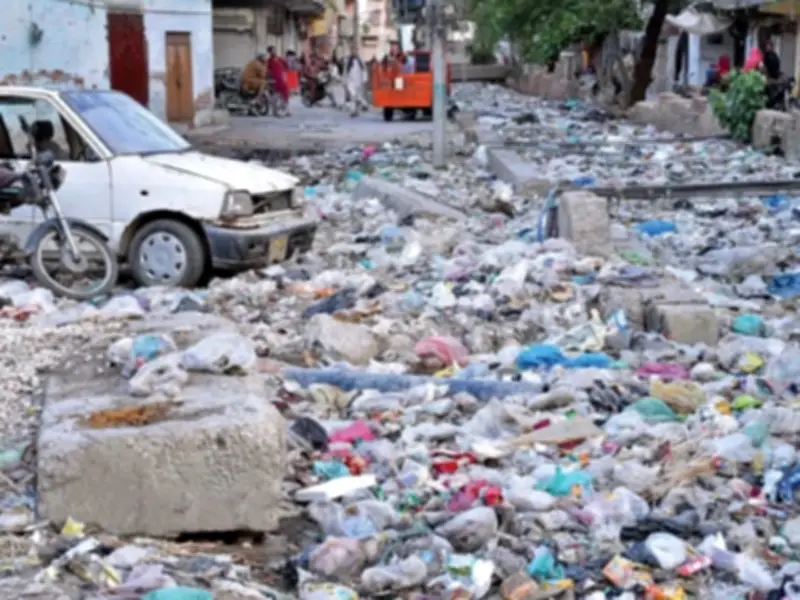
As the monsoon season arrives in Pakistan, Hyderabad is once again vulnerable to urban flooding due to persistently clogged drains. Major stormwater channels across the city remain choked with garbage, prompting fears that even moderate rainfall could inundate roads, neighborhoods, and businesses.
Drains Overflowing with Waste
Open drains in Hyderabad city and Latifabad are overflowing with solid waste, while underground drainage channels in Qasimabad are clogged with debris, severely restricting wastewater flow. The Liaquat Colony drain is among the worst-hit, with overflowing sewage spilling onto adjoining roads and residential streets even before significant monsoon rains have begun.
Pakistan's monsoon season typically runs from July to mid-September, and Hyderabad has historically experienced widespread flooding during this period. Heavy rainfall routinely overwhelms the city's ageing drainage network, leaving roads submerged and residents stranded for days.

No Comprehensive Cleaning Campaign
Despite this recurring pattern, residents say no comprehensive desilting or drain-cleaning campaign has been undertaken this year by the Hyderabad Water and Sewerage Corporation, Hyderabad Municipal Corporation, town municipal corporations, or the district administration. While much of Hyderabad's sewerage system consists of underground pipelines, several densely populated neighborhoods in Hyderabad city and Latifabad still rely on open drains for stormwater and sewage disposal.
Among the worst-affected drains are those along Airport Road between Latifabad Units 8 and 12, the channel from Nishat Chowk to the former Odeon Cinema, the drain through Liaquat Colony towards the Sattar Shah Graveyard pumping station, and the Kali Mori drain. These drains serve densely populated areas but remain filled with tonnes of garbage.
Public Health Concerns
Residents reported that waste has accumulated to such an extent that children can walk across some sections of the drains on compacted rubbish. Reduced drainage capacity has led to frequent sewage overflows, while damaged retaining walls have made it difficult in some places to distinguish between the roadway and the drain itself. The situation is particularly severe along the former Pakistan Oil Mills Road in Liaquat Colony, where livestock waste from nearby cattle farms and household refuse have further blocked the drain. As a result, sewage has backed up into nearby streets, including outside Jamia Arabia Riyaz-ul-Uloom, disrupting traffic and creating serious public health concerns.
Authorities Criticized for Inaction
Social organizations have criticized the authorities' inaction. Social welfare association workers said civic agencies had once again failed to carry out comprehensive drain cleaning before the arrival of the monsoon. They warned that every year authorities resort to temporary cleaning only after flooding occurs instead of undertaking preventive maintenance, leaving residents and businesses in areas such as Capital Plaza, Nishat Market, Gari Khata, and Guru Nagar to bear the consequences.