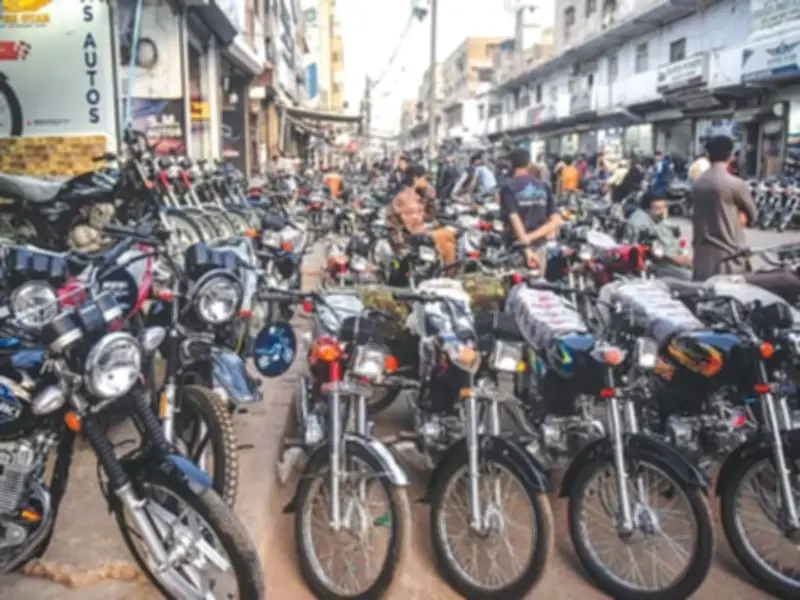
The government's decision to reduce the completely built-up unit (CBU) tariff on two-wheelers while maintaining the same tariff for completely knocked-down (CKD) units and parts may prove counter-productive for the auto industry in the absence of a structured, time-bound roadmap, say industry stakeholders.
New Tariff Structure Halves Differential
According to the new tariff applicable from July 1, 2026, the effective tariff differential between CBU imports and CKD assembly has been halved, from 35 percentage points (CBU 50% vs CKD 15%) to just 15 percentage points (CBU 30% vs CKD 15%). A structurally anomalous situation has emerged, as the tariff on a fully imported CBU motorcycle (30%) is now lower than the tariff applicable to locally manufactured/localised parts (46%).
"This delta has historically been the primary economic incentive for OEMs (original equipment manufacturers) to invest in local assembly and sourcing. At 15 points, the residual margin is insufficient to offset the operational cost of maintaining a local manufacturing footprint, particularly for newer or lower-volume models," said Jameel Asghar, an automotive industry veteran.

Inversion of Cascading Tariff Principle
He reasoned that this situation directly inverts the cascading tariff principle, which requires that duties increase progressively from raw materials to components to semi-finished goods to finished goods. "This creates a perverse incentive whereby importing a complete motorcycle is more cost-effective than assembling one in Pakistan," said Asghar, adding that abrupt structural changes of this nature – without a phase-down roadmap or compensatory measures – introduce regulatory unpredictability that will materially impair future investment decisions and may trigger capacity rationalisation.
Industrial Policy Tool at Risk
Explaining the case for restoring the "Cascading Delta", he said that the cascading tariff structure is not a revenue instrument; it is an industrial policy tool, and its purpose is to make local value addition economically rational at each stage of the supply chain. "Removing it mid-cycle contradicts the government's own stated objectives under the Automotive Development Policy and broader 'Make-in-Pakistan' initiatives," he added.
Impact on Employment and Localisation
It is pertinent to note that Pakistan's two-wheeler sector supports more than 500,000 direct and indirect jobs across OEMs, tier-1 and tier-2 vendors, and retail/after-sales networks. This localisation depth has been achieved over decades, with local content exceeding 85-90% in established models, and is directly contingent on the tariff advantage that incentivises OEMs to source domestically.