Moody's Ratings has affirmed the United Arab Emirates' long-term sovereign rating at Aa2 with a stable outlook, acknowledging the country's strong financial buffers, low federal debt, and diversified economy even as trade disruptions through the Strait of Hormuz pose challenges.
Rating Details
The agency also maintained the UAE's foreign-currency senior unsecured debt rating at Aa2 and its medium-term note program rating at Aa2. The local- and foreign-currency country ceilings remain at Aaa.
Economic Contraction Forecast
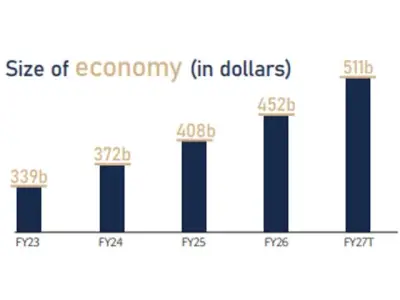
Moody's expects real GDP to contract by around 7 percent in 2026, driven by a 23 percent decline in hydrocarbon production and a 4 percent contraction in the non-hydrocarbon sector due to trade disruption and weakened confidence.

Higher oil prices, forecast to average between $90 and $110 per barrel in 2026, are expected to partially offset lower export volumes. The agency projects economic growth will rebound to 13 percent in 2027 as trade flows resume and non-hydrocarbon activity recovers.
Fiscal Strength and Support
The federal government recorded an estimated budget surplus equivalent to 0.8 percent of GDP in 2025, with federal debt expected to remain at about 3 to 4 percent of GDP. Moody's assessment assumes that Abu Dhabi would provide full financial support to the federal government if needed. Abu Dhabi's government financial assets exceeded 300 percent of the emirate's GDP at the end of 2025.
Geopolitical Context
The affirmation comes as Gulf economies navigate heightened geopolitical uncertainty from shipping route disruptions and energy market volatility. Moody's said the UAE's high per-capita income, effective policymaking, and progress in developing non-hydrocarbon industries strengthen its capacity to absorb shocks.
The UAE can bypass the Strait of Hormuz for some oil exports through the Habshan-Fujairah pipeline. Tourism, real estate, logistics, transport, and foreign investment are expected to face pressure from weaker confidence and interrupted connectivity.
Regional Comparisons
Across the Gulf, Moody's actions highlight different resilience levels. Qatar retained an Aa2 rating with stable outlook, while Saudi Arabia was affirmed at Aa3 with stable outlook, partly due to its ability to route oil through the East-West pipeline and Red Sea terminals. Kuwait kept its A1 stable rating, while Bahrain's weaker B2 rating carries a negative outlook.
Potential Rating Drivers
Moody's indicated that an escalation damaging strategic infrastructure could place downward pressure on the rating. Improved transparency, reduced geopolitical risks, and greater resilience to the global energy transition could support an upgrade.