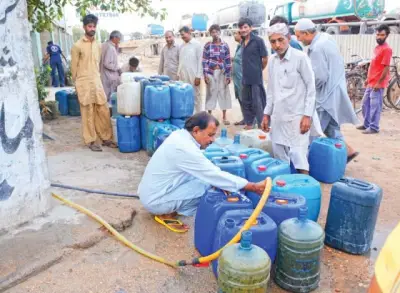
The Islamabad Chamber of Commerce and Industry has issued a stark warning about Pakistan's escalating water crisis, declaring it a critical threat to national security that demands immediate action.
From Water-Stressed to Water-Scarce Nation
ICCI President Sardar Tahir Mehmood revealed in a statement issued on Friday that Pakistan is rapidly transitioning from a water-stressed to a water-scarce country. This alarming shift comes as the nation marks Pakistan Water Week 2025 with growing concerns about the country's water future.
The business leader presented disturbing statistics showing that Pakistan's per capita water availability has plummeted to approximately 900 cubic meters. This figure falls significantly below the internationally recognized water scarcity threshold of 1,000 cubic meters, placing the country in a precarious position.

Multiple Factors Aggravating Water Crisis
Several interconnected factors are driving Pakistan toward a water catastrophe. Rapid population growth, unchecked urbanization, and inefficient agricultural water use have collectively placed unprecedented strain on the nation's fragile water systems.
Climate change is exacerbating the situation through unpredictable rainfall patterns, accelerated glacier melting, and existing poor water management practices. These elements combine to create a perfect storm that threatens Pakistan's economic stability and food security.
Call for Comprehensive Water Solutions
Sardar Tahir Mehmood emphasized that addressing water scarcity extends beyond environmental concerns. "Water is the lifeline of our economy, from agriculture to industry, and its scarcity threatens the livelihoods of millions," he stated.
The ICCI president outlined essential measures needed to combat the crisis:
- Developing an integrated water governance framework
- Improving water storage capacity nationwide
- Implementing efficient irrigation systems
- Promoting modern agricultural techniques
- Encouraging wastewater recycling and rainwater harvesting
He stressed the importance of cross-sector collaboration involving government institutions, scientific communities, markets, and local communities. The chamber has committed to supporting all stakeholders in developing sustainable and innovative water management solutions.
Mehmood called for widespread public awareness campaigns, increased private sector engagement, and science-driven policymaking to transform water conservation into a national movement. He urged immediate action to secure Pakistan's water future before the situation becomes irreversible.