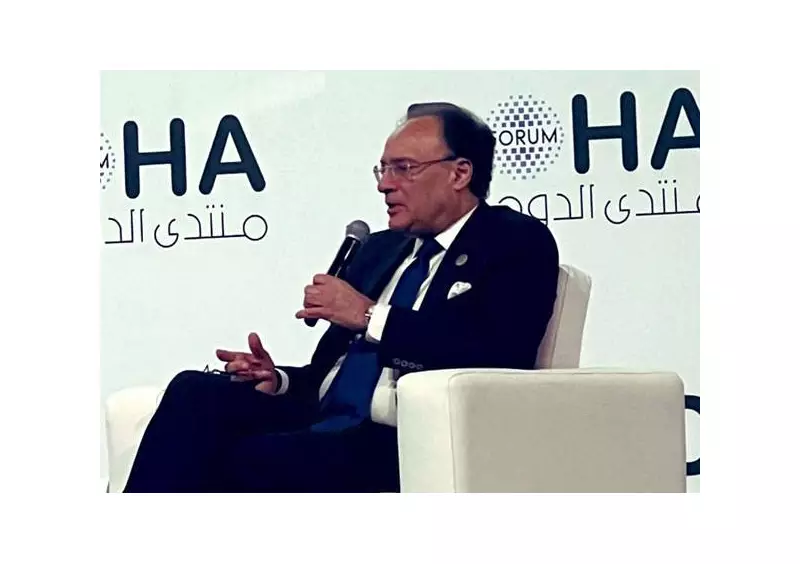
Pakistan's Finance Minister, Senator Muhammad Aurangzeb, has presented a confident assessment of the nation's economic trajectory, highlighting hard-won macroeconomic stability and a strategic pivot towards future growth sectors. The minister shared these insights as a distinguished speaker at the 23rd Doha Forum in Qatar.
Navigating Global Trade and Securing Key Reforms
Participating in a high-level panel titled “Global Trade Tensions: Economic Impact and Policy Responses in MENA,” Senator Aurangzeb detailed Pakistan's proactive approach to a shifting international landscape. He revealed that constructive engagement with the United States resulted in a favorable 19% tariff on crucial textile exports, mitigating potential trade pressures.
The minister emphasized that these global dynamics are accelerating Pakistan's economic diversification. A standout success is the IT services export sector, which is projected to reach nearly USD 4 billion this year. Furthermore, Pakistan is actively expanding its trade geography, deepening ties with Gulf nations and Central Asian republics like Azerbaijan, Turkmenistan, and Kazakhstan.

On fiscal health, Aurangzeb reported that Pakistan has rebuilt its buffers, achieving a primary fiscal surplus and a current account surplus. This resilience is significantly bolstered by strong remittance inflows of USD 18–20 billion annually from the MENA and GCC region.
Climate Risks and the Path from Stabilization to Growth
While acknowledging geopolitical uncertainties, the Finance Minister identified climate change and demographic pressures as more pressing existential risks. He cited severe flooding that alone reduced Pakistan's GDP growth by at least 0.5% this year, underscoring the urgent need for climate financing and investment in resilient infrastructure.
Senator Aurangzeb reiterated Pakistan's commitment to sustained structural reforms in taxation, energy, state-owned enterprises, and private-sector development. This path, he stated, is essential to transition sustainably from the recent period of stabilization to a new phase of robust economic growth.
Strong Partnerships and a Digital Future
The forum also served as a platform to strengthen international partnerships. Qatar's Finance Minister, Ali Bin Ahmed Al Kuwari, praised the deep bilateral ties, describing Pakistan as a “brother country.” He hailed the recently concluded Free Trade Agreement (FTA) between Pakistan and the Gulf Cooperation Council (GCC) as a major milestone set to significantly expand trade.
Al Kuwari expressed keen interest in collaborating with Pakistan on artificial intelligence (AI) strategy and capability development, noting the complementarity between Qatar's vision and Pakistan's growing digital talent pool.
This sentiment was echoed by the IMF's Deputy Managing Director, Bo Li, who commended Pakistan as “a very good example of embarking on the right path of reform and resilience.” He confirmed a USD 1.3 billion Resilience and Sustainability Facility (RSF) to help Pakistan tackle climate vulnerabilities through green budgeting and resilient infrastructure planning.
On digital frontiers, Minister Aurangzeb noted Pakistan's establishment of a crypto council and efforts to build a regulatory framework for virtual assets. He highlighted the massive economic opportunity in upskilling the youth, stating that expertise in blockchain and AI could elevate earning potential from USD 10–12 per hour to USD 60–250 per hour.
The discussions culminated in a bilateral meeting between the Pakistani and Qatari finance ministers, where both sides agreed to establish structured mechanisms to advance cooperation in trade, technology, climate resilience, and investment, signaling a new phase of strategic growth in relations.