In a significant move to bolster domestic industry and attract foreign investment, the Pakistani government held pivotal meetings this week focusing on advanced technology and financial inclusion. Chaired by top officials, these sessions outlined concrete steps towards local manufacturing of lithium-ion batteries and explored the expansion of a major Chinese fintech firm into the Pakistani market.
Push for Local Lithium-Ion Battery Production
A high-level meeting was convened in Islamabad to formulate a dedicated Lithium-Ion Battery Policy. The session was chaired by Special Assistant to the Prime Minister (SAPM) on Industries and Production, Haroon Akhtar Khan, and co-chaired by the Minister of State for Finance and Railways, Bilal Azhar Kiyani.
Key officials including Secretary Industries Saif Anjum and CEO of the Engineering Development Board (EDB) Hamad Mansoor, alongside representatives from public and private sectors, participated in detailed discussions. The core objective is to shift from mere assembly to full-scale local manufacturing of lithium-ion batteries and their components.

SAPM Haroon Akhtar Khan stated that the policy is being developed on the directives of Prime Minister Muhammad Shehbaz Sharif. He highlighted a critical gap in the current ecosystem: "At present, lithium-ion cells and parts are imported, and we only perform local assembly. We must develop complete manufacturing capability within the country."
Policy Incentives and Working Groups
During the meeting, officials from the Ministry of Commerce revealed a notable fiscal incentive: the import of raw materials for these batteries enjoys zero tax, while fully assembled batteries attract a 12 percent levy. This structure is designed to encourage local value addition.
Minister of State Bilal Azhar Kayani emphasized that adopting such modern technology is vital for power conservation, industrial efficiency, and productivity gains. He insisted the new policy must include concrete measures and incentives to make local manufacturing viable.
The Ministry of Science and Technology pledged support for testing, certification, and quality assurance facilities. To fast-track the process, SAPM Khan announced the formation of three working groups, instructing them to consult stakeholders and submit their reports within two weeks. The meeting concluded with a unanimous commitment to reduce import dependence and strengthen Pakistan's industrial and energy storage landscape.
Chinese Fintech Giant Fintopia Eyes Pakistani SME Market
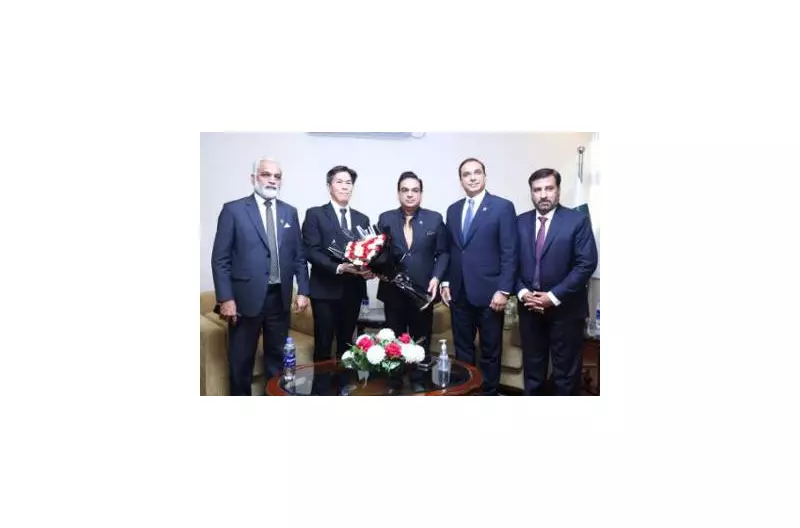
In a separate development aimed at economic digitization, SAPM Haroon Akhtar Khan met with a delegation from the Chinese financial technology company Fintopia. The discussion centered on expanding digital financial services in Pakistan, with a special focus on small and medium enterprises (SMEs).
The delegation informed that Fintopia is a global group using data analytics and artificial intelligence (AI) to provide digital financial services to SMEs. The company is expanding its footprint from China to Southeast Asia, Latin America, and Africa, with a mission to promote financial inclusion.
Haroon Akhtar Khan reiterated that facilitating SMEs is the government's top priority, aligning with the Prime Minister's vision. "Improved access to finance for SMEs will strengthen our economy and create nationwide employment opportunities," he said. He pointed out that AI and digital wallets could make credit access for SMEs easier and more efficient, and Fintopia's solutions could play a transformative role.
The Chinese delegation recognized Pakistan's vast potential for AI-based financial services. Khan further noted that Pakistan's talented youth and farming community could greatly benefit from such modern fintech tools.

Government Pledges Full Support
Responding to Fintopia's request for support in establishing operations, SAPM Khan directed all relevant stakeholders, including the State Bank of Pakistan, SMEDA, and concerned government departments, to facilitate the company. He assured that the Special Investment Facilitation Council (SIFC) would extend full cooperation where needed.
Reaffirming the government's commitment, Khan stated that attracting foreign investment, especially from brotherly country China, and providing them all possible facilities remains a key objective. These parallel initiatives in battery manufacturing and fintech adoption underscore a strategic push towards technological self-reliance and inclusive economic growth.