Federal Minister for Finance and Revenue Muhammad Aurangzeb stated on Saturday that the government's new budget is designed to transition the economy from stabilization to growth. He highlighted tax relief, export incentives, and tariff reforms as key measures to accelerate investment, exports, and economic activity.
Budget Overview
The comments came a day after Pakistan unveiled an Rs18.77 trillion ($67.49 billion) federal budget for fiscal year 2026-27. The budget aims to sustain economic gains achieved under an International Monetary Fund (IMF) program while shifting focus toward growth after years of balance-of-payments pressures and high inflation.
Speaking at a post-budget news conference, Aurangzeb said, “When we were sitting here at this time last year, we had talked about the direction of travel of this economy. At that time, I had said that, God willing, we would move from economic stability toward growth and would continue taking this journey forward.”

Key Measures
Aurangzeb noted that the government has made significant progress in creating an enabling environment for export-led growth. He pointed to tax reforms, cheaper financing, and tariff reductions aimed at improving competitiveness. The advance tax has been abolished, and the super tax rate for businesses with annual income exceeding Rs500 million ($1.8 million) has been reduced from 10 percent to 8 percent. The government is also moving to eliminate the levy for certain exporters.
The minister highlighted tax relief for salaried workers, reductions in transaction taxes to support housing and construction, and measures aimed at boosting agricultural productivity. Agricultural financing has increased by around 15 percent year-on-year to more than Rs2 trillion ($7.1 billion). Customs duties and other import levies on agricultural machinery, including combined harvesters, tractors, and centrifugal pumps, have been reduced to zero.
Economic Targets
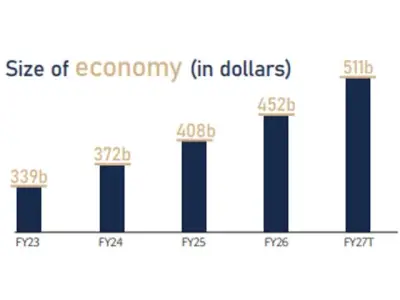
The government has set a GDP growth target of 4 percent and an inflation target of 8.2 percent for the coming fiscal year, after estimating economic growth at 3.7 percent in FY26. Pakistan's economy has stabilized significantly over the past years following a series of IMF-backed reforms that helped rebuild foreign exchange reserves, narrow external imbalances, and bring down inflation from multi-decade highs.