ConocoPhillips Returns to Syria in Landmark Gas Deal
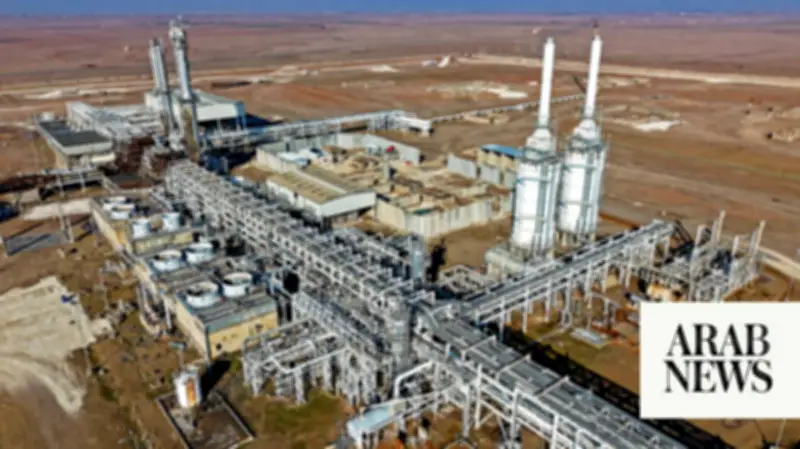
A major gas development project involving US energy giant ConocoPhillips and Novaterra Energy, in partnership with state-owned Syrian Petroleum Co., was signed on June 16, 2026, to develop new gas fields and increase output from existing assets. The deal has been hailed as a strategic breakthrough in economic and political ties between Syria and the US since the fall of Bashar Assad’s regime in late 2024.
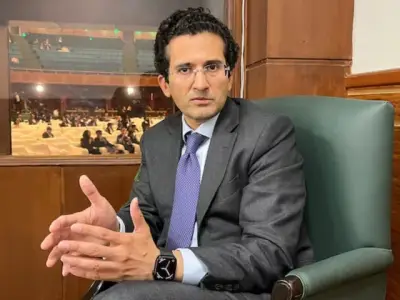
Mohammed Al-Bashir, Syria’s energy minister, said the deal is intended to stabilize the country’s electricity network and support broader economic recovery. At a news conference in Damascus, Ryan Lance, chairman and CEO of ConocoPhillips, said the company’s return to Syria, in partnership with Novaterra, is intended to “grow the gas production in the country.” Alex Macdonald, CEO of Novaterra Energy, said the company would offer “training and providing access to cutting-edge software and technology” as it expands operations in Syria.
Syria's Energy Sector in Decline After 14 Years of War
Before the civil war erupted in 2011, Syria produced about 900 million cubic feet (25 million cubic meters) of gas and an average of 400,000 barrels of oil per day, including roughly 109,000 barrels per day for export, making it the Mediterranean’s only significant crude producer, according to reports. By 2021, oil production had fallen about 80 percent, leaving it at just 50,000 to 80,000 barrels per day, much of it reportedly smuggled, while gas output had nearly halved.

Syria’s estimated natural gas reserves were 240 billion cubic meters (bcm) in 2015, according to BP. Annual gas output at the start of the civil war in 2011 was 8.7 bcm, but by late 2024 it had fallen to 3 bcm. The World Bank estimated that oil and mineral revenues declined from 26 percent of Syria’s gross domestic product in 2012 to 16 percent of total budgeted revenue in 2023.
Deal Could Boost Gas Output by 50% but Won't Solve Crisis
Yousef Qiblawy, CEO of Syrian Petroleum Co., said the deal with ConocoPhillips was intended to increase gas output by 4 million to 5 million cubic meters per day within a year. Benjamin Feve, a senior consultant at Karam Shaar Advisory, told Arab News: “In a single year, that would amount to about 1.5 billion cubic meters, which would increase Syria’s gas production by about 50 percent, which is very positive for future prospects.” However, he added: “In practical terms, it would not solve the serious energy crisis, but it could materially reduce the gap between available gas and what power plants need to operate more regularly.”
Feve emphasized that the agreement’s significance will depend on whether it produces tangible results. “Politically and commercially, I’d say the deal is quite important because ConocoPhillips would be one of the first major US energy companies to re-enter Syria after the collapse of the Assad regime and years of sanctions and conflict,” he said. “That sends a positive signal, especially when combined with other recent moves in the energy sector involving TotalEnergies, QatarEnergy, and the discussions surrounding Block 3 offshore near Latakia.”
Electricity Crisis: Syrians Face Prolonged Blackouts and High Costs
For ordinary Syrians, who have endured prolonged power cuts since at least 2012, even limited improvements could bring relief. But with about 90 percent of the population living below the poverty line, many are unlikely to benefit from lower costs anytime soon. Feve explained: “The main effect would likely be felt first through electricity supply rather than cheaper prices because more gas means existing power plants can run for longer hours, obviously, and thereby reduce reliance on expensive diesel generators.”
Damascus-based graphic designer Salma Saleh told Arab News that Syria’s electricity infrastructure “is not ready today.” She said: “The government cannot equip it; it cannot, for example, buy meters. There is simply no financial capacity, so you need to bring in a private investor — there is no way around it.” At her family home in rural Damascus, the burden of restoring basic services has fallen on residents themselves. “We went and bought the cable ourselves and extended it, because there is no one who will do that for us,” she said.

New Pricing System Increases Bills, Subsidies Lifted
At the start of 2026, many Syrians reported a spike in electricity bills months after the interim government introduced a tiered electricity pricing system that effectively raised consumer costs. State-owned Syria TV reported on Jan. 26 that the new pricing system had increased bills by more than 600 percent for some groups, in some cases pushing charges above household income. Feve noted: “The Syrian government is not interested in subsidizing the price of electricity, gas, or oil. Quite the contrary, we have seen subsidies being lifted.”
He predicted: “The most likely short-term impact would be fewer and shorter blackouts, but not any dramatic fall in prices. We could perhaps see lower overall costs if state electricity becomes available more frequently and people reduce their reliance on private diesel generators, which are obviously more expensive than state electricity.”
For workers like Alexandra Hammoud, an independent English teacher in Tartous who teaches online, a more reliable power grid could improve working conditions. “Electricity is critical for my work because I rely on my mobile phone and laptop, sometimes for long, continuous hours,” she told Arab News. “So, when I have electricity available all the time, I feel reassured that my laptop will not suddenly shut off in the middle of a session or that my phone will not run out of charge and force me to cancel work plans.”