Pakistan's severe air pollution crisis, which ranks the country among the world's most polluted, dominated discussions at a key climate action dialogue held in Lahore this week. Experts unanimously pointed to the critical need for a shift to clean transportation to combat the dangerous smog choking major cities.
The Scale of the Crisis: Alarming Pollution Data
Recent data paints a grim picture of Pakistan's environmental health. According to IQAir, the country holds the dubious position of the third-most polluted nation globally. The average concentration of deadly fine particulate matter, known as PM2.5, stands at a staggering 73.7 micrograms per cubic meter (μg/m³). This figure is many times higher than the safe limits recommended by the World Health Organization.
The situation becomes particularly dire in urban centers during winter. Cities like Lahore regularly experience PM2.5 levels soaring beyond 145 μg/m³, enveloping them in a thick, hazardous smog that poses severe risks to public health, including respiratory and cardiovascular diseases.

Transport Sector: The Primary Culprit
A major study by the Pakistan Institute of Development Economics (PIDE, 2024) pinpointed the source of much of this pollution. The research reveals that the transport sector is responsible for over 43% of national emissions. In densely populated cities, this contribution can skyrocket to an astonishing 80%.
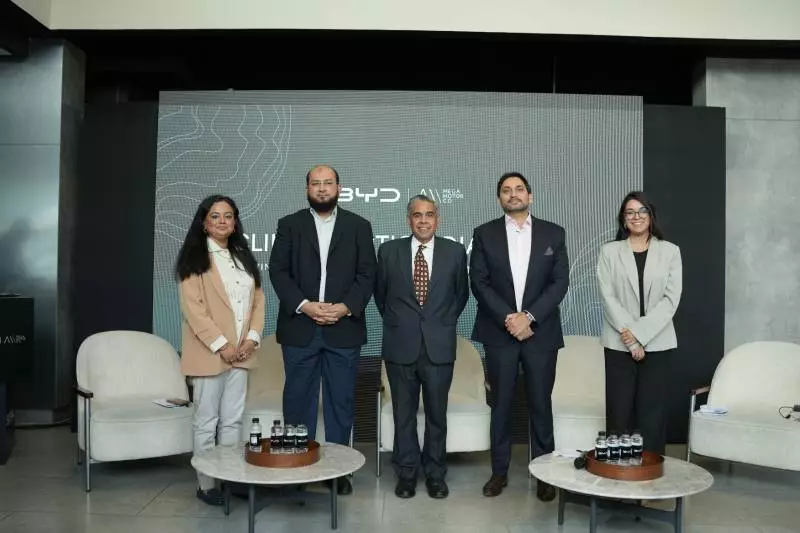
Speaking at the dialogue, energy researcher Dr. Naveed Arshad, climate expert Ali Tauqeer Shaikh, and climate finance specialist Mehak Masood analyzed pathways for Pakistan. They concluded that transitioning to cleaner mobility is one of the most immediate and effective strategies available to cut emissions and clear the air.
Pathways to a Cleaner Future: Policy and Partnership
The forum highlighted several actionable steps to accelerate this transition. A primary focus was on the National Electric Vehicle (NEV) Policy, which requires stronger implementation, clearer regulations, and targeted financial incentives to encourage consumers and manufacturers.
Danish Khaliq, Vice President of Sales and Strategy at BYD–Mega Motor Company (MMC), addressed the gathering. He emphasized that new energy vehicles, which produce zero tailpipe emissions, are a direct solution to urban smog. Khaliq also noted the broader economic benefits, including job creation and industrial growth, that would accompany a wider adoption of clean mobility.
Participants agreed that success hinges on collaboration between the government and private sector. Key steps identified include:
- Strengthening nationwide charging infrastructure.
- Building local technical capacity for maintenance and innovation.
- Learning from successful international models.
The dialogue ended with a strong call for coordinated action. Policymakers, industry leaders, and the public must work together to turn discussion into tangible measures. Tackling Pakistan's air pollution will require sustained policy alignment and collective effort to place sustainable transport at the very heart of urban planning and environmental strategy.