Global oil prices climbed 3 percent on Tuesday after the United States conducted military strikes in Iran, heightening uncertainty over whether a peace deal will be reached to end the conflict and reopen shipping routes through the Strait of Hormuz.
Brent crude rises amid renewed tensions
Brent crude, the global benchmark, rose by $3.04, or 3.2 percent, to $99.18 a barrel by 0820 GMT, following a 7 percent drop in the previous session. Meanwhile, US West Texas Intermediate crude was down $4.07, or 4.2 percent, from Friday's close, at $92.53. There was no settlement on Monday due to the US Memorial Day holiday.
US Secretary of State Marco Rubio stated on Tuesday that negotiating a deal with Iran could "take a few days," dampening hopes for an immediate resolution. This came a day after US forces carried out what Washington described as defensive strikes in southern Iran.

Impact on oil supply and Strait of Hormuz
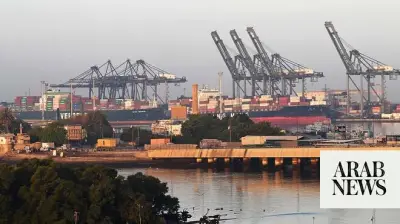
Iran has effectively halted nearly all non-Iranian shipping through the Strait of Hormuz since the war began, disrupting about a fifth of global oil and liquefied natural gas flows. The strait is a critical chokepoint for global energy supplies.
"We are still waiting for more details on a potential deal," said Giovanni Staunovo at UBS. "Meanwhile, we see renewed tensions in the Middle East, while flows through the Strait remain restricted."
Ole Hansen at Saxo Bank noted that while differences between parties have narrowed, any eventual peace deal would likely lead only to a gradual reopening. "The current tight supply outlook could take months to normalize," he added.
Talks in Doha and potential agreement
The strikes occurred as Iran's top negotiator and foreign minister were in Doha for talks with Qatar's prime minister on a potential deal with the US to end the three-month-old war. Both Washington and Tehran reported progress on a memorandum of understanding that would halt the war and give negotiators 60 days to reach a final agreement.
According to a Nikkei report citing a Middle East diplomatic source, Iran would clear mines from the Strait of Hormuz within a 30-day window under the agreement. After that, vessels from all countries could navigate freely, and Tehran would stop collecting transit fees.
Ship-tracking data showed that three LNG tankers recently passed through the strait, heading to Pakistan, China, and India, along with a supertanker carrying Iraqi crude to China that had been stranded for nearly three months.
Uncertainty remains over deal durability
US President Donald Trump reiterated his demand that Iran hand over its enriched uranium for destruction. Tony Sycamore, a market analyst at IG, commented: "It's a sharp reminder that the deal could still collapse at the 11th hour, much like the five previous attempts before it."