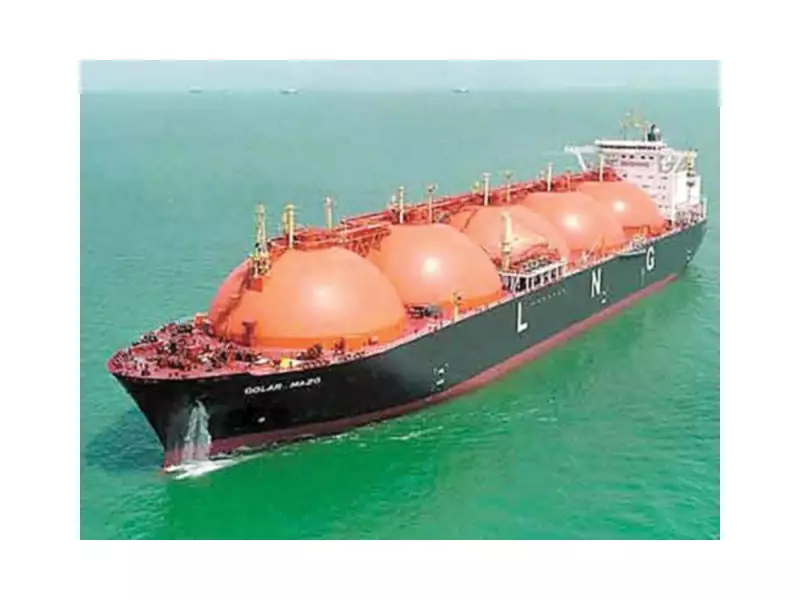
Russia has officially postponed its ambitious target to produce 100 million tonnes of liquefied natural gas (LNG) annually, with the delay expected to last for several years. The country's Deputy Prime Minister, Alexander Novak, attributed this significant setback directly to the impact of Western sanctions imposed on its energy industry.
Sanctions Derail Long-Term Energy Strategy
In an interview with the Rossiya-24 state television channel on Thursday, Novak confirmed the delay. "Our goal was to reach 100 million tonnes. It is clear that, due to sanctions-related restrictions, this will now be pushed back by several years," he stated. This admission marks a major recalibration for Russia's energy exports, which have been heavily targeted since the conflict in Ukraine began.
The country's long-term vision, which aimed to capture a fifth of the global LNG market by 2030-2035, is now under serious threat. Currently, Russia holds only about 8% of the market. A recently updated government strategy now sets a more modest goal of producing between 90 and 105 million tonnes by 2030, and 110 to 130 million tonnes by 2036.

Key Projects Face Major Hurdles
The sanctions have created severe obstacles for critical projects central to Russia's LNG expansion. The flagship Arctic LNG 2 plant, which began production in December 2023, has been particularly hampered. It managed to deliver its first cargo to end-buyers in China only in August of this year, highlighting the logistical and financial challenges posed by the restrictions.
Furthermore, the future Murmansk LNG project, slated to become Russia's largest LNG plant with a planned annual output of 20.4 million tonnes, is also experiencing delays. These setbacks collectively undermine Russia's capacity to significantly ramp up its LNG output in the near term.
Production Figures and Competitive Pressure
Despite the challenges, Russia's LNG production did see a 5.4% increase in 2024, reaching 34.7 million tonnes. However, this figure fell short of the expected 35.2 million tonnes. In a separate but related sector, Novak provided an update on oil and gas condensate, forecasting that production in 2024 will remain broadly unchanged from the previous year at around 516 million tonnes, or approximately 10.32 million barrels per day. This outlook is an improvement over President Vladimir Putin's October prediction of a 1% decline.
The global landscape is becoming increasingly difficult for Russian energy exports. The European Union has finalized plans to ban Russian LNG imports starting January 1, 2027. At the same time, Russia faces fierce competition from other major players. The United States is aggressively expanding its LNG sales in Europe, while Qatar continues to dominate the Asian market, putting additional pressure on Russia's strategic ambitions.
The combination of direct sanctions on projects, looming import bans from a key market, and intense global competition presents a multi-faceted challenge to Russia's energy sector, forcing a reassessment of its timeline and goals for becoming a dominant LNG supplier.