The year 2025 has been officially recorded as one of the most turbulent and challenging periods in the recent history of Pakistan Railways. Internal data released by the department paints a grim picture of systemic failures, marked by frequent derailments, deadly accidents, acts of sabotage, and persistent delays that crippled both passenger and freight services nationwide.
A Year of Constant Crisis: The Alarming Statistics
According to the official figures covering January 1 to December 20, 2025, the national rail operator reported a staggering 95 separate incidents involving its passenger and goods trains. The human cost of this crisis was severe, resulting in the deaths of more than a dozen passengers and injuries to hundreds of travelers and railway staff. The physical damage was equally significant, with locomotives, passenger coaches, and critical track infrastructure suffering extensive harm.
While surface-level improvements were noted at several railway stations and waiting areas, the core operational network continued to deteriorate. This disconnect between cosmetic upgrades and fundamental infrastructure flaws highlighted the deep-rooted problems plaguing the system.

Derailments, Collisions, and Targeted Sabotage
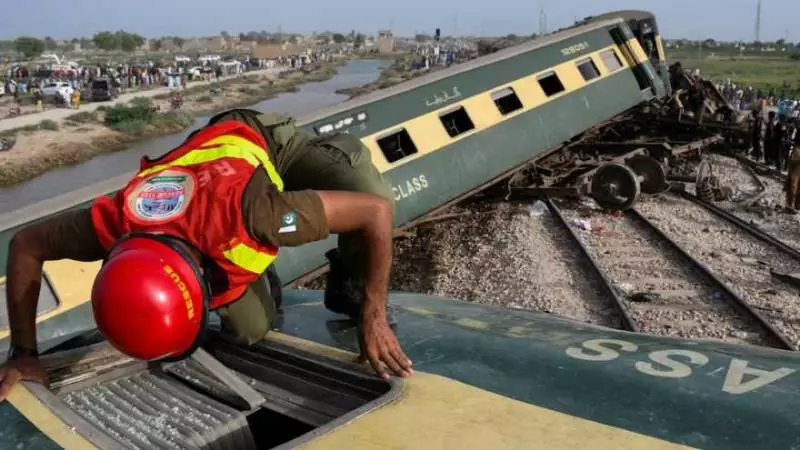
Derailments were the predominant disaster throughout the year. The data shows 46 incidents involving passenger trains and 43 linked to freight services. Several major accidents captured national attention.
On August 1, the Islamabad Express derailed between Lahore and Rawalpindi after a rail broke, causing six coaches to leave the tracks and injuring 30 people. Just weeks later, on August 17, the Awam Express met a similar fate near Lodhran, with six coaches affected. Another significant derailment occurred on May 21 when the Shalimar Express collided with a brick-laden trolley at an unmanned crossing near Sianwala Dar-ul-Ehsan, resulting in all 15 coaches derailing.
Freight operations were not spared, with a major disruption occurring on August 29 near Paddidan after nine wagons derailed. Collisions, especially at level crossings, remained a critical safety failure. A tragic incident on September 11 near Renala Khurd saw a freight locomotive collide with another goods train, killing an assistant driver and injuring a crew member.
Railway infrastructure in Balochistan's Quetta division faced repeated and targeted attacks. The Jaffar Express and its tracks were sabotaged eight times during the year. The most destructive attacks, using explosives near Jacobabad on March 11 and June 18, derailed five coaches of the Jaffar Express and caused major service disruptions.
Chronic Delays and the Modernization Gap
Beyond the dramatic accidents, the daily reality for passengers was one of frustration due to chronic delays. Trains regularly departed hours late from major stations like Lahore, plagued by network congestion, infrastructure faults, and the ripple effects of accidents. The department also recorded at least one incident of a train catching fire, adding to the litany of safety concerns.
The year 2025 underscored a stark contrast: continued investment in station aesthetics versus critically limited large-scale modernization. Upgrades to the aging track network, obsolete signaling systems, and the rolling stock fleet remained insufficient, leaving the fundamental challenges unaddressed.
The annual report serves as a sobering assessment, confirming that despite visible efforts at improvement, Pakistan Railways struggled with a foundational crisis of safety, reliability, and security throughout 2025.