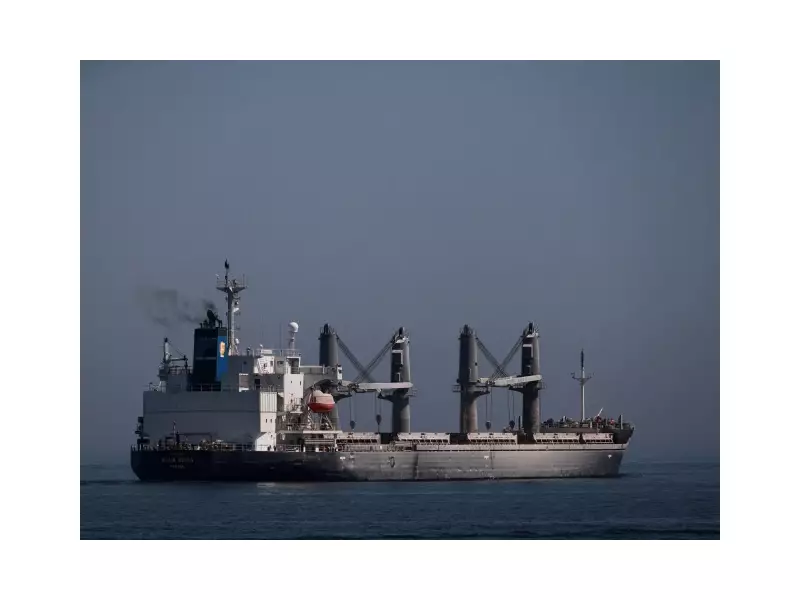
The cost of transporting goods across the Black Sea witnessed a sharp increase on Monday, driven by heightened security fears following a Ukrainian drone assault on two commercial tankers. Industry insiders confirmed that the attacks have led underwriters to raise war risk insurance premiums, directly impacting the vital flow of grain and oil from the region.
Details of the Maritime Attack
According to an official from Ukraine's Security Service, two tankers, which were under Western sanctions, were targeted by naval drones. The vessels were empty and en route to Novorossiysk, a major Russian oil export terminal on the Black Sea coast. This incident marks a significant escalation, as naval analyst Andrii Ryzhenko noted these were the first attacks on non-military, non-Russian flagged ships in international waters of the Black Sea.
Immediate Financial Impact on Shipping
The immediate consequence has been a firming of war risk insurance rates. Sources within shipping and insurance sectors revealed that premiums for voyages to Ukrainian ports over a typical seven-day period rose to 0.5% of a ship's value, up from 0.4% a week ago. For calls at Russian Black Sea ports, which inherently carry higher risk, rates were quoted between 0.65% and 0.8%, compared to around 0.6% last week.

Munro Anderson, head of operations at marine war risk specialist Vessel Protect, explained that Ukraine's campaign to restrict Russian oil revenue is shaping market perceptions. "Rates have firmed in line with that view. For Russian port calls, underwriters are pricing in a broader range of possible strike locations and a higher likelihood of repetition," he stated. He added that increased Ukrainian activity raises the probability of Russian retaliation, creating a more uniform risk across the region.
Broader Regional and Political Repercussions
The attacks have drawn international concern. Turkish President Tayyip Erdogan declared on Monday that assaults on commercial ships in the Black Sea are unacceptable, issuing a warning to all involved parties. The Black Sea is a crucial maritime corridor shared by Bulgaria, Georgia, Romania, Turkey, Russia, and Ukraine.
Analyst Ryzhenko downplayed the immediate threat of Russian retaliation against commercial shipping bound for Ukraine when in NATO territorial waters (of Turkey, Bulgaria, or Romania), suggesting such a move would be highly provocative. However, he accused Russia of consistently attacking vessels within Ukrainian waters.
This event is part of a wider pattern. Maritime security sources indicate there have been at least seven mysterious explosions on separate tankers that called at Russian ports since December 2024, including in the Mediterranean, with Ukraine suspected of involvement.
The escalating maritime conflict in the Black Sea now directly threatens global supply chains, pushing up costs for essential commodities and introducing new volatility into already strained energy and grain markets.