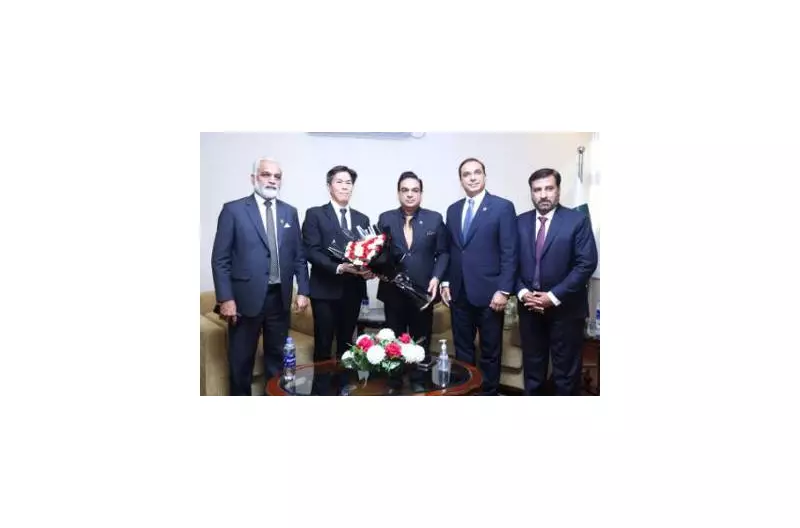
The Ambassador of Thailand to Pakistan, H.E. Chakkrid Krachaiwong, has made a compelling call for the early conclusion of the long-pending Free Trade Agreement (FTA) between Pakistan and Thailand. He urged the Islamabad Chamber of Commerce and Industry (ICCI) to play an active role in advocating for its swift finalization to unlock new economic opportunities.
A Diplomatic Push for Stronger Economic Ties
During a significant meeting with the leadership of the ICCI, Ambassador Krachaiwong emphasized the untapped potential in the trade and investment relationship between the two nations. He highlighted that the current bilateral trade volume, which stands at approximately $1.2 billion, does not reflect the true potential. The envoy pointed out that the Pakistan-Thailand Free Trade Agreement (PTFTA), negotiations for which began over a decade ago, is a crucial instrument to bridge this gap.
The Ambassador outlined that the FTA would facilitate smoother market access, reduce tariffs, and create a more predictable business environment. He encouraged Pakistani businesses to look beyond traditional exports and explore sectors where Thailand has expertise, such as automotive parts, agro-processing, and tourism. This, he argued, would create a more balanced and sustainable trade partnership.

The Role of ICCI and Business Community
In his address, Ambassador Krachaiwong specifically tasked the Islamabad Chamber of Commerce and Industry with becoming a vocal proponent for the agreement. He suggested that private sector pressure and advocacy are essential to move the negotiations forward after years of slow progress. The business community's direct input on trade barriers and desired concessions can provide practical guidance to the negotiators.
The leadership of ICCI, including its President, echoed the Ambassador's sentiments. They acknowledged that an FTA with Thailand could serve as a gateway for Pakistani products to enter the larger Association of Southeast Asian Nations (ASEAN) market. They pledged to mobilize their members and collaborate with other trade bodies to lobby the government for prioritizing the PTFTA's conclusion.
Potential Impact and Future Prospects
The early finalization of the Pak-Thai FTA is expected to have a multi-faceted impact. Primarily, it would provide a significant boost to Pakistani exports like textiles, leather goods, surgical instruments, and agricultural products. Conversely, Pakistani consumers and industries could benefit from more affordable imports of Thai electronics, machinery, and processed foods.
Beyond goods, the agreement is also anticipated to enhance cooperation in services, investment, and economic cooperation. Strengthening this economic corridor could lead to joint ventures, technology transfer, and increased tourist flows in both directions. The diplomatic push from the Thai envoy, coupled with active advocacy from Pakistan's private sector, signals a renewed momentum to conclude this important trade deal, potentially reshaping the economic landscape between South and Southeast Asia.