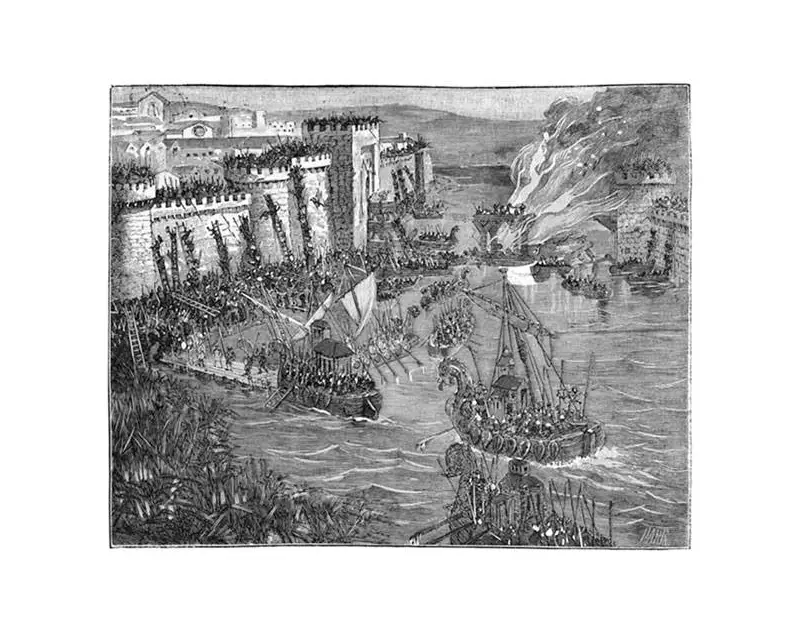
In the turbulent 9th century AD, Scandinavian Vikings emerged as formidable raiders along Western Europe's coastlines, expanding their influence through relentless attacks and wealth acquisition. Their campaigns left an indelible mark on European history, with one particularly significant event standing out as a turning point in medieval politics and warfare.
The Viking Onslaught Begins
During the 9th century, Viking warriors from Scandinavia launched numerous raids across Western Europe's coastal regions. These Norse seafarers sought wealth and territory through systematic plunder, establishing their presence through fear and military prowess. Their advanced shipbuilding techniques and navigational skills allowed them to strike deep into European territories, often catching local defenses unprepared.
The Historic Siege of Paris
The year 845 AD witnessed one of the most dramatic Viking achievements when their forces successfully attacked and besieged Paris, the capital of the powerful Carolingian Empire. This wasn't merely a raid but a full-scale siege that demonstrated Viking strategic capabilities beyond simple plunder. The Viking fleet, reportedly consisting of hundreds of ships, navigated the Seine River to reach the heart of Frankish territory.

Historical records indicate that the Viking forces, led by the legendary chieftain Ragnar, surrounded and overwhelmed Parisian defenses. The siege resulted in the Vikings extracting a massive tribute of 7,000 French livres (approximately 2,570 kilograms of silver and gold) from Charles the Bald, the Frankish king. This payment marked one of the first documented danegelds - payments made to Viking raiders to spare territories from destruction.
Lasting Impact on European History
The Viking raids and particularly the Siege of Paris generated widespread fear throughout Europe, but their significance extended far beyond immediate devastation. These events forced European rulers to develop more sophisticated military responses and fortification systems. The Carolingian Empire, once considered invincible, revealed vulnerabilities that would shape political dynamics for centuries.
The Viking presence ultimately catalyzed significant political and military reforms across medieval Europe. Kingdoms began investing in stronger coastal defenses, improved naval capabilities, and more organized military structures. The raids also stimulated economic changes as trade routes were reconfigured and new defensive alliances formed between previously competing territories.
Perhaps most importantly, the Viking incursions contributed to the fragmentation of the Carolingian Empire and the emergence of feudal systems that would define the High Middle Ages. The need for local defense against Viking threats empowered regional lords and began shifting power away from centralized monarchies, setting the stage for Europe's future political landscape.