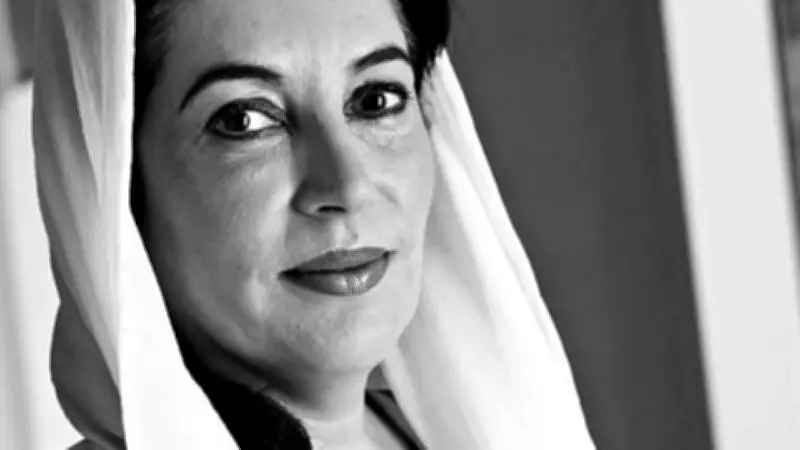
June 21 is the longest day of the year. There is something profoundly fitting about the fact that Shaheed Mohtarma Benazir Bhutto was born on a day when the sun lingers the longest in the sky. In many ways, she remains the summer solstice of Pakistan’s democratic journey, where light, against all odds, refuses to yield to the night. Inimitable as she was, what sets her apart is not only the office she held or the tragedies she endured but also the hope she never relinquished. That hope, rooted in an unwavering faith in Pakistan and its people, found expression both in her politics and in the choices she made as Prime Minister. At a time when public discourse is increasingly consumed by grievance, cynicism, and fear, Benazir Bhutto’s politics of hope is worthy of remembrance as well as revival.
Early Ordeal and Resilience
In 1977, fresh out of Oxford and full of promise, Benazir Bhutto returned to Pakistan to circumstances she could scarcely have imagined. Shortly afterwards, her father’s democratically elected government was overthrown in a military coup, and he was executed following a trial condemned as one of the gravest miscarriages of justice in the country’s history. However, that was not the end of her ordeal. Over the next few years, Benazir and her mother were repeatedly imprisoned, placed under house arrest, and held in solitary confinement in sordid conditions. As recounted by her in Daughter of Destiny, on one occasion, her jailers left a bottle of poison in her cell in an attempt to break her spirit. It failed. Instead, in the depths of that isolation, she sought solace in God’s abiding presence and the boundlessness of His mercy. That faith would, in time, meet an extraordinary fate.
Return and Historic Victory
In 1986, millions defied the dictatorship and lined the roads of Lahore to welcome her return to Pakistan, in what turned out to be one of the largest political rallies the world has witnessed to date. Two years later, the same tide of public affection carried her party to victory in the general election, making her the first woman to lead a Muslim-majority nation.

Development and Social Justice
Power, for Benazir Bhutto, was not an entitlement arising from the sacrifices she and her family had made in blood. Instead, she regarded the exercise of power as a solemn duty towards the people of Pakistan, especially those who had for far too long been consigned to the margins. This philosophy underpinned her government’s hallmark People's Works Programme, which prioritised the development of infrastructure and the provision of basic services such as drinking water, sanitation, education, and healthcare for the poorest segments of society, particularly in the far-flung villages of the country.
Even after narrowly surviving a bombing targeting her homecoming procession, she neither abandoned her campaign nor retreated from the fight against terrorism. During her tenure, 18,000 villages were electrified. One hundred thousand homes were built each year for those in need. Thirty thousand new primary and secondary schools were established across the country, of which approximately seventy per cent were for girls. Instead of allocating resources to a handful of urban centres or privileged groups, she sought to ensure that the benefits of progress were shared as equitably as possible.
Empowerment of Women and Children
Women and children lay at the heart of Benazir Bhutto’s development agenda. The government she led set up the country’s first women’s police station in Islamabad to strengthen women’s access to justice and provide a safer mechanism for reporting crime. But she understood that legal protection alone could never be enough and that women could not be truly emancipated as long as they remained economically deprived and dependent. To that end, she expanded employment opportunities for women and established the First Women Bank to promote financial inclusion and grant them access to capital to start and grow their businesses.

Her internationally acclaimed initiatives in public health were informed by the same belief that investing in women and children was the surest way of investing in the nation’s future. The Lady Health Workers Programme stands out in that it not only created thousands of jobs but also expanded immunisation, family planning, and maternal and child healthcare services by taking them to the doorsteps of families in the most remote and underserved areas of the country. It was also an embodiment of the faith that Bibi placed in the ordinary women of Pakistan to act as agents of change within their communities.
Legacy of Sacrifice and Hope
Taken together, her two terms as Prime Minister amounted to less than five years. The fact that she conceived and implemented these initiatives in such a brief period renders them all the more remarkable, especially given the enormous economic pressures, a hostile establishment and political opposition, and repeated dismissals. Each removal was followed by a wave of legal persecution. Her husband was kept behind bars for eleven and a half years without any conviction, and she herself was forced into exile. Rather than enjoying family holidays, her children grew up visiting their father in prison.
Despite all this, she did not succumb to bitterness and signed the Charter of Democracy in 2006 with her long-time political rival to restore civilian rule in the country. The following year, she returned to Pakistan in the face of grave threats to her life. Even after narrowly surviving a bombing targeting her homecoming procession, she neither abandoned her campaign nor retreated from the fight against terrorism. Because her fight was not for power or personal survival, it was for the survival of Pakistan and the generations who would inherit it, whom she believed deserved a peaceful, progressive, and prosperous future. She took an assassin’s bullet, not asking what her impoverished countrymen owed her for the hardships she had endured. Instead, she gave her life in pursuit of what she believed she owed them. No wonder, then, that millions continue to throng her shrine and that the sun continues to shine brightly upon her life and legacy.