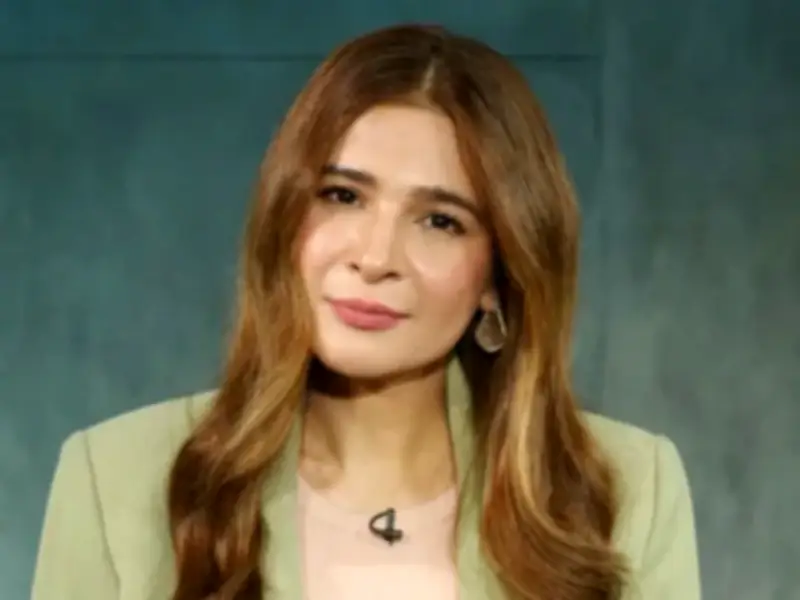
Actor Ayesha Omar has spoken out about the devastating consequences of image-based abuse, revealing that personal vacation photos shared online without her consent threatened her relationships and cost her professional opportunities. In an interview with BBC Global Women, Omar criticized social media companies and authorities for failing to protect women from such violations.
Omar Featured in Chayn Report on Image-Based Abuse
Omar was featured in a report by gender justice organization Chayn, which found that 64 women across Pakistani and diaspora communities in the United Kingdom, Canada, Germany, Malaysia, the United Arab Emirates, and Kuwait had experienced image-based abuse. The actor recalled how private photos from a trip to Thailand with friends were allegedly taken from her laptop and posted online without her knowledge or consent.
“Just two girls on a beach holiday in Thailand and those images were posted everywhere,” Omar said. “It was just me wearing a skirt, a little top, a swimsuit with a sarong and I am just running around the beach or in the water with my female friends.”

Career and Emotional Toll
Omar revealed that the incident severely damaged her career. “It was very damaging for my career, I lost out on a lot of work stuff. Because in my culture, you have to conform to a particular image, even if you’re representing a brand,” she said. The emotional impact was equally profound: “I went through a lot of trauma because of that,” she explained, adding that she became “hypervigilant,” constantly scanning her surroundings for people who might be secretly filming her.
Redefining Image-Based Abuse
Chayn founder Hera Hussein worked closely with Omar to redefine what image-based abuse means. The report challenges the stereotype that such abuse is limited to nude photos. “So many survivors around the world, especially in certain cultures — and this report's about Pakistan — it's the experience of many women and gender minorities in South Asia. The image does not have to be nude for it to be harmful,” Hussein told the BBC. “Sometimes it can be as harmful even if not a single body part is bare. And that's why we want to reframe the conversation around image-based abuse, away from nudity and it being about consent. The lack of consent is what's important, not about how nude an image is.”
Another Case: Mahnoor’s Story
The report also detailed the case of a 32-year-old Pakistani woman, referred to with the alias Mahnoor. Private photos of her wearing Western clothing were circulated online, allegedly by her ex-husband. According to the report, the incident contributed to the breakdown of her current marriage, led to the loss of support from family and friends, and ultimately affected her children. The BBC emphasized that the leaked pictures were ordinary selfies showing Mahnoor lying in bed or displaying her outfits and makeup. “None had ever been shared publicly. She rarely posted photos on social media, mindful of the conservative culture of her community in Pakistan,” the report stated.
Manipulation and False Narratives
The BBC further reported that image-based abuse has evolved beyond the sharing of private photos, with social media users now able to manipulate images and create false narratives through editing and cropping. “Mahnoor says he (her ex-husband) also cropped images of her with a group of friends to make it appear that she was standing with a man, insinuating that they were having an affair,” the report stated.
The cases of Omar and Mahnoor demonstrate how image-based violence continues to affect women across the world, including public figures in Pakistan, often as part of revenge-driven harassment campaigns.