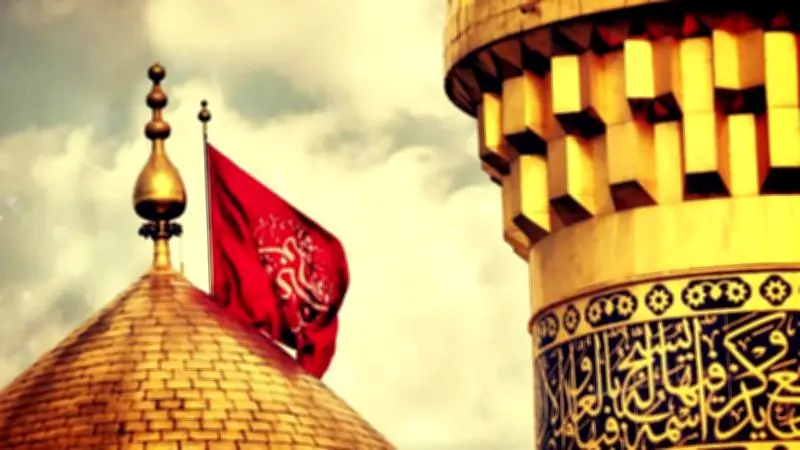
The Essence of True Loyalty
Loyalty is often defined in modern terms as a social contract or a mutual obligation. We view it as a transaction—a reciprocal arrangement where faithfulness is offered in exchange for protection, respect, or reward. Yet, when stripped of material conditions, true loyalty reveals itself as something far deeper. It is a profound spiritual stance. It is the voluntary surrender of the individual ego to a higher truth. In its purest form, loyalty is not merely a moral choice. It is an act of love so absolute that the boundary between the lover and the beloved dissolves entirely.
To understand loyalty from a philosophical perspective, one must look beyond mere obedience. Obedience can be forced by fear or bought with wealth. Genuine loyalty, however, can only be born out of deep spiritual insight. It requires people to recognise an ultimate truth or a divine guide, and to align their entire existence with that reality. In this state of total submission, personal desires, comfort, and even the natural instinct for survival are willingly cast aside. The loyal soul does not ask, “What will I gain?” Instead, it asks, “How can I serve?”
The Birth of a Symbol of Loyalty
Throughout human history, many have claimed the mantle of loyalty, but few have ever reached its absolute peak. To see this virtue manifested perfectly, without a single flaw or moment of hesitation, one must turn towards the burning sands of Karbala. There, the abstract concept of loyalty took physical form in the grand and tragic figure of Hazrat Abul Fazlil Abbas (AS).

The lineage of Hazrat Abbas (AS) was woven with the threads of courage and faith. Born in the year 26 A.H. to the Commander of the Faithful, Imam Ali ibn Abi Talib (AS), and the noble Ummul Banin (SA), his very presence was the fulfilment of a sacred purpose. History records that Imam Ali (AS) had asked his brother Aqil—a master of Arabian genealogy—to find a spouse from a lineage known for unmatched bravery. The intention was clear: to bring forth a valiant son who would stand as a shield for Imam Hussain (AS) in his ultimate hour of trial.
The Moon of Banu Hashim
Ummul Banin (SA) bore a son whose physical beauty and spiritual radiance earned him the title Qamar Bani Hashim—the Moon of Banu Hashim. He grew to be a man of towering stature and immense strength; it is narrated that, when he sat upon a horse, his blessed feet could touch the ground. Yet, it was not his physical power that defined him, but his profound spiritual insight. From his earliest childhood, Hazrat Abbas (AS) viewed his relationship with Imam Hussain (AS) through the lens of deep reverence. Though they were brothers, Hazrat Abbas (AS) never addressed Imam Hussain (AS) simply as a sibling. He addressed him as “Ya Maula” (My Master) or “Ya Imam” (My Leader).
Even as an eight-year-old child during the Battle of Siffeen, when he saw an enemy attempting to strike Imam Hussain (AS) from behind, the young Abbas rushed into the battlefield with a sword, crying out, “How can anyone dare attack my Maula while I am alive?” This was the blueprint of his entire existence. He lived, breathed, and fought for one purpose alone: to protect the standard of Islam carried by his brother.
The Tragedy of Karbala
On 2nd Muharram, 61 A.H., the small caravan of Imam Hussain (AS) was forced to halt at Karbala, surrounded by the vast military might of the Umayyad forces. As the days pressed on, the enemy’s cruelty intensified. By 7th Muharram, the supply of water from the Euphrates River (Furaat) had been completely cut off from the tents of the Prophet's (PBUH) household. For three agonising days, the desert’s scorching heat took its toll. The cries of small children for a single drop of water echoed through the camp. Among them was the beloved young daughter of Imam Hussain (AS), Bibi Sakina, who shared a special bond with her uncle Abbas.

When the day of Ashura arrived, the tragedy reached its peak. Hazrat Abbas (AS), a fierce warrior whose strength was legendary, begged his brother for permission to enter the battlefield and fight. His heart burned to defend the family. Yet, Imam Hussain (AS) looked at him with tearful eyes and said: “Abbas, you are the captain of my army; you are my 'Alamdaar, my flag-bearer. Without you, I have no army.” Bound by absolute obedience, the great warrior accepted his role. But as the cries of the thirsty children grew unbearable, Hazrat Abbas (AS) made one request: permission to take a water skin (mashq) and try to bring water back to the camp. Recognising the desperation of the children, Imam Hussain (AS) granted permission but made a heartbreaking request: “My brother, I request a gift from you: your sword.” Without a moment of hesitation, showing the ultimate sign of submission, Hazrat Abbas (AS) handed over his sword.
The Ultimate Sacrifice
Hazrat Abbas (AS) charged towards the river, scattering the hundreds of enemy soldiers who tried to block his path. His bravery was so fierce that the forces of Yazid retreated in terror. He reached the banks of the Euphrates, and the cool, flowing water was finally within his reach. He leaned down and scooped a handful of water into his palms. At that precise moment, he was faced with a choice that defines the very pinnacle of human loyalty. He could easily drink to regain his strength, deliver the rest to the camp, and fight more effectively. But true loyalty does not compromise. Hazrat Abbas (AS) remembered his Master, Imam Hussain (AS), standing in the scorching heat. He remembered the parched lips of the infant Ali Asghar (AS) and the crying children in the tents. With a heavy heart, he threw the water back into the river.
Filling the water skin, Hazrat Abbas (AS) turned his horse back towards the camp. His only goal was to deliver the water. He did not seek conflict; he sought only to fulfil his promise to the children. Seeing him ride back, the enemy forces realised that they could not defeat him in a fair fight. They hid behind palm trees and launched a cowardly ambush. A sudden blow struck his right arm, severing it from his body. In the face of this excruciating pain, his loyalty did not waver. He took the sword and the standard in his left hand. Moments later, another hidden strike severed his left arm. Even as his lifeblood poured onto the desert sand, his resolve remained unbroken. He refused to drop Imam Hussain’s (AS) flag, pinning it against his chest with his bleeding torso. He took the strap of the water skin between his teeth, desperate to take it to the children. Then came the final, devastating blows. A rain of arrows showered upon him. One arrow pierced his chest, and another struck the water skin, causing the precious water to flow out into the sand. A final arrow struck him directly in the eye, blinding him.
Eternal Symbol of Faithfulness
The lesson of loyalty learned from this martyr is something very few have the resolve to replicate. Perhaps that is why Hazrat Abbas (AS) shall eternally remain a symbol of ultimate faithfulness. A warrior, a soldier who, if given the chance, could have eliminated the enemy but was bound by his commander to desist from raising his sword. What agony he may have gone through cannot be perceived by any mortal.