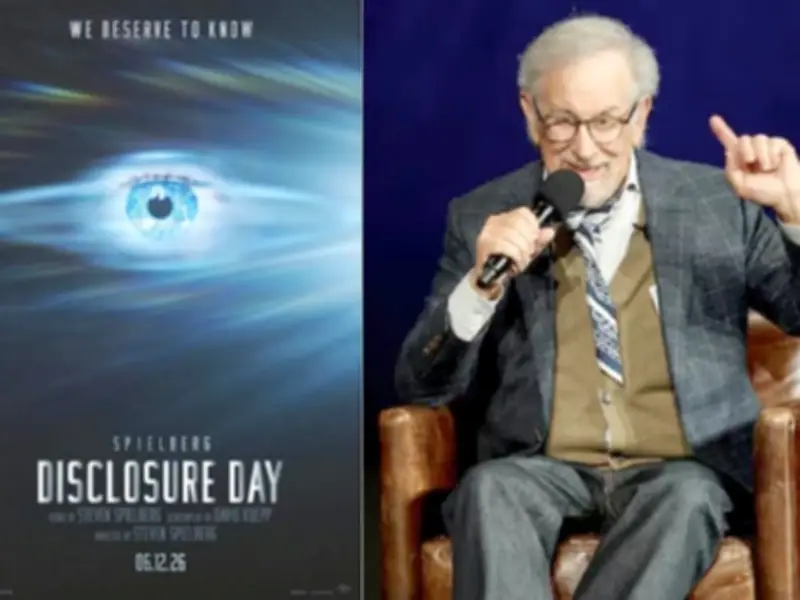
LOS ANGELES: When Steven Spielberg first invited audiences to look skyward in 1977's 'Close Encounters of the Third Kind', the possibility of extraterrestrial life was presented as a mystery wrapped in wonder and imagination. Nearly 50 years later, the celebrated filmmaker is returning to familiar territory with 'Disclosure Day', but this time with a perspective he says is rooted less in speculation and more in conviction. Scheduled for release by Universal Pictures on June 11, 'Disclosure Day' marks Spielberg's latest exploration of one of the defining themes of his career: whether humanity is alone in the universe.
The film arrives at a moment when public fascination with unidentified aerial phenomena has intensified, fueled by congressional hearings, whistleblower claims, and renewed debates over government transparency. For Spielberg, now 79, the subject has evolved from cinematic curiosity into something more profound. While discussing the film, he described 'Close Encounters' as his own speculation about intelligent life beyond Earth. In contrast, he views 'Disclosure Day' as a story that reflects current discoveries and growing evidence that continues to shape public discussion.
The director, whose filmography includes extraterrestrial classics such as 'E.T. the Extra-Terrestrial' and 'War of the Worlds', says he has gradually changed his stance over the years. Once reluctant to make definitive claims without seeing evidence firsthand, Spielberg now believes the accumulation of circumstantial evidence has altered his thinking. That belief forms the foundation of 'Disclosure Day', a thriller centered on hidden truths and long-suppressed secrets.

The film stars Josh O'Connor as a cybersecurity whistleblower who uncovers evidence allegedly documenting a history of alien encounters. Pursued by powerful interests determined to keep the information hidden, he is aided by a disclosure movement leader played by Colman Domingo, while Emily Blunt portrays a meteorologist whose life is transformed by a mysterious awakening. Screenwriter David Koepp, one of Spielberg's most trusted collaborators, recalled the simplicity of the director's original pitch. Spielberg, he said, summed it up as "aliens again, but different this time."
The project emerged during a period of personal reflection following Spielberg's 2022 film 'The Fabelmans'. Widely regarded as his most autobiographical work, the film explored his childhood, family relationships, and the experiences that shaped his journey into filmmaking. Spielberg has openly described making 'The Fabelmans' as a deeply personal exercise that allowed him to confront emotions and memories he had never previously shared so publicly. Completing that chapter left him searching for a new creative challenge, one capable of reigniting the sense of curiosity that has defined much of his career.
The answer came from a subject he had been quietly following for years. Reports of unidentified anomalous phenomena, commonly referred to as UAPs, increasingly captured public attention after a series of high-profile disclosures and official investigations. Spielberg became particularly interested in testimony presented during a 2023 congressional hearing in which former Air Force intelligence officer David Grusch alleged the existence of secret programs investigating unexplained aerial encounters. Although those claims were disputed, they helped inspire the filmmaker.
Spielberg reportedly drafted a 50-page treatment that eventually became the blueprint for 'Disclosure Day'. Koepp later revealed that the director's dedication to the screenplay was unlike anything he had witnessed before, with Spielberg repeatedly reviewing drafts and sending extensive notes throughout the writing process. The director's enthusiasm was equally evident when he addressed theater owners at CinemaCon in Las Vegas earlier this year. There, Spielberg suggested that the film would offer "more truth than fiction" and hinted that audiences should prepare for a thrilling ride filled with questions and revelations. Without revealing key plot details, he told attendees that the story would challenge viewers while encouraging them to think differently about humanity's place in the universe.

Footage screened at the event offered only brief glimpses of the film, including a scene showing an alien figure leaning over a human child. Yet despite its extraterrestrial subject matter, Spielberg insists that the film's most important themes remain firmly grounded on Earth. At its core, he says, 'Disclosure Day' is about empathy – an increasingly scarce commodity in a world shaped by political divisions, social pressures, and entrenched belief systems.
That message also reflects the broader evolution of Spielberg's career. He has often described his body of work as divided between two creative identities. One produced crowd-pleasing adventures such as 'Jaws', 'E.T.', and 'Raiders of the Lost Ark'. The other gravitated toward more serious and emotionally complex stories such as 'Schindler's List', 'Saving Private Ryan', and 'Munich'. 'Disclosure Day' appears to unite those two traditions. It combines the spectacle and sense of wonder associated with Spielberg's blockbuster era with the thoughtful themes and emotional depth that have characterized his later work.