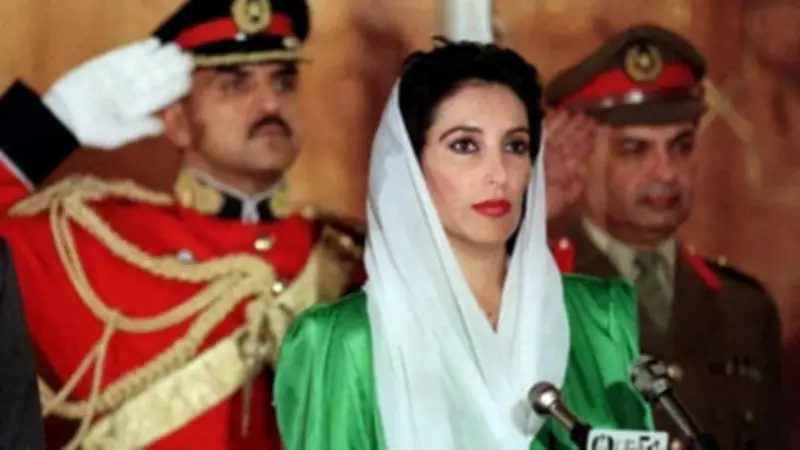
Benazir Bhutto, the first child of Zulfikar Ali Bhutto and Begum Nusrat, was born on 21 June 1952. Her father, noticing her rosy cheeks, nicknamed her Pinky. The name Benazir means 'matchless, unique, and unparalleled' in Persian and Urdu. She grew up to become a brilliant student and a towering political figure, carrying forward the Bhutto dynasty's legacy. She was assassinated on 27 December 2007 by terrorists and suicide bombers, having vowed to rid Pakistan of such scourges.
Pattern of Political Assassinations
The killing of Benazir Bhutto was not an isolated event. It followed a pattern: first, the execution of her father, Zulfikar Ali Bhutto; second, the murder of her brother, Murtaza Bhutto; and third, her own assassination. This chain of events suggests meticulous planning by what the article describes as 'dark forces' within the deep state. These forces, it argues, fear the power of the masses and cannot tolerate strong political parties with grassroots support.
Zulfikar Ali Bhutto's Rise and Legacy
Senior Bhutto, though from a privileged dynasty, championed the cause of the common man. His wit, intellect, and intelligence won him the hearts of the people, propelling him to the pinnacle of political power. Even the Soviet leaders were impressed by him when he was only 33 years old. His sudden disappearance from Pakistan's political landscape after a decade of dominance left a vacuum that seemed impossible to fill.

Benazir Bhutto: The Beacon of Hope
Benazir inherited her father's political mantle and steered the Pakistan Peoples Party, rekindling hope among the masses. She inspired people and revived their revolutionary zeal for change. Adulatory crowds across the country testified to her status as a symbol of the federation. However, intriguers with hidden knives were determined to strike. Their first target was her brother Murtaza, the male heir, who was killed in a police encounter just yards from the Bhutto residence at 70-Clifton, while she was in power.
Return from Exile and Assassination
After Murtaza's murder, Benazir's government was dismissed, forcing her into exile. She later returned through a deal, despite warnings of security threats. On 18 October 2007, she survived a suicide attack that killed 150 of her workers. Undeterred, she continued her campaign across Sindh and Punjab, planning to enter Khyber Pakhtunkhwa after her final address at Liaquat Bagh in Rawalpindi. On 27 December 2007, she stood up through the sunroof of her bulletproof vehicle to address the crowd, against advice. A terrorist triggered a blast, and she slumped back with blood oozing from her neck. The cause of death remains disputed—bullet wound or injury from the sunroof latch.
Investigation and Justice Denied
The crime scene was hosed down within hours, destroying evidence—an act that itself carries a punishment of seven years. The prosecution was handled by ordinary lawyers, despite the party having high-calibre advocates like Barristers Aitzaz Ahsan, Farooq Naek, and Babar Awan. One prosecutor, Zulfikar Shah, was murdered during the case. Another eyewitness, Khalid Shahinshah, who made mysterious gestures during her speech, went into hiding but was later gunned down at Bilawal House in Karachi. No investigations were carried out into these murders, even though the party was in power in Sindh and at the centre. The UN investigation team received no cooperation from local authorities, making it seem like the murder of an ordinary soul, not a world-famous leader. When the court announced its verdict, a former officer of the Pakistan Administrative Service remarked, 'Did you hear the verdict in the case of the abandoned woman?' The author could not hold back his tears.