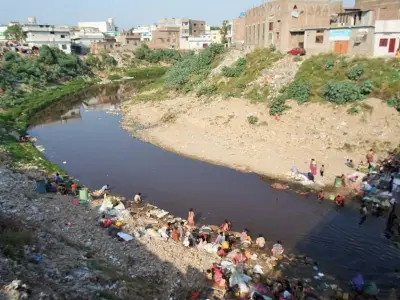
Pakistan's National Disaster Management Authority (NDMA) has issued a stark warning about the 2026 monsoon season, projecting it will bring 22 to 26 per cent more rainfall than current levels, accompanied by accelerated glacial melting that significantly increases flood risks across the country.
Repeated Warnings and Escalating Threats
This alarming projection isn't entirely new. The NDMA had previously shared the same 22 to 26 per cent increase figure during a Public Accounts Committee meeting back in August. However, the urgency has intensified with recent climate assessments.
General Inam Haider, Chairperson of the National Disaster Management Authority, emphasized the growing threat from melting glaciers. "There is a significant risk of flooding from snowmelt," he warned, noting that heat waves will likely trigger increased glacial lake outburst floods.

The scale of the problem is massive. Pakistan's more than 7,000 glaciers are melting at rates that have increased by two to three per cent, creating unprecedented challenges for disaster management authorities.
Devastating Human and Economic Costs
Climate Change Minister Musadik Malik provided sobering statistics about the impact of recent floods. "In the past three to four floods, 4,570 people have lost their lives," he revealed, adding the chilling comparison: "Not even our wars have claimed so many lives."
The human displacement has been equally staggering. An estimated 40 million people have been displaced by the last four major floods, including 20 million children and 20 million mothers. Minister Malik described heartbreaking scenes of families watching homes built over eight years of labor wash away in mere hours.
The economic devastation has crippled development efforts. The 2022 floods alone caused damage exceeding 9 per cent of Pakistan's GDP, with direct losses accounting for 4.5 per cent. "We struggle to grow GDP by three or four per cent, and nine per cent is destroyed by floods," Malik stated, highlighting the futility of development efforts against accelerating climate disasters.
Emergency Preparedness and System Overhaul
In response to these projections, Prime Minister Shehbaz Sharif has approved comprehensive emergency preparedness plans. The strategy addresses both the exceptionally severe 2026 monsoon season and accelerated glacial melt from heat waves.
Over the next 200 days, authorities will repair bridges and flood gates damaged in previous disasters while integrating early warning systems from district level up to the federal capital. General Inam Haider explained that "the region has one of the best early warning systems," with data received from 370 satellites and trained local communities.
However, the system faces criticism. Senators have accused the NDMA of failing to provide adequate warnings for the 2025 monsoon, raising questions about coordination with meteorological departments.
A comprehensive 300-day plan will be presented to the prime minister, including measures to coordinate tourism in disaster-prone areas with emergency preparedness. The plan is expected to feature temporary schools in flood-affected areas and mobile hospitals for disaster zones.
The early warning system will be redesigned to ensure "the initial alert rings at the location where the natural disaster is expected to occur," with the first alarm sounding in the office of the assistant commissioner at district level for faster local response.