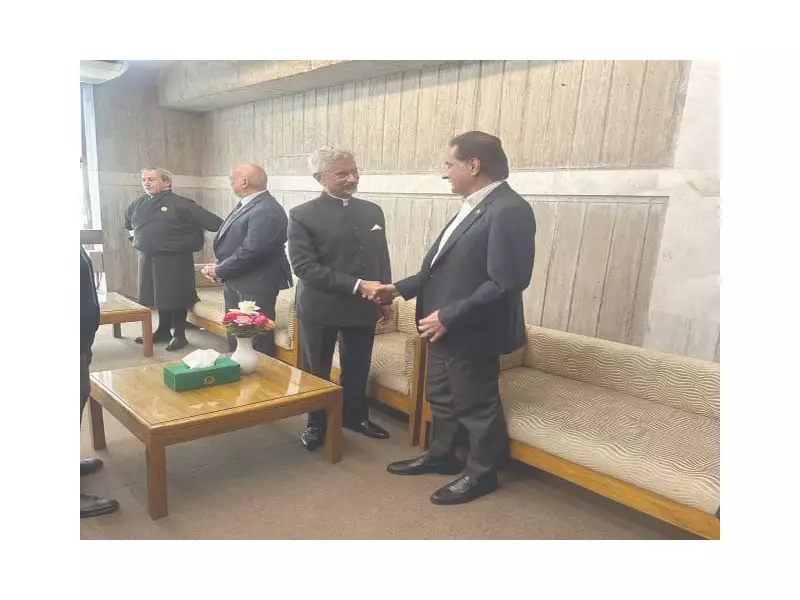
A seemingly simple gesture on the sidelines of an international summit has ignited a flurry of diplomatic speculation. The brief handshake between Pakistani Prime Minister Shehbaz Sharif and Indian Prime Minister Narendra Modi at the Shanghai Cooperation Organisation (SCO) summit in Astana, Kazakhstan, has been interpreted by many as a potential, albeit tiny, crack in the ice of frozen bilateral relations.
The Astana Encounter: More Than Just a Greeting?
The interaction occurred on July 4, 2024, during the SCO leaders' gathering. While official details were sparse, reports confirmed that the two leaders exchanged a handshake and brief pleasantries. This marked their first direct contact since Shehbaz Sharif assumed office in April 2024. The encounter was notably informal and brief, taking place amidst the summit's ceremonial events rather than as a planned, structured meeting.
Analysts were quick to dissect the body language and context. The handshake, described as polite and correct, lacked the warmth that might signify a major breakthrough. However, in the complex and often hostile arena of India-Pakistan diplomacy, even such a minimal public interaction is loaded with meaning. It stands in stark contrast to the years of virtually no high-level contact, where leaders often avoided being seen together in the same frame.

Context of a Prolonged Freeze
To understand the significance of this moment, one must recall the deep chill that has defined relations. The core dispute over Jammu and Kashmir remains unresolved, with tensions flaring periodically. The last major downturn followed India's revocation of Article 370 in August 2019, which Pakistan vehemently condemned. Diplomatic ties were downgraded, trade was suspended, and dialogue channels lay dormant.
Prime Minister Shehbaz Sharif, since taking office, has sent mixed signals. While he has repeatedly called for serious and sincere talks to resolve outstanding issues, he has also firmly stated that peace is impossible without a just settlement of the Kashmir dispute. His government faces significant domestic pressure, with opposition voices quick to criticize any perceived softening towards India without concrete concessions on Kashmir.
Reactions and Interpretations: Cautious Optimism Meets Skepticism
The reaction from both sides has been characteristically measured. Pakistani officials downplayed the event, framing it as a common courtesy extended at a multilateral forum. There was no official readout from Islamabad suggesting it was anything more than a diplomatic formality. Indian media and officials similarly offered a low-key assessment, avoiding any grand pronouncements.
However, foreign policy experts and former diplomats see a sliver of opportunity. Some posit that the handshake could be a tentative first step towards re-establishing a basic level of communication at the highest level. In the fraught landscape of South Asian politics, such non-verbal cues are often the precursors to more substantive, behind-the-scenes engagements. The very act of acknowledging each other's presence publicly breaks a long-standing pattern of avoidance.
Yet, skepticism remains the dominant tone. Many analysts warn against reading too much into a protocol-driven gesture. They argue that without a fundamental shift in positions on core issues—primarily Kashmir and cross-border terrorism—such interactions are merely cosmetic and lack substance. The deep-seated mistrust between the two nuclear-armed neighbors requires far more than a handshake to overcome.
The Road Ahead: SCO and Diplomatic Channels
The SCO itself provides a neutral platform for such incidental contact. As both Pakistan and India are full members, future summits will inevitably place their leaders in the same room. This creates a low-pressure environment for possible side discussions if both parties desire them. The focus now shifts to whether this Astana moment will be followed by any official communication or an agreement to utilize existing diplomatic channels, like the dormant foreign secretary-level talks.

The international community, particularly major powers and regional stakeholders, often encourages dialogue between India and Pakistan for regional stability. A simple handshake, while minor, may be welcomed by these observers as a positive sign in a generally negative trend.
Conclusion: A Symbolic Gesture in Need of Substance
The Dhaka handshake in Astana is a classic diplomatic vignette—rich in symbolism but currently poor in concrete outcomes. It has successfully chipped at the surface of the deep freeze, revealing the possibility of contact where none seemed to exist. For the citizens of both nations yearning for peace and normalized relations, it offers a fleeting glimpse of hope.
However, transforming that hope into reality demands courageous political will, pragmatic diplomacy, and a willingness to address contentious disputes with sincerity. The handshake is not a policy shift, but it could be the first faint signal that the long winter of estrangement might, eventually, see a thaw. Whether this moment is forgotten or remembered as a small beginning depends entirely on what, if anything, follows in the coming months.