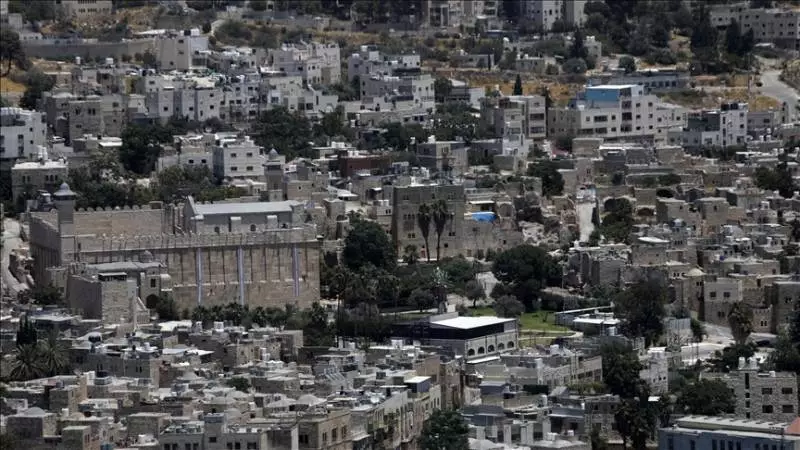
The European Union has issued a firm and urgent call for Israel to immediately halt a significant new settlement project in the occupied West Bank. The bloc's foreign policy chief, Josep Borrell, condemned the planned construction, labeling it a severe obstacle to achieving a lasting peace between Israelis and Palestinians.
EU's Strong Condemnation of Settlement Expansion
In a clear and direct statement, the EU's High Representative for Foreign Affairs, Josep Borrell, voiced the Union's deep concern. He emphasized that the proposed settlement expansion, which involves the construction of thousands of new housing units, directly violates international law. The EU's position is unequivocal: such unilateral actions undermine the viability of a future Palestinian state and jeopardize the prospect of a two-state solution, which remains the cornerstone of international peace efforts.
The EU considers all settlement activity in the occupied territories illegal under international law. This latest project, according to Borrell, is particularly damaging as it would further fragment the West Bank, making the contiguity of a future Palestinian entity increasingly difficult. The statement stressed that settlements are a major obstacle to peace and threaten to make a two-state solution impossible.

Details of the Controversial Project and International Law
The settlement project in question is one of the largest advanced in recent years. While the exact number of units was reiterated from the source, the scale signals a significant escalation in construction activities in Area C of the West Bank, which is under full Israeli administrative and security control according to the Oslo Accords.
The European Union's stance is firmly rooted in the consensus view of the United Nations Security Council and the International Court of Justice. International humanitarian law, specifically the Fourth Geneva Convention, prohibits an occupying power from transferring parts of its own civilian population into the territory it occupies. The EU, along with much of the international community, views all Israeli settlements built since 1967 as illegal. This new project is seen not just as a continuation of policy, but as an aggressive step that could pre-determine the outcome of any future negotiations.
Broader Implications for Regional Peace and Diplomacy
This strong rebuke from Brussels comes at a time of heightened tension in the region. The EU's call is more than a routine diplomatic statement; it is a warning about the long-term consequences of continued settlement expansion. By physically altering the landscape of the West Bank, these projects create facts on the ground that are extremely hard to reverse through negotiation.
The statement serves as a reminder of the EU's commitment to a rules-based international order. It also highlights the growing frustration among even Israel's traditional partners with policies that are perceived as closing the door on peaceful coexistence. The EU urged both parties to refrain from any actions that could increase tensions and to engage in meaningful dialogue. However, the immediate onus was placed squarely on Israel to stop this specific project to prevent further deterioration of the situation.
Ultimately, the EU's message is clear: a sustainable peace can only be built on the foundation of mutual recognition and respect for international law. The continuation of settlement building is portrayed as moving decisively away from that path, risking the future of both peoples for short-term territorial gains.