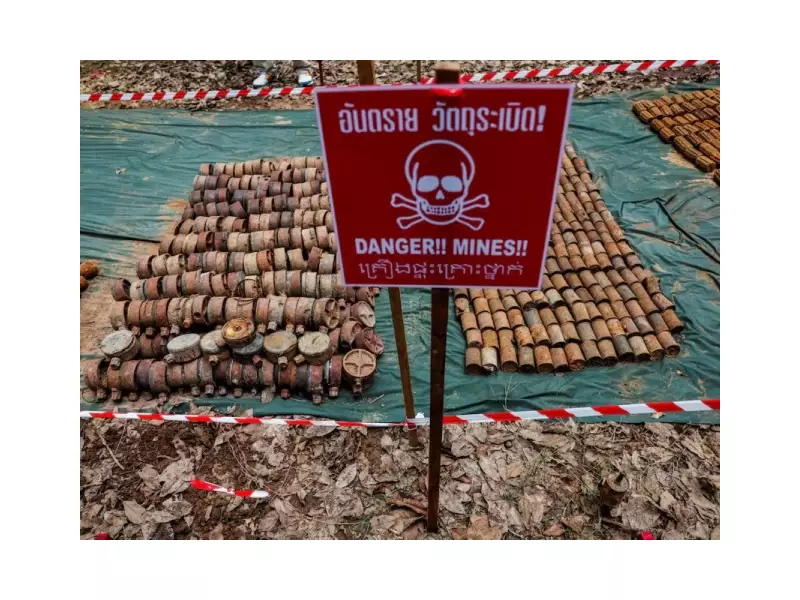
Civilian casualties from landmines and explosive remnants of war have climbed to their highest point in four years, according to a new report from a leading monitoring group. The surge is largely attributed to intensified conflicts in Syria and Myanmar, painting a grim picture of the ongoing human cost of these indiscriminate weapons.
Sharp Rise in Civilian Harm Documented
The International Campaign to Ban Landmines (ICBL), in its Landmine Monitor 2024 report, recorded at least 4,710 casualties from these devices in 2023. This marks a significant increase and represents the highest annual total since 2019. Alarmingly, the vast majority of those killed or maimed were non-combatants.
Civilians accounted for a staggering 85% of all recorded casualties, with children making up half of these civilian victims. This data underscores the horrific and disproportionate impact these weapons have on ordinary people, long after active fighting may have ceased in an area.

Conflict Zones Driving the Crisis
The report identifies specific war zones as the primary drivers of this alarming trend. Syria witnessed the highest number of landmine casualties in the world for the second consecutive year. The widespread and often unrecorded use of improvised mines in the country's protracted conflict continues to claim lives and limbs daily.
Similarly, Myanmar saw a dramatic escalation in casualties, with numbers more than tripling compared to the previous year. The intensifying civil war following the 2021 military coup has led to a massive increase in the use of landmines by various parties, trapping communities in deadly environments.
Other countries contributing significantly to the global toll include Ukraine, Yemen, Somalia, and Ethiopia. The report notes that the use of improvised explosive devices (IEDs) function as mines is a major and growing problem, particularly in non-international armed conflicts.
A Stalled Path to a Mine-Free World
Despite the ongoing crisis, the report highlights some progress in the global effort to eradicate landmines. In 2023, Sri Lanka and Iraq both declared themselves mine-free, completing years of arduous clearance work. Furthermore, the use of anti-personnel mines by state forces remains relatively low, with only Russia and Myanmar confirmed as active users.
However, the path forward is fraught with challenges. The United States announced a new policy allowing the use of landmines on the Korean peninsula, a move criticized by campaigners as a step backward. Funding for victim assistance and mine clearance, while substantial, is often insufficient and unevenly distributed, leaving many survivors without adequate support.
The findings of the Landmine Monitor 2024 serve as a stark reminder that the goal of a world free from the threat of landmines is still distant. As conflicts proliferate and new types of explosive hazards emerge, the international community faces renewed pressure to strengthen the 1997 Mine Ban Treaty and protect civilians from these cruel and persistent weapons.