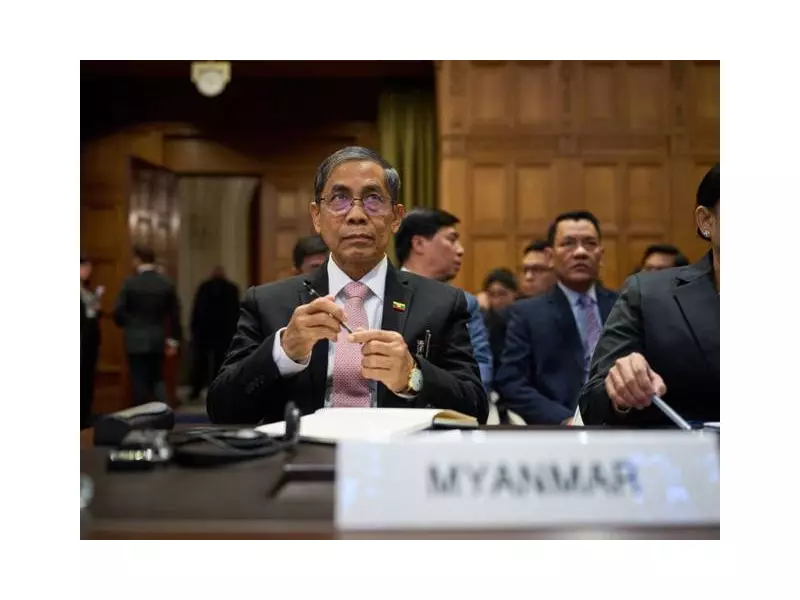
In a significant hearing at the International Court of Justice (ICJ), Myanmar's government has firmly rejected accusations of genocide against its Rohingya Muslim minority, labeling the allegations as "unsubstantiated." The country's defense argued that its military actions in 2017 were legitimate counterterrorism operations.
Myanmar's Defense: Facts Over Allegations
Representing Myanmar, Ko Ko Hlaing, a minister in the president's office, addressed the UN's top court in The Hague on Friday. He stated that the case must be decided on proven facts, not unsubstantiated allegations. He criticized the use of emotional language and a blurry factual picture, insisting on a rigorous presentation of evidence.
The case against Myanmar was initiated by The Gambia, which accuses the Southeast Asian nation of violating the Genocide Convention during a brutal military crackdown in Rakhine State in 2017. The offensive forced over 700,000 Rohingya to flee to neighboring Bangladesh.

The Justification: A Response to Insurgent Attacks
Myanmar has consistently maintained that the operations by its armed forces, the Tatmadaw, were a necessary response to violence. Ko Ko Hlaing told the judges that a series of attacks by Rohingya insurgents, which killed a dozen security personnel, prompted the "clearance operations."
"Myanmar was not obliged to remain idle and allow terrorists to have free reign of northern Rakhine states," Hlaing asserted. He clarified that the term "clearance operations" refers to standard military counterinsurgency or counterterrorism activities.
The Broader Context and International Scrutiny
This legal battle at the ICJ represents a major international effort to hold Myanmar accountable for the alleged atrocities. While the court's proceedings are separate from criminal investigations, its rulings carry significant moral and legal weight. The Gambia's case argues that Myanmar's actions, including mass killings, rape, and arson, were intended to destroy the Rohingya community in part.
For the global Muslim community, particularly in Pakistan, the case is being closely watched as a test of international justice. The outcome could set a precedent for how similar allegations of state-sponsored violence are addressed by world bodies.
The hearings continue as Myanmar seeks to dismiss the case, while The Gambia pushes for a full trial on the merits of the genocide claims.