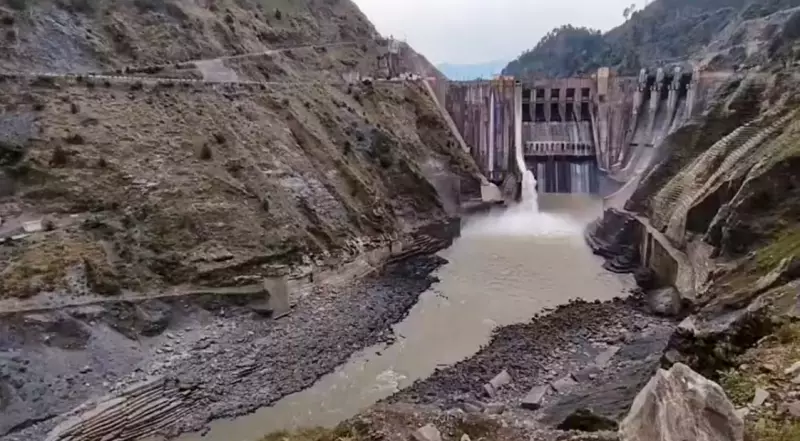
Pakistan has taken its serious concerns regarding India's actions on the Chenab River to the highest global forum, calling for international attention and action. The issue centers on alleged violations of the longstanding Indus Waters Treaty (IWT) by India, which Pakistan claims are threatening its water security and regional stability.
Formal Complaint Lodged at United Nations Security Council
In a significant diplomatic move, Pakistan's Permanent Representative to the United Nations, Ambassador Munir Akram, formally raised the matter during a UN Security Council debate on "Maintenance of International Peace and Security" held on December 17, 2025. The debate focused on the impacts of climate change and environmental issues on global stability.
Ambassador Akram explicitly highlighted that India's unilateral alterations to the flow of the Chenab River constitute a clear breach of the 1960 Indus Waters Treaty. He emphasized that such actions are not merely bilateral concerns but pose a direct threat to international peace and security. By bringing this issue before the Security Council, Pakistan has internationalized the dispute, seeking to hold India accountable on the world stage.

The Core of the Dispute: Treaty Violations and Water Aggression
The heart of Pakistan's complaint lies in specific projects and actions undertaken by India. Islamabad accuses New Delhi of constructing infrastructure and manipulating flows in ways that violate the treaty's provisions. The Indus Waters Treaty, brokered by the World Bank, allocates the waters of the three eastern rivers—the Sutlej, Beas, and Ravi—to India. In return, Pakistan receives the waters of the three western rivers—the Indus, Jhelum, and Chenab—with India permitted limited non-consumptive uses like run-of-the-river hydropower projects.
Pakistan contends that India's recent actions on the Chenab exceed these permitted uses. Changes in the river's flow patterns can have severe consequences downstream in Pakistan, affecting agriculture, drinking water supplies, and power generation. Ambassador Akram framed this as a form of "water aggression," where one state weaponizes shared water resources against a lower riparian neighbor, exacerbating tensions in an already volatile region.
A Call for Global Scrutiny and Upholding International Law
Pakistan's statement at the UN was a direct appeal to the international community. The ambassador urged the United Nations and the Security Council to closely monitor situations where environmental resources, particularly water, are used as tools of coercion or conflict. The argument presented was that allowing such treaty violations to go unchecked sets a dangerous precedent and undermines the entire framework of international water-sharing agreements.
The call for action is clear: global institutions must ensure strict compliance with the Indus Waters Treaty. Pakistan views the treaty as a critical confidence-building measure that has survived decades of political friction. Its erosion, Islamabad argues, risks removing a vital pillar of stability between the two nuclear-armed nations. The move at the UNSC is seen as a strategic effort to apply diplomatic pressure and rally international opinion to safeguard Pakistan's water rights as guaranteed by the treaty.
This development marks an escalation in the long-standing water disputes between the two countries. While mechanisms like the Permanent Indus Commission exist for bilateral resolution, Pakistan's decision to elevate the matter to the UN Security Council indicates a perception that bilateral channels are insufficient to address what it sees as serious, ongoing violations. The world's response to this plea will be closely watched, as it touches upon critical issues of transboundary water management, climate change vulnerability, and regional security.