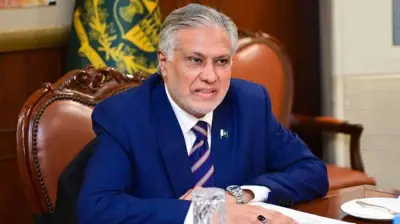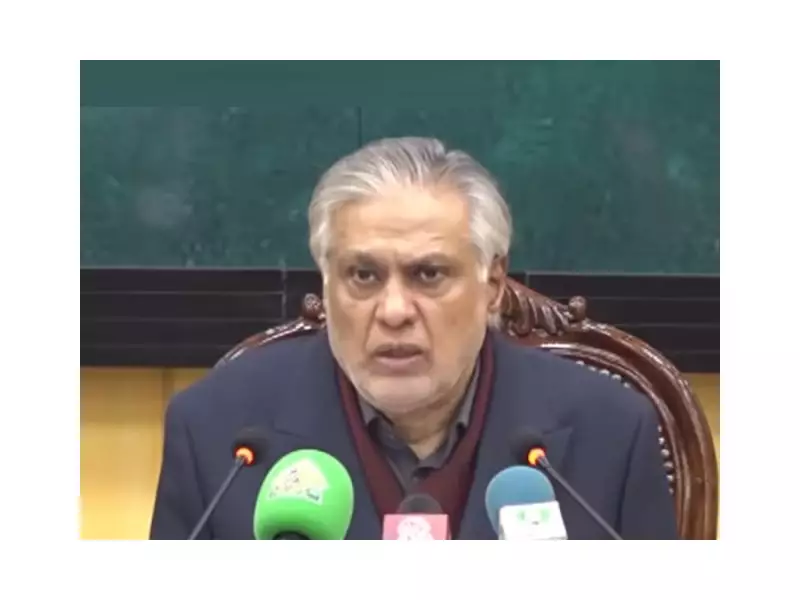
Pakistan has formally declared its readiness to participate in an international peacekeeping force for Gaza, contingent on a crucial condition regarding the Palestinian group Hamas. The announcement was made by the country's Foreign Minister, Senator Ishaq Dar, during a session of the upper house of parliament, the Senate.
Pakistan's Stance on Peacekeeping Mandate
While expressing Pakistan's willingness to contribute troops to a proposed multinational force aimed at stabilizing Gaza, Foreign Minister Dar drew a clear red line. He stated that Pakistan would only join if the force's mandate explicitly excludes the task of disarming Hamas. This condition underscores Pakistan's long-standing diplomatic position, which recognizes Hamas as the legitimate elected representative of the Palestinian people.
"We are prepared to consider the deployment of Pakistani forces in Gaza as part of a UN peacekeeping mission," Dar told the Senate. However, he emphasized that the mandate for such a force must be strictly limited to peacekeeping and should not involve operations against Hamas. This stance aligns with Pakistan's view that the core issue is the Israeli occupation and the pursuit of a two-state solution.

Context of the Proposal and Regional Diplomacy
The discussion about an international force for Gaza has gained momentum amid ongoing ceasefire negotiations and plans for post-war governance. The proposal, often floated by US and Israeli officials, envisions a coalition of Arab and international troops to maintain security in the region following a potential halt in hostilities.
Minister Dar's statement serves as a significant intervention in this global dialogue. It positions Pakistan as a potential player in regional stability efforts while firmly anchoring its participation to the principle of Palestinian self-determination. The foreign minister also reiterated Pakistan's unwavering support for the Palestinian cause and its demand for an immediate and unconditional ceasefire in Gaza.
Implications and the Path Forward
Pakistan's conditional offer presents both a diplomatic opportunity and a challenge. On one hand, it signals Pakistan's commitment to international peace and security under the UN banner. On the other, it sets a precondition that may clash with the objectives of other nations advocating for the force.
The development highlights the complex geopolitical calculations surrounding Gaza's future. Any peacekeeping mission would require a UN Security Council resolution, where negotiations on the precise mandate would be intense. Pakistan's clear terms ensure its position is on the record from the outset.
Analysts suggest this move reinforces Pakistan's role as a vocal advocate for Palestinian rights on the world stage. It also demonstrates a proactive approach to foreign policy, where Pakistan is not just reacting to events but outlining specific terms for its potential involvement in resolving one of the world's most protracted conflicts.