Mehreen Jabbar Highlights Political Barriers to Pakistani Content on Global Platforms
When one of Pakistan’s finest directors, Mehreen Jabbar, says that Pakistani content is missing from global streaming platforms not because it lacks quality but because programming decisions are influenced by politics, people should pay attention. After all, this is someone who has spent decades making films and television dramas, working both in Pakistan and internationally. She understands not only how content is made but also how it is bought, commissioned and distributed. Her assessment confirms what many in Pakistan’s entertainment industry have quietly believed for years.
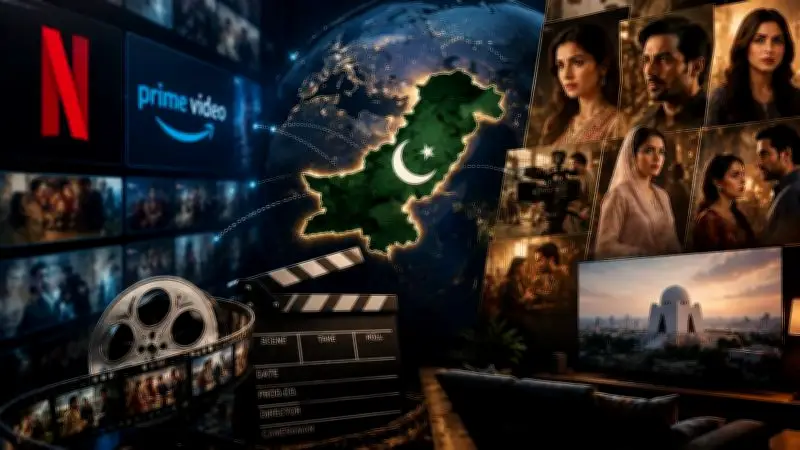
The absence of Pakistani content from platforms such as Netflix and Amazon Prime Video has little to do with quality. It has far more to do with geography, politics and who gets to decide what the world watches. That should concern anyone who believes that streaming platforms are genuine marketplaces of ideas rather than gatekeepers shaped by political realities.
The Irony of Global Streaming Platforms Claiming Diversity
The irony is impossible to miss. These platforms routinely describe themselves as global, diverse and committed to discovering stories from every corner of the world. Yet one country with a thriving television industry, a proven international audience and decades of storytelling excellence remains largely shut out. Why? One fact stands out. The South Asian regional headquarters of both Netflix and Amazon Prime Video are based in India. That does not automatically prove bias, but it does raise an obvious question. Can programming decisions involving Pakistan ever be completely insulated from the political environment in which those decisions are being made? Given the collapse of cultural relations between India and Pakistan over the past decade, that is a legitimate question, not an unreasonable accusation.

Pakistani Dramas: Quality That Surpasses Many Indian Originals
If quality were truly the deciding factor, Pakistani dramas would already have secured a much stronger presence on these platforms. Compare much of what Pakistan produces with a significant portion of the Indian originals currently available on international streaming services. Pakistani dramas frequently offer tighter scripts, stronger dialogue, more convincing performances and stories rooted in human relationships rather than spectacle alone. They also produce memorable music, polished cinematography and emotional depth that audiences continue to respond to. The point is not that Pakistani dramas are better than everything coming out of India. India produces outstanding cinema and television. But it is equally true that a great deal of Pakistani content compares favourably and often surpasses many productions that receive global promotion simply because they happen to come through the right commissioning pipeline.
Massive Global Viewership on YouTube Proves Demand
The numbers make the argument even stronger. Pakistan’s leading entertainment broadcasters, ARY Digital, Geo Entertainment and Hum TV, are not producing content for a tiny domestic audience. They are attracting extraordinary global viewership through YouTube. Individual episodes routinely cross several million views. Entire drama serials often accumulate hundreds of millions of views over the course of a season. The official YouTube channels of these broadcasters have tens of millions of subscribers between them. These are not estimates. They are publicly available figures. Streaming platforms spend billions of dollars trying to identify content with built-in audiences. Pakistani dramas have already demonstrated exactly that. They have loyal viewers across Pakistan, the Gulf, the United Kingdom, Europe, North America and wherever sizeable South Asian communities exist.

Commercial Logic Overlooked Due to Regional Politics
In business terms, this should be an easy decision. Pakistani productions are comparatively inexpensive to acquire, enjoy established fan bases and consistently generate audience engagement. Yet they remain largely absent from the world’s biggest streaming services. It becomes increasingly difficult to believe that this is simply a commercial decision. Instead, Pakistan appears to be paying the price for regional politics over which its writers, actors, producers and directors have absolutely no control. That is unfair to an industry that has continued to thrive despite limited budgets, inconsistent institutional support and almost no access to the global distribution networks available to its competitors.
Pakistani Content Thrives Without Netflix or Amazon
Perhaps what is most frustrating is that Pakistani content has already proved it does not need Netflix or Amazon to find an audience. YouTube has become the industry’s accidental global streaming platform. Millions of viewers from around the world actively seek out Pakistani dramas every day. They watch them with subtitles, recommend them to friends and return for every new episode. Imagine what these productions could achieve if they received the same visibility, promotion and algorithmic support routinely given to content from other markets.
Selective Diversity Undermines Streaming Platforms' Principles
Global streaming platforms often celebrate themselves as champions of diversity. Diversity, however, cannot be selective. It cannot mean embracing every culture except the one that has become politically inconvenient. If politics is indeed shaping commissioning decisions, as Mehreen Jabbar suggests, it represents not merely a missed commercial opportunity but a failure of principle. The greatest success stories in modern streaming have come from countries once considered niche markets. South Korea transformed global television through compelling storytelling. Spain gave the world Money Heist. Turkish dramas found audiences across continents. None succeeded because of geopolitics. They succeeded because audiences recognised quality when they saw it.
Pakistan Deserves the Same Chance as Other Nations
Pakistan deserves the same chance. Its storytellers have done their job. Its actors have done theirs. Its audiences have already delivered hundreds of millions of views without the backing of global streaming giants. The only people yet to recognise that success appear to be those whose job it is to discover great content. If global streaming platforms truly believe that stories should transcend borders, then it is time they proved it. Until then, it is difficult to escape the conclusion that, when it comes to Pakistan, politics continues to matter more than content.