Pakistan has taken a definitive and principled stance regarding potential international involvement in Gaza, drawing a line that demands global attention. The country's leadership has made it clear that any participation in a proposed peacekeeping mission would come with a critical precondition.
Pakistan's Firm Condition on Gaza Force Mandate
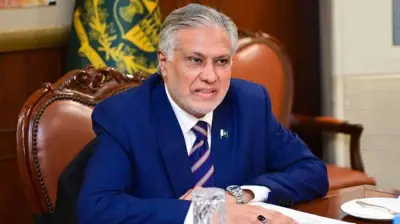
In a recent briefing reviewing the nation's diplomatic engagements, Deputy Prime Minister and Foreign Minister Ishaq Dar reiterated Pakistan's position. He stated unequivocally that Islamabad would consider joining a proposed International Stabilisation Force only if its mandate explicitly excludes the disarming of Hamas. This condition underscores a deep understanding of Gaza's complex reality, which Pakistan argues is not a conventional post-conflict zone where stability can be imposed from the outside.
The Perils of Peace Enforcement vs. Peacekeeping
Pakistan's stance highlights a crucial distinction in international interventions. Peacekeeping operations are built on principles of consent and neutrality from the conflicting parties. In contrast, peace enforcement does not require such consent and carries the significant risk of transforming foreign troops into active participants in a political struggle they may neither control nor fully comprehend.

The issue of disarmament is central to Pakistan's caution. For any group as deeply woven into the political and social fabric of Gaza as Hamas, disarmament by an external force is viewed as a recipe for failure. Such an action would likely trigger immediate resistance and delegitimize the mission from its very inception. Pakistan asserts that the responsibility for disarmament must lie with the Palestinian Authority, or any future representative government that emerges from a genuine, internally-owned political process.
Informed by Experience, Not Indifference
This position is not born of inaction. Pakistan brings substantial weight to this debate through its extensive and globally recognized record in United Nations peacekeeping. Having contributed troops and expertise to missions across continents, Pakistan possesses firsthand knowledge of both the utility and the inherent limits of such international deployments. Its reluctance to be drawn into enforcement operations is a lesson learned from history, not a sign of indifference to the profound suffering of the people in Gaza.
External actors, in Pakistan's view, may assist in maintaining order, but they cannot dictate political outcomes without facing severe, unintended consequences. Without clear and strict limits, even a force composed of nations sympathetic to the Palestinian cause risks being perceived as a partisan entity, thereby undermining its own objectives.
By setting this clear boundary, Pakistan has signaled its willingness to support a genuine peace in Gaza while also defining the limits of its involvement. In the current volatile climate, such clarity is vital. The message from Islamabad is that Gaza does not require another experiment in enforced order. What it truly needs is restraint, a credible political horizon that no foreign force can create, and above all, a foundation for a lasting and just peace.