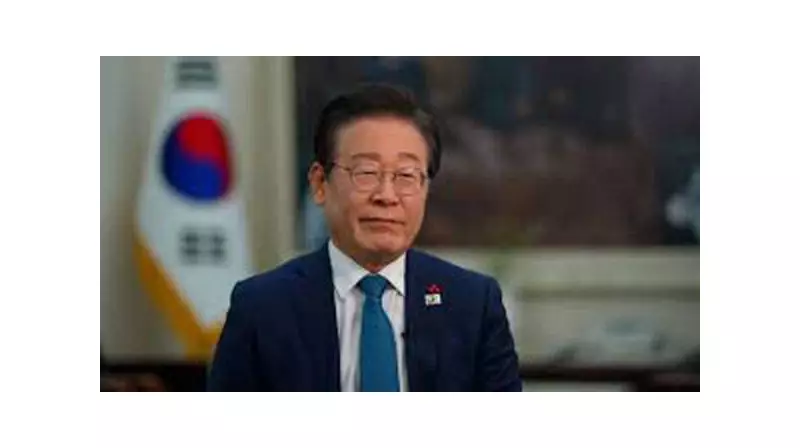
In a significant diplomatic move, South Korean President Lee Jae Myung has announced a major new strategy for engagement with the Middle East. The comprehensive plan was revealed during his official visit to Cairo, where he addressed an audience at the prestigious Cairo University.
The SHINE Initiative: A Framework for the Future
President Lee introduced the "SHINE" initiative, an acronym representing five core principles: Stability, Harmony, Innovation, Network, and Education. He emphasized that this framework will guide South Korea's efforts to strengthen its partnership with the region, which is vital for the nation's energy security and economic interests.
Stability and harmony were highlighted as the foundational elements. President Lee connected these principles directly to peace efforts on the Korean Peninsula. "Our government aims to end the era of hostility and confrontation between the two Koreas and open a new era of peaceful coexistence and shared growth," he stated. His administration plans a phased approach, including expanding inter-Korean exchanges and supporting North Korea's normalization of relations with the US and the international community.

Solidifying Partnerships and Providing Aid
During his trip, President Lee held a summit with Egyptian President Abdel Fattah El-Sisi, who reportedly expressed firm support for the South Korean peace initiative. Lee also pointed to his country's past contributions to regional stability, such as the deployment of peacekeeping forces in Lebanon in 2007.
In a concrete gesture of humanitarian support, President Lee pledged $10 million in aid to the Egyptian Red Crescent. This funding is intended to assist in relief and recovery efforts for the people in the Gaza Strip.
Economic and Cultural Bridges
The innovation component of the SHINE initiative signals a desire to move beyond traditional cooperation. While construction and energy sectors remain important, South Korea is eager to collaborate on future technologies like artificial intelligence and hydrogen.
To deepen economic ties with Egypt, President Lee vowed to push for a Comprehensive Economic Partnership Agreement. This pact would lower trade barriers and create a stronger institutional foundation for business. He poignantly noted that South Korea's own "Miracle of the Han River" was built with support from the Middle East, and it is now time to contribute to a "Miracle of the Nile."
Finally, the plan calls for expanded people-to-people connections. This includes bringing more Egyptian students to South Korea and fostering professional training programs. Cultural exchanges are also on the agenda, with potential collaborations between the Grand Egyptian Museum and the National Museum of Korea.