Syrian-Kurdish Ceasefire Negotiations Collapse Amid Military Buildup
In a significant development for regional stability, negotiations between Syrian President Ahmed al-Sharaa and Mazloum Abdi, the chief of the Kurdish-led Syrian Democratic Forces (SDF), have completely collapsed in Damascus. This breakdown was confirmed by a Kurdish official to AFP, as the Syrian army deployed reinforcements to flashpoint areas in the north, escalating tensions in the conflict-ridden region.
Background of the Failed Talks
The talks were aimed at discussing a ceasefire agreement that included integrating the Kurds' administration into the Syrian state. This agreement had represented a major setback for the Kurds' long-standing ambitions to preserve the de facto autonomy they have exercised in parts of northern Syria for over a decade. The collapse comes after rapid gains by the Syrian army in Kurdish-controlled territory, with President Sharaa refusing to concede on demands for decentralisation, even while pledging to protect minority rights.
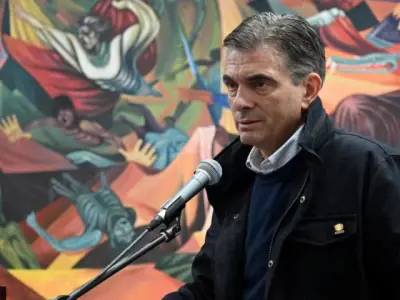
According to Kurdish official Abdel Karim Omar, who spoke to AFP, the negotiations held yesterday in Damascus have failed entirely. He blamed the central government for the breakdown, stating, "Their sole demand is unconditional surrender. A firm and decisive stance from the international community is urgently required." This highlights the deep-seated disagreements over governance and autonomy that have plagued Syrian-Kurdish relations.

Military Movements and Regional Implications
Despite the ceasefire between the two sides, brief clashes erupted on Monday in Raqa city in northern Syria, with an AFP correspondent reporting heavy bombardment. Raqa was once the de facto capital of the Islamic State group in Syria, underscoring the volatile nature of the area. On Tuesday, the AFP correspondent in Raqa observed a large convoy of armoured vehicles and soldiers heading towards Hasakeh, a Kurdish bastion that also hosts a sizeable Arab population, indicating a significant military buildup.
In response, the SDF has called for "young Kurds, men and women" both within and outside Syria to "join the ranks of the resistance." In Hasakeh, an AFP journalist witnessed dozens of civilians, including women and elderly people, carrying arms and manning checkpoints as they heeded this call to defend their territory. This mobilization suggests a potential escalation in hostilities if diplomatic efforts remain stalled.
International Context and Diplomatic Efforts
President Sharaa, who is backed by the United States and Turkey, has consistently refused to entertain ideas of decentralisation or federal rule, insisting that the army must deploy across all of Syria. On Monday, Sharaa discussed the Kurdish question with US President Donald Trump, according to the Syrian presidency. In their phone call, they "emphasised the need to guarantee the Kurdish people's rights and protection within the framework of the Syrian state" and "affirmed the importance of preserving the unity and independence of Syrian territory." They also discussed cooperation on combating the Islamic State jihadist group, highlighting the complex interplay of local and international interests in the region.
The collapse of these talks marks a critical juncture in the Syrian conflict, with implications for peace, security, and the future of Kurdish autonomy. As military reinforcements are deployed and civilians arm themselves, the situation remains highly fluid, requiring close monitoring by global stakeholders to prevent further deterioration.