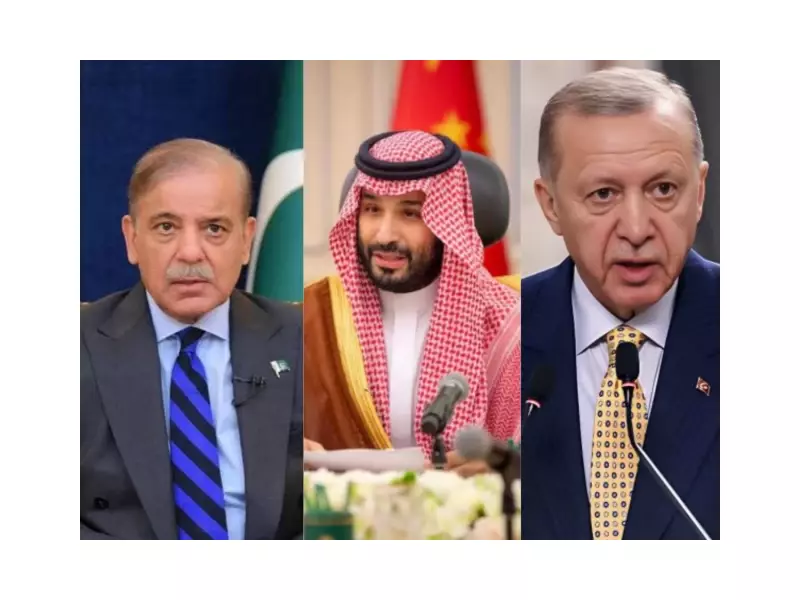
In a significant move to deepen its strategic footprint in South Asia and the Middle East, Turkey has formally expressed its desire to become part of the existing defense cooperation agreement between Pakistan and Saudi Arabia. This development, reported by Bloomberg, signals a potential reshaping of regional security and defense industrial alliances.
Turkey's Strategic Outreach
According to sources familiar with the matter, Turkish officials have communicated Ankara's interest in joining the pact to their counterparts in both Islamabad and Riyadh. The initiative underscores Turkey's broader foreign policy objective of expanding its influence and military-industrial partnerships beyond its immediate neighborhood. The existing bilateral agreement between Pakistan and Saudi Arabia serves as a foundation for this proposed trilateral framework.
The push is reportedly being led by Turkey's defense industry, which has seen substantial growth in recent years. Turkish companies are keen to explore new markets and collaborative ventures. Joining this pact could provide Turkish defense firms, including giants like Baykar (maker of the Bayraktar TB2 drone) and ASELSAN, with enhanced access to the markets and military establishments of both Pakistan and Saudi Arabia.

Potential Benefits and Alignments
A three-way defense agreement could unlock multiple avenues for cooperation. These range from joint military exercises and training programs to co-production and technology transfer in defense equipment. For Pakistan, a long-standing partner of both nations, this could mean access to Turkish drone technology and naval platforms, while also balancing its deep economic and strategic ties with Saudi Arabia.
For Saudi Arabia, which has been diversifying its arms suppliers and seeking technology transfers under its Vision 2030, collaboration with Turkey's burgeoning defense sector could offer new opportunities. The potential pact aligns with the Kingdom's goals of developing its domestic defense industry. The discussions are still in preliminary stages, and the final structure and scope of any trilateral agreement remain to be negotiated.
Regional Security Implications
The move, if successful, would formalize a security triangle among three influential Muslim-majority nations. It reflects a shared interest in fostering greater strategic autonomy and interoperability. Analysts suggest that such an alliance could have wider implications for regional security dynamics, particularly in the context of the Middle East and South Asia.
However, the path forward may involve diplomatic nuance, given the complex and sometimes strained relationships between various regional powers. All three countries—Pakistan, Saudi Arabia, and Turkey—maintain independent foreign policies and relationships with other global powers. The success of this initiative will depend on aligning their strategic interests and navigating the intricate geopolitical landscape.
As of now, official statements from the governments of Pakistan, Saudi Arabia, and Turkey on the specifics of the request are awaited. The development, however, marks a notable moment in the evolving defense diplomacy of the region, highlighting a trend towards more multilateral security partnerships.