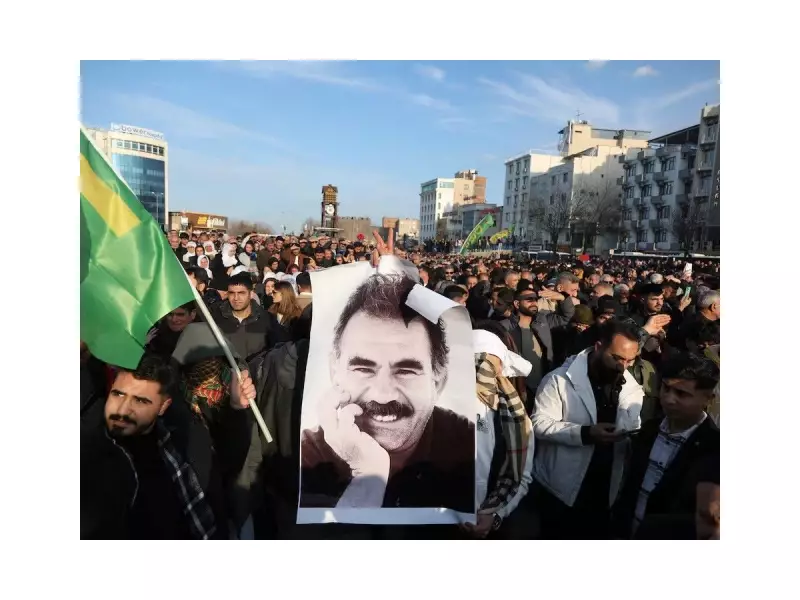
In a significant development that could potentially reshape Turkey's approach to its longstanding Kurdish conflict, a delegation from the country's parliament has visited imprisoned Kurdistan Workers' Party (PKK) leader Abdullah Ocalan for the first time in more than two years. The landmark visit to the high-security Imrali Island prison has sparked renewed hope for revived peace negotiations between the Turkish government and Kurdish representatives.
Historic Parliamentary Visit to Imrali Prison
The delegation, comprising members from the pro-Kurdish Peoples' Equality and Democracy Party (DEM Party), met with Ocalan on Monday in what marks the first official contact permitted between the jailed leader and parliamentary representatives since 2021. The visit occurred under strict security protocols at the prison facility located in the Sea of Marmara, where Ocalan has been held in isolation for decades.
The delegation included prominent DEM Party lawmakers Serpil Kemalbay and Dersim Dag, who had been seeking authorization for this meeting for several months. Their persistence finally paid off when Turkish authorities granted the necessary permissions, ending a prolonged period of restricted access to the controversial figure.

Context and Significance of the Meeting
Abdullah Ocalan, founder of the PKK organization designated as terrorist by Turkey, the United States, and European Union, has been imprisoned since 1999 when Turkish special forces captured him in Kenya. His imprisonment on Imrali Island has been characterized by extreme isolation, with access heavily controlled by Turkish authorities.
The timing of this parliamentary visit is particularly noteworthy given Turkey's recent diplomatic maneuvers and internal political dynamics. This development comes shortly after the Constitutional Court's decision to block the state from seizing the DEM Party's treasury, a ruling that had already eased political tensions. The delegation's successful visit suggests a potential shift in Ankara's approach to Kurdish political representation.
Previous negotiations between Ocalan and the Turkish state, notably the 2013-2015 peace process, had shown promise but ultimately collapsed amid renewed violence. The current visit raises questions about whether both sides might be preparing for renewed dialogue aimed at resolving one of Turkey's most persistent internal conflicts.
Regional Implications and Future Prospects
The PKK conflict has claimed approximately 40,000 lives since the armed group launched its insurgency in 1984, seeking greater autonomy for Turkey's Kurdish minority. The conflict has periodically spilled across borders, affecting neighboring countries including Iraq, Syria, and Iran, where Kurdish populations maintain significant presence.
International observers and human rights organizations have long criticized Ocalan's prison conditions, citing concerns about isolation and limited access to legal representation. The European Court of Human Rights has repeatedly ruled against Turkey regarding Ocalan's treatment, adding international pressure for improved conditions.
The parliamentary delegation's visit represents the first breach in the communication blockade surrounding Ocalan since 2021, when his lawyers last had access. This development could signal a new chapter in Turkey's handling of the Kurdish question, particularly as the country navigates complex regional relationships and domestic political challenges.
As news of the visit spreads, reactions from various stakeholders—including Turkish nationalists, Kurdish political movements, and international mediators—will likely shape the next steps in this delicate political dance. The world watches closely to see whether this confidence-building measure might eventually lead to substantive peace negotiations that could finally bring lasting resolution to decades of conflict.