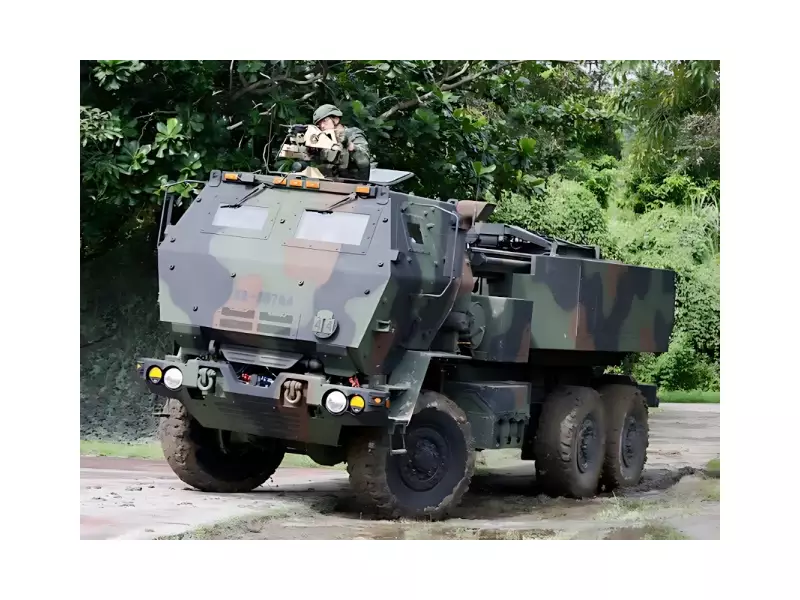
The United States government has given the green light to a substantial new package of military assistance for Taiwan, marking a significant escalation in its support for the island's self-defense capabilities. The deal, valued at approximately $1.1 billion, represents the largest single arms sale authorization to Taiwan under the current US administration.
Details of the Military Package
The approved package is not a single weapon system but a comprehensive set of equipment and services designed to bolster Taiwan's defensive posture. According to the notification sent to the US Congress, the deal includes 60 AGM-84L Harpoon Block II anti-ship missiles and 100 AIM-9X Block II Sidewinder air-to-air missiles. These weapons are critical for countering potential naval and aerial threats.
Furthermore, the package encompasses a $665 million contract for sustainment of Taiwan's Surveillance Radar Program (SRP). This long-term support is essential for maintaining the island's early warning radar systems, which are a key component of its integrated air and missile defense network. The US State Department emphasized that this sale is consistent with the Taiwan Relations Act and serves US national, economic, and security interests by supporting the recipient's continuing efforts to modernize its armed forces and maintain a credible defensive capability.

Immediate Reactions and Diplomatic Fallout
The announcement has triggered an immediate and fierce response from Beijing. China's Foreign Ministry swiftly condemned the move, labeling it a serious violation of the One-China principle and the stipulations of the three US-China joint communiqués. Chinese officials warned that the sale severely undermines China's sovereignty and security interests, and they vowed to take resolute countermeasures. The Chinese government has summoned the US ambassador in Beijing to lodge a formal protest.
This development comes at a time of already heightened tensions in the Taiwan Strait. Recent visits by high-profile US politicians to Taipei and increased Chinese military exercises around the island have created a volatile atmosphere. The US maintains that its policy has not changed and that it does not support Taiwanese independence, but it is committed to providing Taiwan with the necessary articles for its self-defense under the Taiwan Relations Act.
Strategic Implications and Regional Security
Analysts view this arms package as a clear signal of Washington's strategic commitment to Taiwan's security amidst China's growing military assertiveness. The inclusion of advanced missiles and radar support directly enhances Taiwan's asymmetric warfare capabilities, which are central to its defense strategy against a much larger potential adversary. The deal is also seen as part of a broader US effort to strengthen alliances and partnerships in the Indo-Pacific region to counter Chinese influence.
For Pakistan, which maintains close diplomatic and economic ties with both China and the United States, such developments present a delicate balancing act. Pakistan adheres to the One-China policy and recognizes Taiwan as part of China. Therefore, official statements from Islamabad typically reaffirm this principle while advocating for peaceful resolution of cross-strait issues. This latest US action adds another layer of complexity to the already intricate great power dynamics in Asia, with potential ripple effects on regional stability and international diplomacy.
The approval process for the sale is now with the US Congress, which has 30 days to potentially block the deal, though such an action is considered highly unlikely given the bipartisan support for Taiwan in Washington. The implementation of this package is expected to proceed, ensuring that Taiwan continues to receive the military hardware and support it has long requested to deter aggression.