The signing of the Islamabad Memorandum of Understanding (MoU) between the United States and the Islamic Republic of Iran marks a watershed moment in contemporary global affairs, shifting the world from the precipice of a catastrophic, multi-front war toward an era of calculated and hopeful diplomacy. Officially finalised through remote digital signatures by US President Donald Trump and Iranian President Masoud Pezeshkian, this historic fourteen-point interim framework went into immediate effect, breathing life into a region weary of conflict.
Key Provisions of the MoU
President Trump appended his signature to the historic text at a high-profile dinner hosted by French President Emmanuel Macron at the Palace of Versailles following the G7 summit, while President Pezeshkian endorsed the document from Tehran. Far from a rigid or hasty decree, this arrangement serves as an audacious, high-stakes mechanism designed to freeze active hostilities, lift crippling maritime blockades, and establish an intense sixty-day negotiating window to hammer out a permanent, all-encompassing peace treaty.
To understand the magnitude of this breakthrough, one must look closely at the core postulates that form the spine of the agreement. At its heart, the memorandum institutes an immediate and permanent termination of military operations on all fronts, providing an invaluable security umbrella that explicitly references the territorial integrity of Lebanon.

Economic and Maritime Measures
Operationally, the deal tackles the immediate economic and maritime bottlenecks that had brought global trade to a standstill. Under the agreed terms, the United States has committed to completely dismantling its naval blockade of Iranian ports within thirty days. In reciprocal synchronisation, Iran has undertaken to ensure the safe, unhindered passage of commercial vessels through the strategic Strait of Hormuz free of charge for the initial sixty-day period. Furthermore, the US Department of the Treasury has agreed to immediately issue vital waivers allowing Iran to freely export crude oil and petroleum products, alongside a phased framework to unfreeze restricted Iranian assets abroad.
The Framework Accord Is Only the Beginning
Most astonishingly, the document contains a pledge for Washington to collaborate with regional partners on developing a definitive three-hundred-billion-dollar blueprint for the economic reconstruction and development of Iran—a massive financial mechanism to be meticulously finalised over the next two months while Iran maintains the current status quo of its nuclear programme. Hardliners on both sides have already begun their predictable grumbling—some in Washington worrying the economic concessions are too generous, and some in Tehran questioning the nuclear oversight—proving that a truly balanced compromise is one where nobody is entirely ecstatic, but everyone is safely talking.
Pakistan's Mediation Role
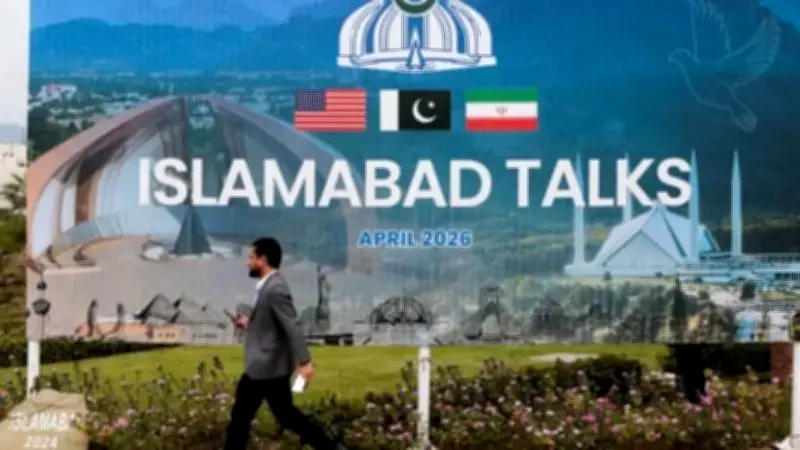
The genesis of this diplomatic miracle did not happen in a vacuum, and the primary credit for orchestrating what many thought to be an impossible convergence belongs incontestably to Pakistan. Operating with quiet, tireless, and masterful precision, the Pakistani mediating team—spearheaded by Prime Minister Shehbaz Sharif and Field Marshal Asim Munir—served as the vital diplomatic crucible where the initial breakthroughs were forged. The historic Islamabad Peace Talks, which featured a gruelling twenty-one-hour, three-round marathon session back in April, laid the indispensable foundation for this text.
Field Marshal Asim Munir skilfully utilised his unique regional rapport and credibility, enjoying the rare position of maintaining trust with both the Iranian Revolutionary Guards' commanders and President Trump. Pakistan's leadership managed to gracefully host and harmonise heavyweight delegations, including a massive three-hundred-member American team led by Vice President JD Vance alongside special envoys Steve Witkoff and Jared Kushner, and a highly focused seventy-member Iranian contingent led by parliamentary speaker Mohammad Bagher Ghalibaf and Foreign Minister Abbas Araghchi.

Regional Support
This monumental achievement was further elevated by a beautifully coordinated chorus of regional heavyweights. The tireless back-end efforts of Qatar, whose diplomatic envoys flew directly into Tehran for intensive finalisation sessions, alongside the strategic facilitating support of Saudi Arabia, Türkiye, and Egypt, demonstrated a rare and magnificent show of regional solidarity.
Global Reaction and Economic Impact
Global leaders, from British Prime Minister Keir Starmer to United Nations Secretary-General António Guterres, have rightly poured praise upon Islamabad and its partners. Pakistan effectively proved that it possesses the geopolitical weight and sophisticated neutrality required to act as the ultimate bridge between the East and the West, transforming its territory into a global sanctuary for peace.
For a global community weary of rampant inflation and energy insecurity, the benefits of this memorandum are bound to ripple beautifully across the globe. Chief among the immediate dividends is the literal unclogging of the world's primary energy artery. With one-fifth of the world's liquefied natural gas and petroleum moving through the Strait of Hormuz, the stabilisation of this maritime passage caused international crude oil markets to experience an instantaneous, stabilising correction. International shipping insurance premiums plummeted overnight, breathing confidence back into fractured global supply chains. Financial markets reacted with immediate joy, with major Asian stock indices shattering historic records, illustrating just how deeply global economic health is tied to peace in the Persian Gulf. By containing the conflict, the mediators have essentially saved the global economy from a devastating stagflationary shock.
Challenges and Caveats
Of course, as with any interim agreement put together under the intense pressure of preventing a world war, there are a few minor speed bumps and lighter shortfalls that the technical teams will need to gently iron out in the coming days. For instance, the agreement playfully leaves the future administrative long-term fees of the Strait of Hormuz open to future dialogue between Iran, Oman, and littoral states, meaning commercial ships can enjoy free passage for sixty days, but might want to keep their wallets handy for potential transit tolls down the road. There is also the slightly awkward reality that while the agreement mandates peace on all fronts, including Lebanon, the State of Israel was not a formal signatory to the text, creating a bit of an asymmetrical jigsaw puzzle where regional proxies and external actors will have to tread carefully so as not to accidentally trip over each other's security red lines.
Furthermore, hardliners on both sides have already begun their predictable grumbling, some in Washington worrying the economic concessions are too generous, and some in Tehran questioning the nuclear oversight, proving that a truly balanced compromise is one where nobody is entirely ecstatic, but everyone is safely talking.
Looking Ahead
Ultimately, these minor wrinkles do little to diminish the brilliant glare of what has been accomplished. The strict sixty-day countdown clock is now running towards the final deadline of 18 August 2026, when the technical-level teams—set to commemorate this achievement at a formal ceremony in Switzerland—must permanently cement the details. What Pakistan, Qatar, Saudi Arabia, and their partners have achieved is nothing short of a diplomatic masterpiece. They have successfully reminded the world that the pen remains infinitely mightier than the missile, providing a shining blueprint of hope that will be studied in the halls of international relations for decades to come.