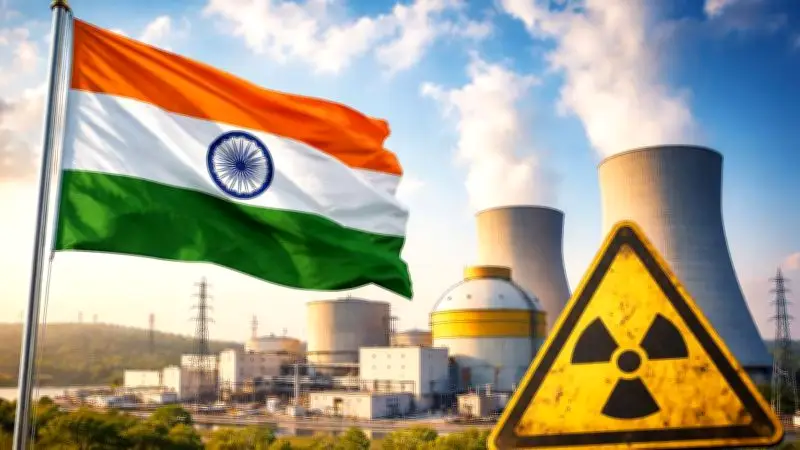
According to the Stockholm International Peace Research Institute (SIPRI) policy document (2026), India has deployed 12 nuclear warheads on the sea leg of its nuclear triad, making it one of the fastest-growing nuclear-weapon states. This deployment, combined with increasing conventional and nuclear forces, creates asymmetry against Pakistan in South Asia.
India's Nuclear Modernization and Regional Threats
India is canisterising and encapsulating its nuclear forces, transforming them into a "ready arsenal" usable within minutes. This shift from non-weaponised posturing increases the risk of rapid escalation during a crisis. India's aspirations for regional hegemony are evident in its "Act East" policy and claims over the Indian Ocean, driving investments in nuclear-powered submarines, advanced maritime capabilities, and overseas bases. These developments threaten the security of other states, including the United States.
Escalation Dominance and Ideological Drivers
India seeks escalation dominance over rivals, modernising forces beyond security needs. This includes MIRVing missiles, expanding submarine-launched ballistic missile (SLBM) ranges, ballistic missile defence, anti-satellite systems, tactical nuclear weapons, hypersonic missiles, and intercontinental ballistic missiles (ICBMs) exceeding 12,000 km, targeting regions beyond Pakistan and China. Dr. Zafar Khan, Professor of International Relations and Executive Director at Balochistan Think Tank Network, notes that India's "Akhand Bharat" ideology, rooted in RSS religious ideology, drives prestige over security, treating other states as part of India. This ideological arrogance may lead to preventive strikes against Pakistan.

Policy Implications of Deployed Nuclear Forces
India's deployed nuclear forces undermine its No First Use (NFU) doctrine and minimum deterrence posture. The more warheads India deploys, the less consistent it becomes with its original policy. The sea-based deployment creates a "lose-or-use dilemma," similar to the Cuban Missile Crisis, where the Soviet submarine B-59 nearly launched a nuclear torpedo. With emerging technologies, Pakistan and China may locate and force Indian submarines to surface, potentially leading to SLBM use before loss. This increases inadvertent escalation risks.
Entanglement and Arms Race Dynamics
India's deployment entangles conventional and nuclear delivery systems, incentivising a launch-on-warning posture and early nuclear use. This fuels an unending arms race, fostering overconfidence and perceived dominance. However, Pakistan's credible nuclear forces and demonstrated resolve during the 2019 and May 2025 crises show that India cannot wage limited or large-scale war against Pakistan.
Pakistan's Strategic Response
Pakistan must sustain Full-Spectrum Deterrence within Credible Minimum Deterrence, deterring India at operational, tactical, and strategic levels. Conventional force development should remain integral. India should be convinced that no viable war option exists against Pakistan due to credible nuclear forces. The only way forward is institutionalised confidence-building measures and the Strategic Restraint Regime proposed by Pakistan, along with sustained dialogue for lasting peace and stability.