UNITED NATIONS – Pakistan expressed optimism on Tuesday that the recent agreement between Iran and the United States would create a more favorable environment for peace and renewed political engagement in Yemen, a country grappling with intertwined political, security, and humanitarian crises.
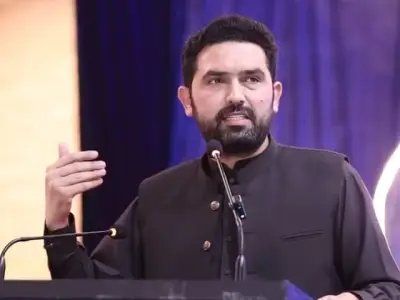
“Recent developments in the region have underscored both the dangers of escalation and the value of diplomacy,” stated Ambassador Asim Iftikhar Ahmad, Pakistan’s permanent representative to the United Nations, during a Security Council debate on Yemen.
The Pakistani envoy highlighted that the Pakistan-mediated peace deal between the US and Iran presents a welcome opportunity to reduce tensions and advance regional stability. He emphasized that Pakistan’s efforts were guided by its longstanding commitment to dialogue, diplomacy, and the peaceful resolution of disputes.

“We hope that this positive momentum will reverberate across the region and contribute to a more conducive environment for peace and renewed political engagement in Yemen, allowing its people to reap the dividends of stability and development,” Ambassador Ahmad told the 15-member Council, noting that significant political, economic, and humanitarian challenges persist in Yemen.
Since 2014, Yemeni government forces, backed by a Saudi-led coalition, have been fighting Houthi rebels for control of the fractured country. The internationally recognized authorities are mainly based in the southern city of Aden, while the Houthis, officially known as Ansar Allah, control the capital Sana’a and large areas in the north and west.
A UN-brokered truce in April 2022 helped reduce violence, but after more than a decade of conflict, Yemen continues to face challenges. Ambassador Ahmad pointed out that the relative calm over recent months—including the absence of major hostilities across fronts and no attacks on commercial shipping—demonstrates that de-escalation is achievable and a negotiated settlement is possible.
He underscored the need to move forward with the political process, stating that a durable settlement can only emerge through a UN-facilitated, Yemeni-led, and Yemeni-owned political process that addresses the legitimate aspirations and concerns of all Yemenis. The Presidential Leadership Council remains the internationally recognized government of Yemen, he said, adding that in the south, the proposed South Dialogue by Saudi Arabia represents a timely and constructive initiative that can contribute positively to those efforts.
The Pakistani envoy commended the UN’s sustained efforts in engaging with all regional and local stakeholders and preserving political space for dialogue under challenging circumstances. The fact that Yemen has not relapsed into large-scale hostilities despite numerous challenges is significant, he said, drawing attention to the recent agreement on the exchange of approximately 1,600 detainees and prisoners. “We also call for the immediate and unconditional release of all UN personnel held in illegal detention by the Houthis.”
Expressing concern over the deteriorating humanitarian situation, Ambassador Ahmad said millions of Yemenis continue to rely on assistance, while funding shortfalls, economic difficulties, and declining public services further exacerbate vulnerabilities. “Enhanced international support is required to sustain humanitarian operations and strengthen economic stability, particularly at this critical stage,” he added.
Earlier, top UN officials called for bolstered efforts to stave off rising hunger and foster a path towards permanent peace in Yemen. UN Special Envoy for Yemen Hans Grundberg said that while the 2022 truce between the Houthi rebels and the government continues to hold, the conflict is unresolved, with Yemenis bearing the cost of this uncertainty.
“In meetings with Yemenis, we are told that entrenched front lines across the country are draining resources, deepening fragmentation and accelerating the militarisation of society, even driving students and teachers to join armed groups simply as a means of economic survival,” Grundberg said. “As long as Yemen’s conflict remains unsettled, the risk of further destabilisation persists, both within the country and, should regional tensions flare again, well beyond it.”

The parties should use this window of regional de-escalation to make progress toward reviving a political process that can sustainably end the conflict in Yemen, he said. The special envoy reiterated an appeal for the release of 73 UN personnel currently under arbitrary detention by Houthi rebels, many since 2024.
“The Secretary-General’s recent statement underscored that these detentions violate international law, cause deep suffering to families and constrain the UN’s ability to assist millions of people in need,” Grundberg said, noting that the Security Council had condemned the detentions earlier this month, demanding the unconditional, safe and immediate release of all those held. “The United Nations will continue doing all it can to press for their releases,” he said, asking the Security Council to continue its efforts until “our colleagues are freed.”