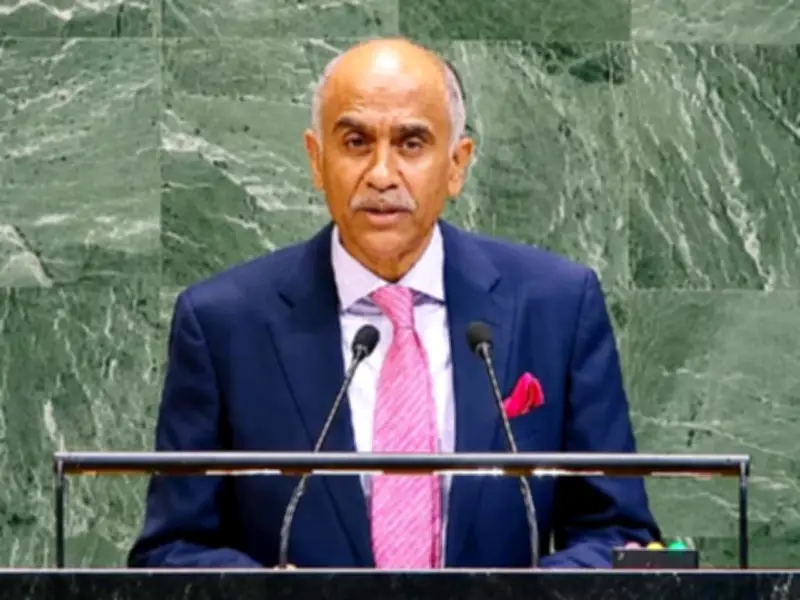
The decades-old Kashmir dispute once again sparked a war of words between Pakistan and India at the United Nations Security Council (UNSC), with Islamabad accusing New Delhi of attempting to mislead the council. Speaking during the presentation of the UNSC's Annual Report to the General Assembly, Pakistan's Permanent Representative to the UN, Ambassador Asim Iftikhar Ahmad, called for the resolution of the Kashmir dispute, according to a press release issued on Friday. Pakistan coordinated and drafted the introduction to the annual report.
India's Response
Responding later, India's Permanent Representative to the UN, Harish Parvathaneni, accused Pakistan of using UN forums to advance what he described as its "divisive political agenda". He also maintained that Jammu and Kashmir "was, is and will always remain an integral and inalienable part of India".
Pakistan's Rebuttal
Responding under Pakistan's right of reply, Counsellor and Political Coordinator at Pakistan's Mission to the UN, Gul Qaiser Sarwani, said attempts to portray Kashmir as an internal matter of India were contrary to historical and legal realities. "IIOJK remains an internationally recognised dispute on the agenda of the UNSC. No amount of obfuscation can alter the historical, legal and international character of this dispute. Kashmir never was, nor is, nor will ever be so-called an integral part of India," the Pakistani diplomat said.

UNSC References
The diplomat noted that the Supreme Court's annual report contained more than 20 references and communications related to the India-Pakistan question during the reporting period. He also pointed to the council's closed-door consultations held on May 5, 2025, regarding regional tensions and the security situation. Sarwani said delegates participating in the debate had acknowledged Pakistan's role in drafting the introduction to the Security Council's annual report and helping secure its adoption by consensus.
Criticism of India
Criticising India's intervention, he said New Delhi had focused solely on references to the Kashmir dispute in the report while ignoring its broader contents. He accused the Indian representative of attempting to misrepresent facts before the General Assembly. Sarwani reiterated Pakistan's position that the people of IIOJ&K continue to be denied their right to self-determination despite longstanding UNSC resolutions calling for a plebiscite. He also alleged persistent human rights violations in IIOJ&K, including arbitrary detentions, curbs on civil liberties and demographic changes in the territory.
Human Rights Concerns
Referring to a joint communication issued by UN Special Procedures on October 16, 2025, he said UN human rights experts had expressed concern over developments in the region. The Pakistani envoy further argued that India's non-implementation of SC resolutions on Kashmir reflected a failure to meet its obligations under the UN Charter, including Article 25, which required member states to carry out SC decisions.
Counter Allegations
Sarwani also dismissed Indian allegations against Pakistan, accusing New Delhi of supporting terrorism inside Pakistan, conducting assassination campaigns abroad, violating the rights of minorities and disregarding international legal norms. He additionally criticised India's decision to place the Indus Waters Treaty in abeyance, describing the move as unlawful.