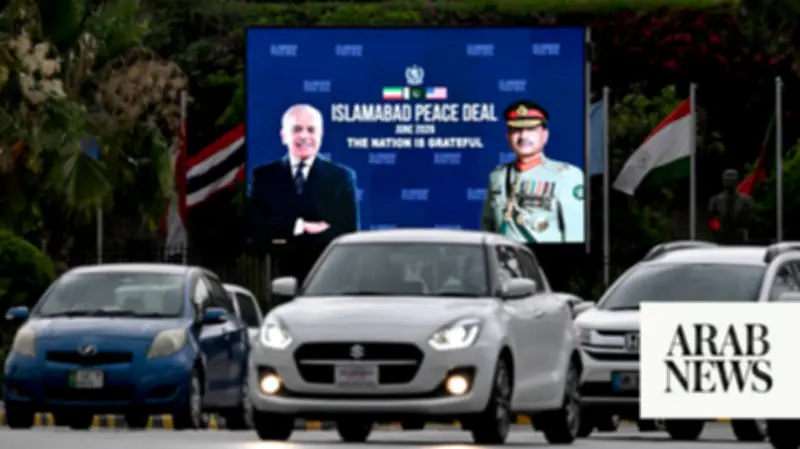
The United States and Iran will hold technical-level talks in Switzerland on Sunday, with Pakistan’s prime minister and army chief expected to attend, according to officials in Islamabad on Saturday, as Tehran reimposed a blockade of the Strait of Hormuz over continuing Israeli attacks in Lebanon, testing the durability of a newly signed accord ahead of the next phase of negotiations.
Background of the Talks
The announcement came as Pakistan’s Interior Minister Mohsin Naqvi met his counterpart Eskandar Momeni and Iranian Foreign Minister Abbas Araghchi in Tehran, as Iran’s joint military command warned of further measures if Israel continued its Lebanon strikes. Israeli strikes on southern Lebanon killed at least 16 people, including two children, on Saturday, despite reports of a ceasefire agreement, one of the key provisions of the Islamabad Memorandum of Understanding electronically signed by the US and Iran on June 18.
First Formal Negotiations Under Framework
The talks in Switzerland will mark the first formal negotiations under the framework agreement following months of conflict between Washington and Tehran. “As a follow-up to the signing of the Islamabad Memorandum of Understanding, technical-level talks will be held in Bürgenstock, Switzerland, on 21 June 2026,” Pakistan’s foreign office said in a statement. “Representatives of the United States and Iran, along with mediators from Pakistan and Qatar, will participate in the discussions,” it added.

Key Provisions of the Accord
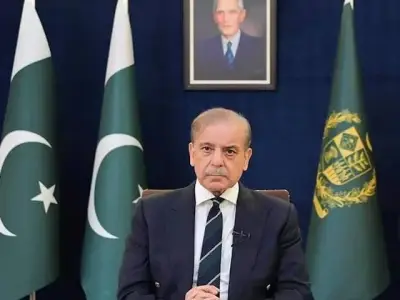
The initial US-Iran peace pact calls for the reopening of the Strait of Hormuz, a ceasefire in Lebanon, easing restrictions on Iranian oil exports and launching a 60-day process aimed at reaching a broader settlement over Iran’s nuclear program and other outstanding disputes. “Prime Minister Shehbaz Sharif is going to Switzerland later tonight,” a senior official at Sharif’s office told Arab News on condition of anonymity. “He will be reaching tomorrow morning.”
US and Pakistani Involvement
Earlier, there was speculation that Sharif could participate in the diplomatic process after US Vice President JD Vance said he expected to travel to Switzerland in the coming days for talks with Iran. Vance said US negotiators Jared Kushner and Steve Witkoff were already in Switzerland handling “some of the technical elements” of the talks and had reported that “things are going well.” Another source privy to the diplomatic process highlighted the possibility of the army chief’s presence at the talks. “Chief of the Defense Forces Field Marshal Asim Munir is likely to join the negotiations,” he said.
Pakistan’s Mediating Role
Pakistan has been working on multiple levels to keep the US-Iran talks on track and on schedule. Iran’s state-run IRNA news agency reported during the day that Pakistan’s interior minister met Araghchi and Momeni, with both sides discussing the regional situation. Naqvi also met Iranian President Masoud Pezeshkian, who praised Pakistan’s role in supporting diplomatic efforts that led to the US-Iran ceasefire agreement and emphasized the need to expand bilateral cooperation. IRNA said Pezeshkian voiced support for deepening economic and strategic ties with Pakistan, with both sides agreeing that a high-level Iranian delegation comprising the interior, agriculture, industry and finance ministers would soon visit Islamabad to explore opportunities for expanding trade, investment and other areas of cooperation.
Continuing Tensions
Despite the continuing tensions in the Middle East, Iranian state television reported that Tehran’s negotiating team was traveling to Switzerland for the next round of talks with the US. However, Iranian officials also described Israel’s continuing attacks in Lebanon as US “bad faith” and Washington’s failure to uphold its commitments under the agreement. Pakistan’s foreign office said in its statement that Islamabad will continue to facilitate the next round of talks “in its role as mediator, with a view to advancing the understandings reached under the Islamabad Memorandum of Understanding.” Pakistan has played a central mediating role in the crisis, hosting rare US-Iran talks in April and facilitating diplomatic contacts that culminated in the signing of the agreement earlier this week.