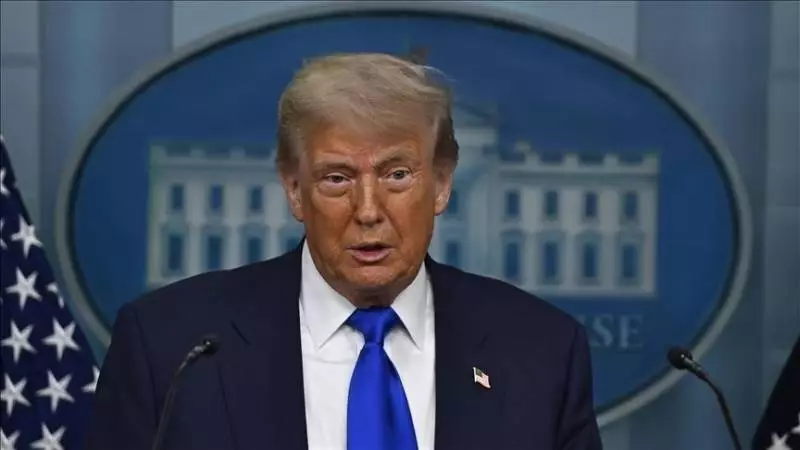
In a dramatic escalation of pressure on the South American nation, former United States President Donald Trump has issued a directive for a naval blockade targeting Venezuelan oil tankers. Simultaneously, his administration has formally designated the government of President Nicolás Maduro as a terrorist organization.
Unprecedented Move: Blockade and Terrorist Label
The directive, issued on Tuesday, December 17, 2024, marks a significant hardening of US policy towards Caracas. The order mandates the US Navy to intercept and block oil tankers flying the Venezuelan flag or carrying Venezuelan crude from leaving the nation's territorial waters. This move aims to cripple the primary source of revenue for the Maduro government, which has long relied on oil exports to fund its operations amidst a severe economic crisis.
Parallel to the blockade, the Trump administration officially labeled the Maduro-led government a "Specially Designated Global Terrorist" entity. This designation carries severe implications, including freezing any US-based assets belonging to the government and prohibiting American citizens and companies from conducting any financial transactions with it. The administration cited the government's alleged support for terrorist groups and its systematic human rights abuses as the core reasons for this decision.

Context of a Protracted Political Crisis
This aggressive stance is rooted in the longstanding political deadlock in Venezuela. The United States, along with dozens of other nations, recognizes opposition leader Juan Guaidó as the country's legitimate interim president, having rejected the legitimacy of Maduro's 2018 re-election. The Trump administration has consistently employed a "maximum pressure" campaign, involving sweeping sanctions on Venezuela's state oil company PDVSA and key officials, to force Maduro from power.
The new measures represent the most direct military and legal challenge to date. A naval blockade is considered an act of war under international law, potentially raising tensions not only with Venezuela but also with other global powers that maintain diplomatic and trade ties with Caracas, such as Russia and China.
Potential Global Repercussions and Reactions
The immediate consequences of this decision are manifold. Firstly, it threatens to further disrupt global oil markets, although the impact may be limited as Venezuelan production has already plummeted due to years of mismanagement and prior sanctions. Secondly, it risks a dangerous confrontation in the Caribbean Sea, where Venezuelan naval forces might attempt to challenge US interdictions.
International reaction is expected to be sharply divided. Allies of the US, such as Colombia and Brazil, may offer tacit support, while nations like Russia, Iran, and Cuba are likely to condemn the actions as unlawful foreign intervention. Within Venezuela, the measures are poised to deepen the humanitarian crisis, potentially causing further shortages of essential goods even as the government attempts to circumvent the blockade through clandestine oil shipments.
For the Trump administration, this bold move reinforces its hawkish foreign policy doctrine in Latin America in its final weeks. It also presents a complex challenge for the incoming Biden administration, which will have to decide whether to maintain, modify, or roll back these aggressive tactics in pursuit of a diplomatic solution to the Venezuelan crisis.