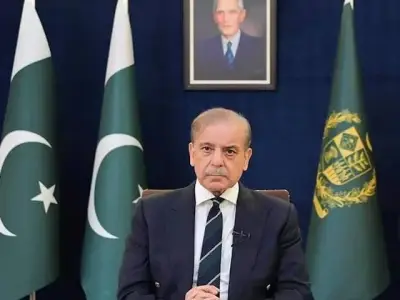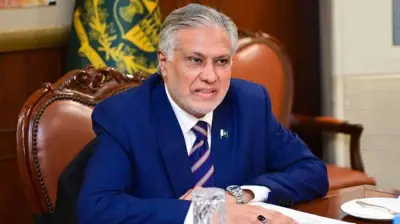
President Donald Trump's current governance style has significantly reoriented the United States' approach to South Asia, particularly affecting relations with India and Pakistan. Pakistan played a crucial role in helping Washington reach an understanding with Iran. According to newspaper reports, Field Marshal Asim Munir engaged in shuttle diplomacy between Iran and the United States and maintained telephone contact with President Trump. This involvement led to a notable improvement in Washington's relations with Islamabad, a development that has displeased New Delhi.
US-India Relations Under Strain
The Washington-New Delhi relationship is under pressure as the American leadership works to ease tensions with China. Additionally, the treatment of Indians living in the United States has troubled the Indian leadership. To address these issues, the US sent Secretary of State Marco Rubio to New Delhi. During a news conference on May 25, 2026, Rubio stated, "The United States-India relationship has not lost any momentum. The relationship continues to be strong." He explained that Trump's tariffs on Indian imports—50 percent in the initial salvos in summer 2025—were part of a global effort to create trade balances, not specifically targeting India. "There is a huge imbalance that's built up and needs to be addressed. This is not about India," Rubio said.
Tariffs and Nobel Prize Controversy
According to Edward Wong writing for The New York Times, the high tariffs followed Prime Minister Modi's refusal to nominate Trump for a Nobel Peace Prize. Trump has insisted he played a crucial role in securing a ceasefire between India and Pakistan after both countries carried out deadly military strikes. Wong noted that Trump's actions have upended more than two decades of US policy toward India, which had sought closer ties since the early 2000s.

Rubio's Visit and Indian Response
Rubio emphasized that commercial partnerships between India and the US are a cornerstone of their relationship, which he called a "strategic alliance." Indian Foreign Minister Subrahmanyam Jaishankar, standing alongside Rubio, said, "The Trump administration has been very forthright in putting forward its foreign policy as 'America First.' We have a view of 'India First.'" When asked about US-Pakistan ties, Rubio stated, "I don't view our relationship with any country in the world as coming at the expense of strategic alliance with India."
Indian Concerns Over Trump's Praise of Pakistan and China Ties
Many Indians are troubled by Trump's praise of Pakistani leaders who mediated in the Iran war and by close ties developing between Washington and Beijing. Early in the year, Trump visited Beijing for a two-day summit with President Xi Jinping. In May, Trump posted a transcript from a right-wing podcast where host Michael Savage referred to China and India as "hellhole" places and claimed recent immigrants had not integrated as European Americans had. The Indian government rebuked the White House on social media, calling the comments "obviously uninformed, inappropriate and in poor taste."
Bilateral Meeting and Geopolitical Dynamics
During the G7 meeting in France, Trump and Modi held a one-on-one meeting. Analysts suggested India might need to be more flexible, as it lacks the leverage of China or the US to reshape the global economy. Despite souring trade and geopolitical relations, the performative theatre of both strongman-style leaders remains. In mid-June, Trump congratulated Modi on becoming India's longest-serving Prime Minister, surpassing Jawaharlal Nehru.
Immigration and Demographic Concerns
Indians are also concerned over Trump's anti-immigration moves, including efforts to restrict legal immigration. The US and Western Europe face demographic challenges with aging populations and need young immigrants from Africa and South Asia to sustain economic dynamism. These issues were discussed at the G7 meeting held in France on June 15-16, 2026, hosted by President Emmanuel Macron. India, though not a member, attended as an observer. The key agenda item was the US war in Iran. The G7 consists of Canada, France, Germany, Italy, Japan, the UK, and the US. Russia was expelled after invading Ukraine, and Trump's attempts to readmit Russia have been blocked by other members.