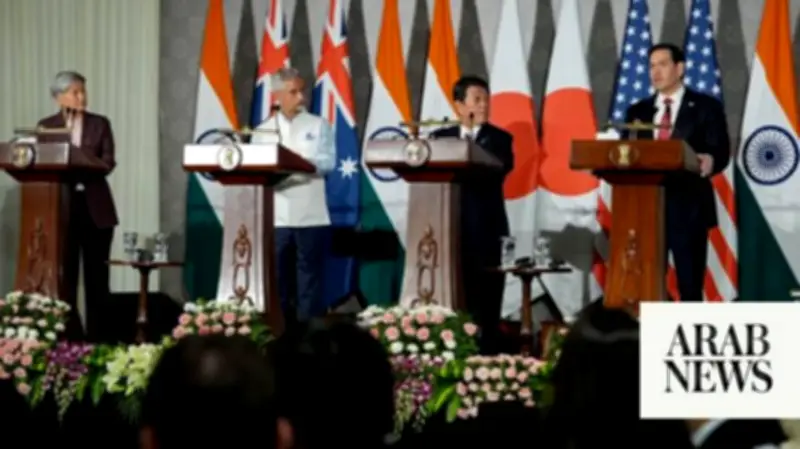
The United States, India, Japan, and Australia launched a maritime surveillance initiative for the Indo-Pacific region on Tuesday, along with several new collaborations, as their foreign ministers convened in New Delhi. The meeting was held among members of the Quad, a strategic security alliance established in 2007 to counter China's growing economic and military influence in Asia. Together, these four nations represent approximately one-third of the global gross domestic product and nearly 2 billion people.
Indo-Pacific Maritime Surveillance Collaboration
Under the Indo-Pacific Maritime Surveillance Collaboration, the four countries will integrate their surveillance capabilities and enhance information sharing across the region, announced US Secretary of State Marco Rubio during a joint press conference. He emphasized the critical importance of maritime security, noting that 60 percent of global maritime trade passes through the Indo-Pacific. "It's a vital national interest, not just to the four countries represented here today, but to dozens and dozens of countries, countless countries around the world," Rubio stated.
Expanded Cooperation on Maritime Domain Awareness
The Quad also agreed to expand cooperation on maritime domain awareness, providing real-time data on ship movements, including commercial vessels. Additionally, the bloc announced plans to deepen collaboration on critical minerals and energy, as well as a joint port infrastructure project in Fiji—their first such initiative in the region. Rubio highlighted the tangible achievements of the partnership, calling it a "linchpin and a cornerstone of our global strategy as a nation in the United States."

Strategic Implications and Expert Analysis
The meeting of Quad foreign ministers followed the high-profile summit between US President Donald Trump and Chinese President Xi Jinping, signaling that Washington intends to use the Quad as a tool in its broader "constructive strategic competition" with China, according to Vanshika Saraf, a research analyst with the geostrategy program at the Takshashila Institution. The new and expanded collaborations also enable the countries to monitor China's long-range naval ambitions and movements across the Indian Ocean and Western Pacific, while protecting underwater data cables and monitoring regional ports. Saraf noted that the Quad's revival demonstrates that the US is not withdrawing from Indo-Pacific competition despite being focused on the war in West Asia, domestic political volatility, and trade disputes.
Context of Global Energy Disruptions
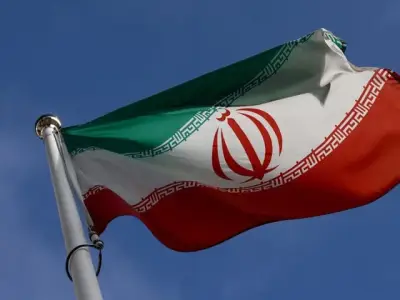
The Delhi meeting also occurs amid the closure of the Strait of Hormuz following US-Israeli attacks on Iran, effectively halting global energy supply shipments. The outcomes of the meeting appear to be an effort to create a unified network to make the Indo-Pacific more transparent. "Historically, nations tracked the seas independently, leaving large blind spots," Saraf said. "Given the vulnerability of maritime chokepoints as revealed during the West Asian War, tracking vessel transit logs through the Malacca, Sunda, and Lombok straits would be of vital interest."