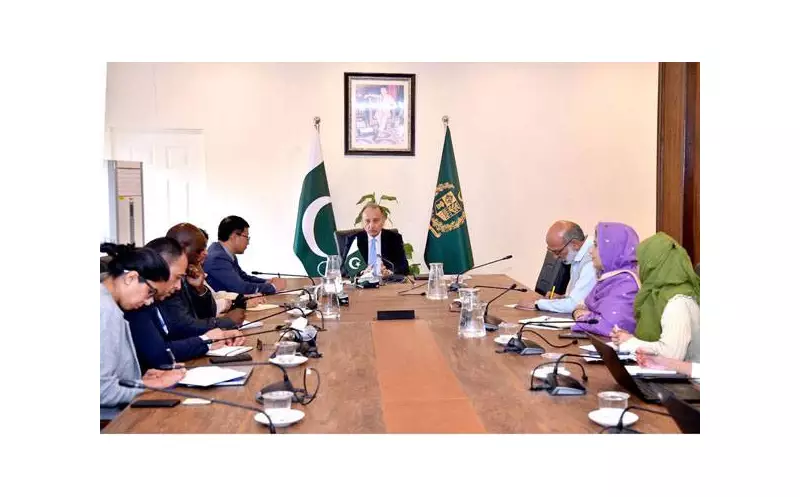
Federal Climate Change and Environmental Coordination Minister Dr Musadik Malik held a significant meeting with a high-level delegation from the Food and Agriculture Organisation (FAO) in Islamabad on Wednesday. The delegation was led by Lifeng Li, Director of the Land and Water Division at FAO headquarters.
Strengthening Climate Resilience Through Collaboration
The discussion centered on enhancing cooperation in sustainable land management, water resources, and climate-resilient development. Lifeng Li emphasized that food systems and resource management are particularly critical for Pakistan, given the country's high vulnerability to climate change impacts.
During the meeting, Li briefed Minister Malik about FAO's ongoing initiatives in Pakistan, including comprehensive efforts to:

- Prevent and reverse land degradation
- Improve utilization of Indus Basin resources
- Enhance water governance systems
New Framework and Digital Platform Introduced
The FAO delegation presented two key initiatives: the Country Programming Framework (2023–2027) specifically designed for Pakistan, and the Aqua Portal – a digital platform facilitating inter-agency information and data sharing among stakeholders.
Dr Musadik Malik acknowledged FAO's substantial support and stressed the need to prioritize areas where public returns are typically low, particularly focusing on capacity building and institutional strengthening.
Green Clusters and Strategic Partnerships
The minister outlined an innovative plan to establish Green Clusters through the Ministry of Climate Change and Environmental Coordination. This initiative aims to connect young Pakistani entrepreneurs working on green startups with international investors, creating a vibrant ecosystem for sustainable innovation.
Dr Malik called for establishing a structured collaborative framework covering three critical areas:
- Administrative coordination
- Capacity building programs
- Public-private partnerships
He made a strong statement about funding priorities, emphasizing that climate-related projects must not rely on repurposing loans originally allocated for education, health, and human development. Such practices, he warned, hinder progress on Sustainable Development Goals (SDGs).
The minister concluded by highlighting the importance of active ministry involvement and strong strategic alignment between federal, provincial, and international partners to ensure coherence and achieve long-term impact in climate resilience efforts.